Indonesia’s history isn’t something that’s dramatically shouted from the rooftops. You stumble into it instead, in a market stall stacked with hand-dyed cloth or a workshop where someone carves teak the way their grandfather did. Travellers who slow down enough to watch these crafts come together often get a richer sense of the country than spending all their time on a beach chair.
Batik Country, From Solo to Pekalongan
Java is the place most people picture when they think of Indonesian craft, and batik is usually the reason why. Batik is a textile art form that is centuries-old. It uses wax resistant dyeing techniques to create intricate patterns on cloth. Batik is recognized as a Masterpiece of Oral and Intangible Heritage by UNESCO.
In Solo, also known as Surakarta, the Klewer Market sells a bewildering range of cheaper batik, while the village of Laweyan specialises in higher end pieces worn to weddings and ceremonies. Yogyakarta runs its own version of the trade through Malioboro Street, where workshops let you watch the wax and dye process before you buy. Pekalongan, further along the coast, favours brighter colours drawn from centuries of trade with India and China.
Bali’s Carvers and Painters
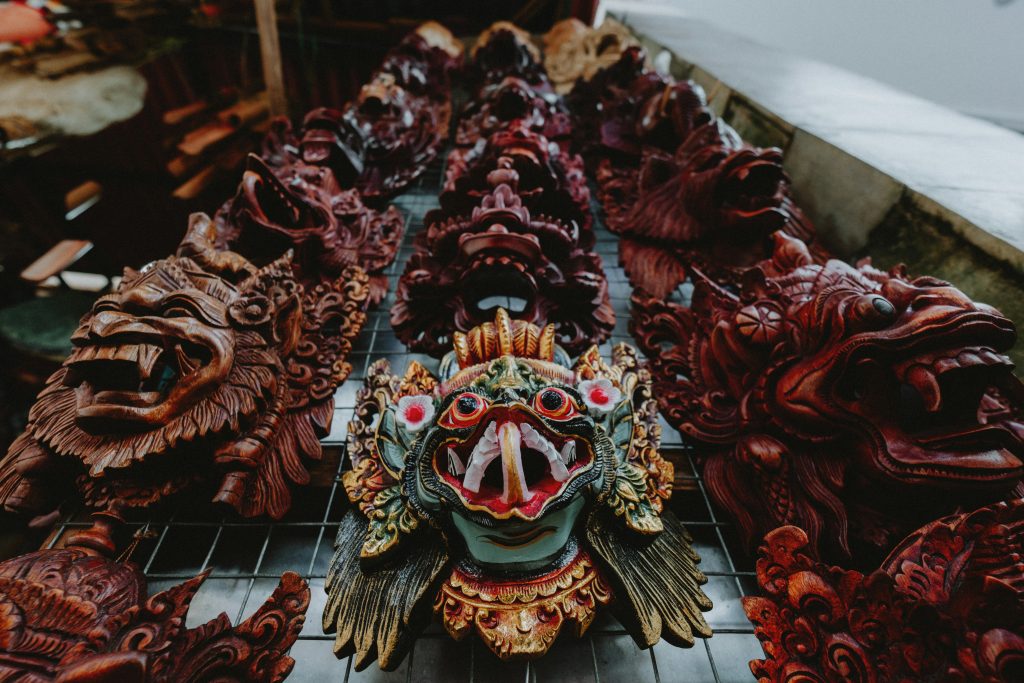
Bali’s history is carved mostly in wood rather than dyed onto fabric. The village of Mas, which is a short drive south of Ubud, has turned out wood carvings for generations. Wandering through its workshops gives a far better sense of the craft than buying a finished piece off a shelf. Many carvers still work from designs passed down through their family generations, adjusting them just enough to keep buyers interested without losing the heart of the original history.
Silver and the Ubud Crowd Markets
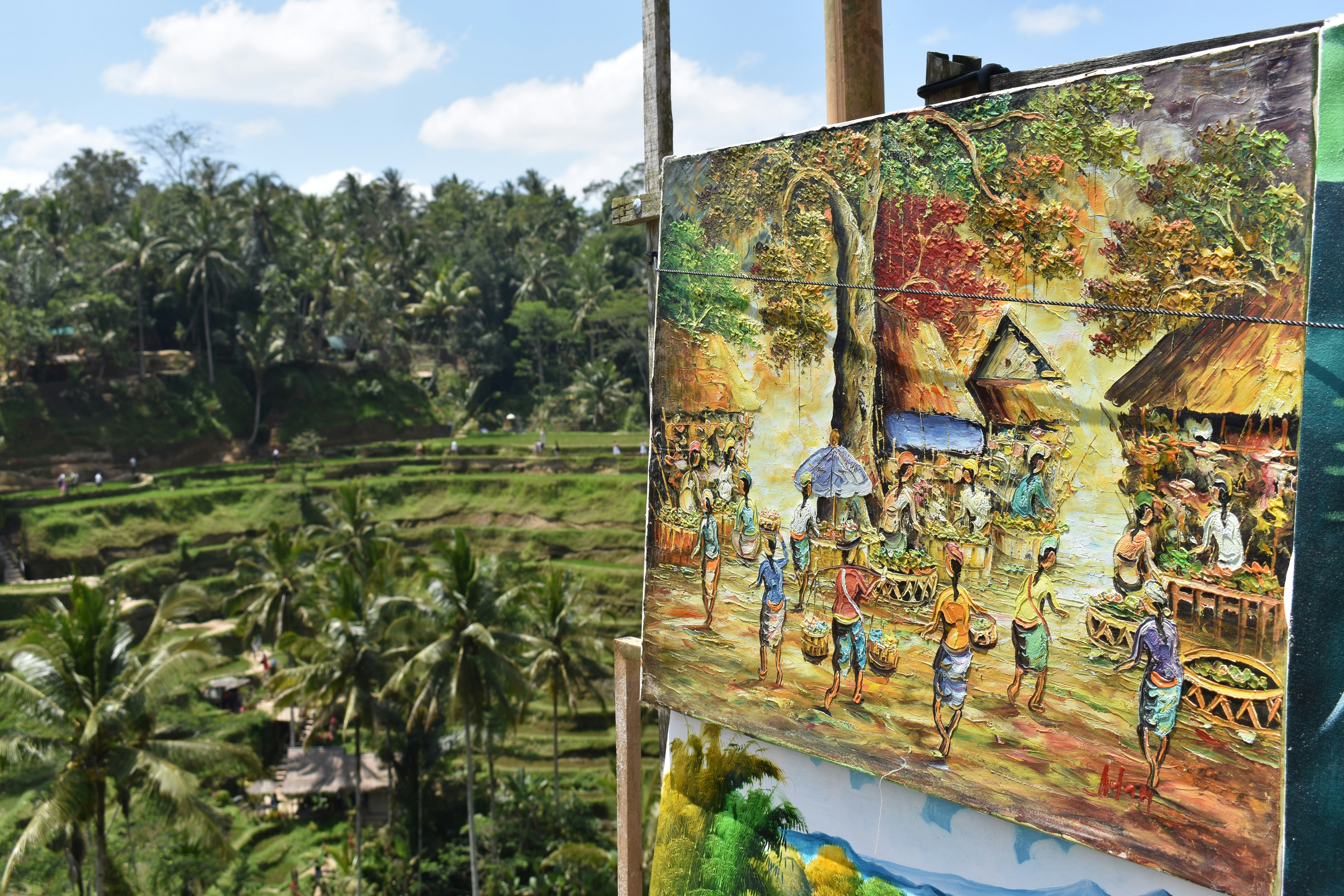
Ubud’s own market is worth spending a slow morning stroll-through instead of a rushed half hour. The market is packed with paintings, woven baskets and jewellery from nearby villages. If silver appeals to you more than wood, Celuk is worth the detour, known for pieces mixing traditional Balinese motifs with an artisan’s own touch. Prices move fairly easily here, so don’t be shy about having a polite back and forth. The locals are very comfortable with negotiating.
Yogyakarta’s Silver Legacy in Kotagede
Kotagede has been a centre for silverwork since the days of the Mataram Sultanate. The Mataram Sultanate was the last major independent Javanese empire on Java. It ruled from the late 16th century until 1755.
Artisans in Kotagede still hammer filigree designs by hand in workshops that have barely changed. Watching someone build a piece from a flat sheet of metal takes more patience than most visitors expect, yet it tends to be the part of the trip people talk about longest once they’re home.
Sumba’s Woven Stories
Further east, the island of Sumba produces ikat weaving that can take months to finish, with motifs carrying genuine meaning rather than decoration for its own sake. Most of it ends up for sale at the Pasar Inpres Matawai market in Waingapu, and buyers willing to make the trip out there come away with pieces nobody else back home will have. For a broader sense of where these handicraft hubs sit across the archipelago, Indonesia’s official tourism board has put together a thorough guide on handicraft centres that are worth checking out.
Buying Without Being That Tourist
A little respect goes a long way in these markets, and it costs nothing. Haggling is expected almost everywhere, but there’s a difference between a friendly negotiation and grinding someone down over the equivalent of fifty cents. Asking about a piece’s history, or how long it took to make will delight the locals and help you get into a friendly conversation. You can also do yourself a favour by looking up the local customs and traditions when entering markets in certain areas.
On the practical side, plenty of travellers now set up an eSIM for Indonesia before they land, since it keeps maps and translation apps working the moment they step off a flight. It’s also quite handy when you’re hunting for a workshop tucked three alleys back from the main road.
What You Carry Home Matters More Than the Suitcase
The real value in all of this isn’t the souvenir sitting in your bag, though that matters too. It’s the half hour spent watching someone draw wax patterns onto cotton with a tool that hasn’t changed much in a hundred years, or the conversation with a silversmith in Kotagede who learned the trade from his father. Indonesia’s crafts aren’t museum pieces kept behind glass, they’re still being made, sold and worn every day, which is exactly why visiting the people who make them beats reading about them.