Some games have very unusual origins.
We see quirky stories like a puzzle made for one person becoming a global daily habit. Plenty of games that now feel completely normal began in places that do not look much like the finished product at all.
That is part of what makes gaming history so interesting. Games travel and sometimes end up being used for something their original creators probably never imagined. They move and they evolve.
Plinko Went From American Television to Online Casino Play
Plinko has one of the most unusual journeys because it did not begin as a casino game at all.
The game became famous through the American television show The Price Is Right. The contestants dropped a disc from the top of a large pegboard and watched it bounce unpredictably towards different prize slots at the bottom.
The whole appeal was visual.
There was no need for complicated instructions because the board explained itself. The disc hit the pegs and gradually made its way down while everyone watched to see where it would land.
That basic idea was itself related to the much older Galton board. This was a device used to demonstrate probability. The television version simply turned the same bouncing movement into entertainment.
The concept eventually moved into casino gaming.
People play plinko games online that keep the same recognizable structure: an object drops from above through rows of pegs and lands in a section carrying a particular outcome. The physical board becomes digital to bring it to people’s homes.
A concept once built for a game-show stage now fits comfortably onto a phone screen, which is quite a journey for a board full of pegs.
Wordle Was Originally Made for One Person
Wordle’s origin is much more personal.
Developer Josh Wardle originally created the word game for his partner. She enjoyed word puzzles. It was not launched as some giant commercial project.
The idea was simply to make something enjoyable for somebody he knew.
The structure was equally modest.
There is one five-letter word each day. We see six attempts to find it and a set of coloured tiles that show which letters are correct or misplaced.
That tiny project eventually escaped its original audience.
The shareable grid was especially clever because people could post results without giving away the answer.
Its success is a useful reminder that giant ideas do not always start with giant ambitions.
Tetris Came From a Computer Lab
Tetris also has an unusual origin because it emerged from a very different technology culture from the commercial games industry most people associate with it today.
Alexey Pajitnov created the game in the Soviet Union during the 1980s while working at a computing centre in Russia.
The inspiration came partly from a puzzle involving geometric shapes called pentominoes.
Pajitnov simplified the idea into pieces made from four squares. They could fall and fit together to complete lines.
That became Tetris.
The game spread quickly because the central mechanic was so easy to understand.
Blocks fell. People arranged them. Then they tried to do it faster.
What started on fairly basic Soviet computing equipment eventually became one of the most widely played games on Earth.
Mahjong Evolved Through Chinese Card and Tile Traditions
Mahjong feels ancient. The form most people recognize today is probably much younger than many assume.
The game developed in China during the 19th century. It drew on older card-game traditions. Its tiles behave in many ways like cards.
Players collect and discard them while trying to form particular combinations. This is why the game can feel oddly familiar even to people who have never played before.
Mahjong then spread quickly beyond China.
Different regions developed their own styles of play.
That process changed the rules and even some of the social customs around the game.
The interesting part is that Mahjong looks so physically distinctive that it can seem completely separate from card games.
Snakes and Ladders Had a Moral Lesson Behind It
Snakes and Ladders is another game that changed a lot as it travelled.
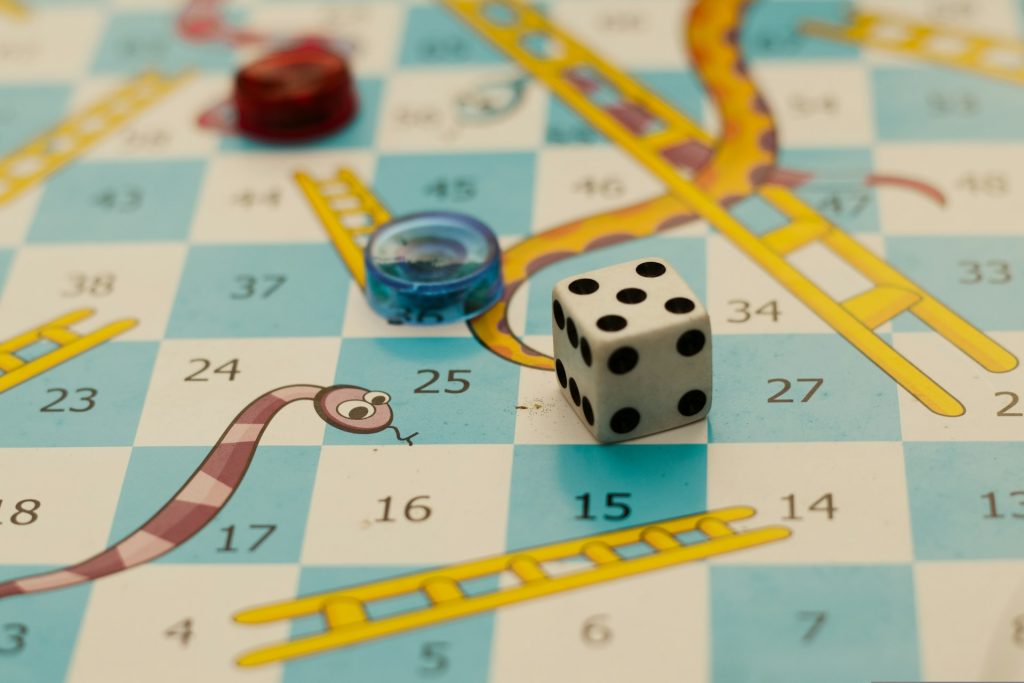
Its roots can be traced to India. Earlier versions were linked with ideas about morality and spiritual progress.
Ladders represented virtues and good behavior. Snakes could represent faults or bad choices.
Movement across the board therefore had a meaning beyond simply reaching the finish first.
The game eventually travelled to Britain and later became popular elsewhere under different names.
What remained was the simple structure of climbing ladders and sliding down snakes.
Pachisi Travelled From Indian Courts to Western Living Rooms
Pachisi is another Indian game whose descendants became much more familiar internationally than the original.
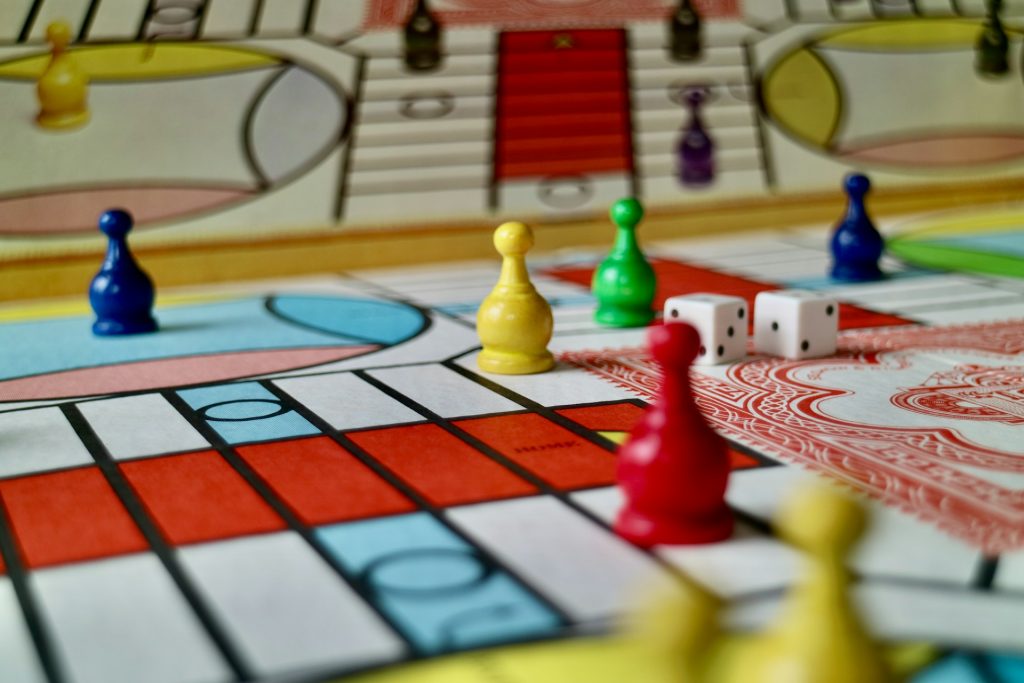
The game has been played in India for centuries and traditionally uses a cross-shaped board.
Players race pieces around the board. The movement is decided through dice-like objects such as cowrie shells.
Huge versions were even built into palace courtyards.
Simpler commercial descendants appeared elsewhere. This includes games such as Ludo and Parcheesi.
A game once associated with grand palace spaces eventually became something played around ordinary kitchen tables.
The strangest thing about game history is how often the original purpose gets left behind. That is probably why games survive so well. The rules can travel without the original setting and the online gaming world has changed everything.
Sometimes the version everybody knows is only the latest chapter of a much bigger story.