The plastic chair doesn’t quite balance on the uneven concrete floor, and you stop noticing this within about thirty seconds. It’s four in the afternoon in Ubud and the warung at the end of the back road has three tables, a handwritten menu chalked on the wall, and a woman standing over a wok that has been running since this morning.
The fan overhead moves the air without cooling it. Somewhere behind the kitchen wall a child is doing homework. You are the only foreigner here and the meal that arrives in twelve minutes will cost less than three dollars Australian and will be, with some confidence, the best thing you eat today. A warung is not a restaurant in the way Australians understand restaurants. You don’t arrive, eat, pay, and leave. You arrive, you order eventually, you wait without impatience, you stay.
Cards come out between meals at the tables around you. The 500 card game team noticed this same sit-and-stay rhythm the first time they travelled through Indonesia, which is partly what shaped the thinking behind their new edition, a game built for exactly this kind of afternoon where nobody has anywhere better to be. The food eventually arrives and it is not what you ordered at the hotel buffet last night.
So what is a Warung?
Warungs exist across all of Indonesia and are the primary way most Indonesians eat outside the home. In Bali they range from a few plastic tables under a tarp on a back road to slightly more established spots with ceiling fans and laminated photographs of the dishes. The food is almost always cooked fresh, often by one person, often the owner, often someone whose family has been cooking the same recipes in the same neighbourhood for a generation.
The economics of a warung are worth understanding. A full meal in regional Indonesia for under two Australian dollars is not unusual and not a poverty indicator. It reflects a food system where the family owns the space, the ingredients come from nearby, and the margins are built on community volume rather than tourist markup. The woman behind the wok is not undercutting herself. She is operating inside an economy that functions on different assumptions entirely, and the food is better for it.
The social function is inseparable from the food function. Other customers drift in and know the owner by name. The television in the corner runs a soap opera nobody is watching. You can sit for two hours over a single meal and nobody will make you feel unwelcome or hurried. That is not incidental to the warung experience. It is the experience.
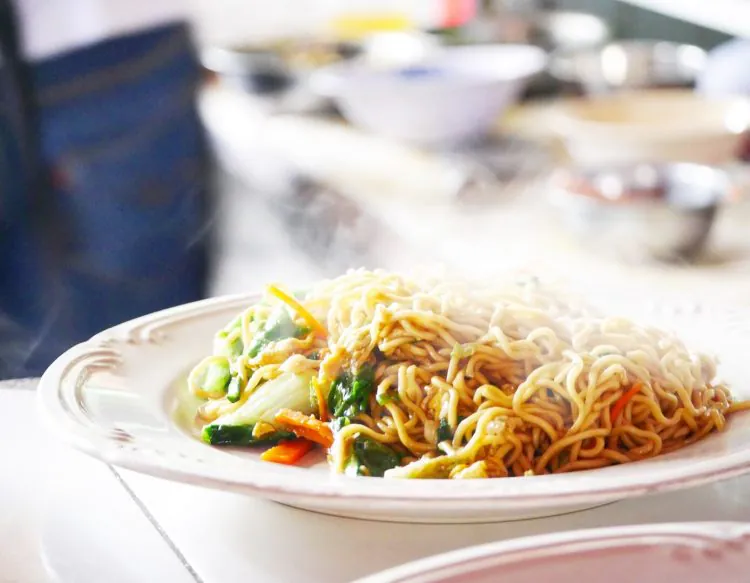
Bali Is Not Indonesia (Except When It Is)
Most Australians who have been to Bali have eaten Balinese food, or a tourist-softened version of it, and come home calling it Indonesian food. This is understandable and also meaningfully wrong.
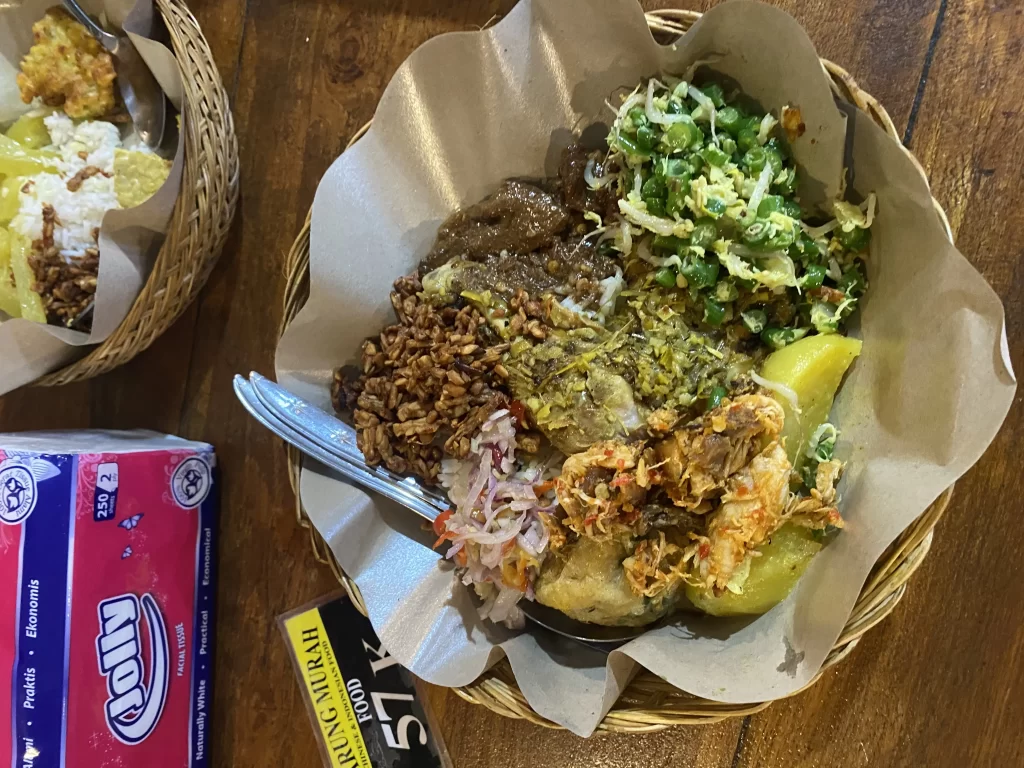
Balinese food is shaped by Hinduism, the dominant religion on the island, which makes it immediately distinct from the cuisine of majority-Muslim Indonesia. Pork is used freely and prominently. Babi guling, the spit-roasted suckling pig served with crispy skin and a spiced filling of turmeric, lemongrass, and galangal, is the most iconic Balinese dish and would be difficult to find in most of the rest of the country. Ceremonial cooking traditions bleed into everyday eating in ways that have no parallel elsewhere in the archipelago.
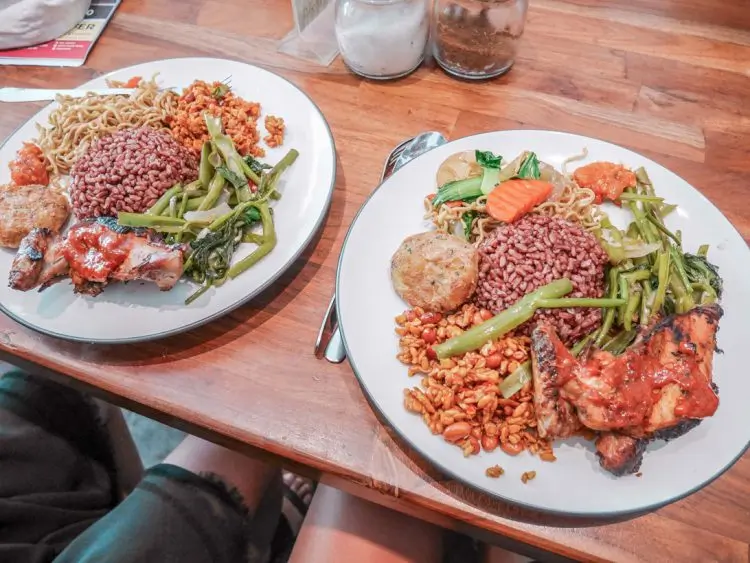
Indonesia is 17,000 islands and more than 300 distinct ethnic groups. The regional cuisines share almost nothing except rice and a general philosophy about chilli. Padang food from West Sumatra operates on the nasi padang model, where you sit down and the table fills immediately with small dishes, a parade of rendang, gulai, fried fish, sambal, and raw vegetables, and you pay only for what you actually eat. The dishes you don’t touch go back to the kitchen and re-emerge for the next customer. It is the most efficient and most generous restaurant system I have encountered anywhere.
Javanese food, particularly from Yogyakarta, runs sweeter than anywhere else in Indonesia due to heavy use of palm sugar. Gudeg, a stew of young jackfruit cooked for hours in coconut milk until it turns the colour of dark caramel, tastes like nothing else in the region and divides opinion sharply even among Indonesians. Then there is Manadonese food from North Sulawesi, one of the spiciest regional cuisines in the country, carrying traces of Portuguese colonial contact in its ingredients and techniques, using pork and fish in ways that feel genuinely unlike the rest of the archipelago.
What You’ve Actually Been Eating
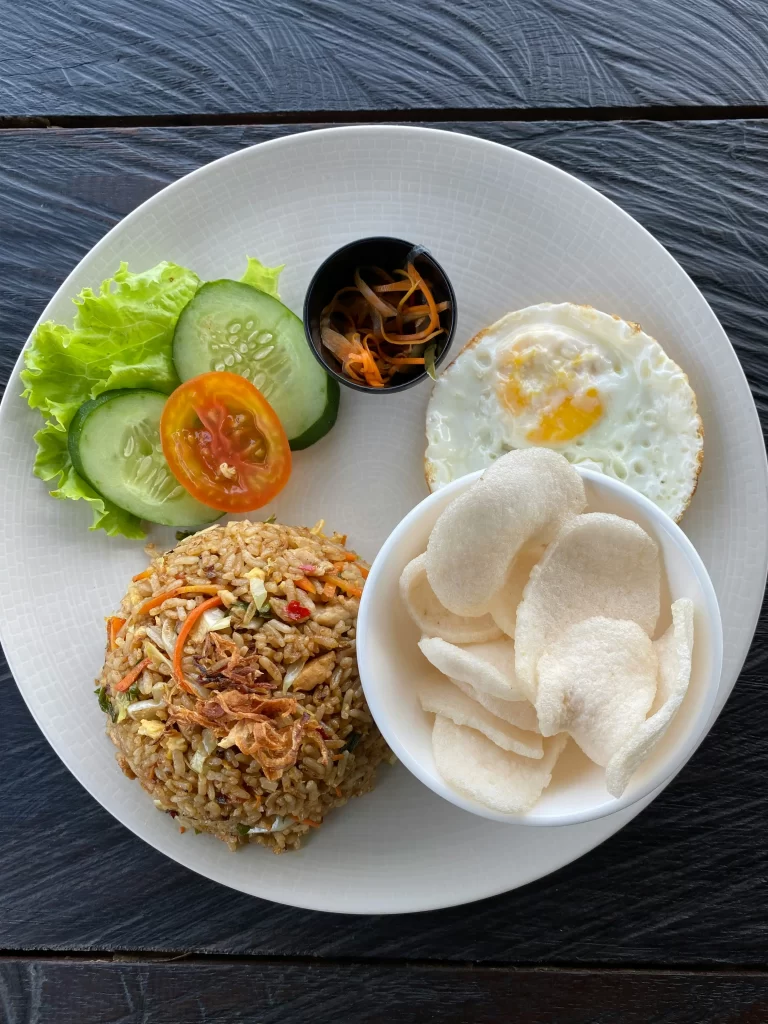
Nasi goreng is the dish every Australian knows and most have eaten a version of that bears some relationship to the real thing. The version on the hotel buffet is missing several things: the heat of a proper carbon-seasoned wok, kecap manis(the thick, sweet soy sauce that gives the dish its depth and its colour), and day-old rice, which fries properly because it has dried out overnight. Fresh rice turns to paste in the wok. The fried egg on top is not a garnish. It is structural.
Satay in the version Australians know sits closest to the Javanese tradition. Madurese satay uses a completely different sauce, thicker and made with petis (fermented shrimp paste) rather than peanuts, and eating it next to the Balinese version you grew up with is a mild version of culture shock.
Rendang deserves more than a passing mention. It originated in West Sumatra and at its proper stage of completion is a dry curry, cooked for three to five hours until every drop of liquid has evaporated and the coconut milk has caramelised around the beef in a dark, dense coating. What most Australians encounter in restaurants is a wet, sauce-heavy dish that is technically a kalio, the same preparation stopped at an earlier stage when there is still liquid remaining. Kalio is good. Rendang is something else. The difference is hours.
Tempeh arrived in Australian health food culture stripped of almost all its context. It originated in Java from fermented soybeans and in Indonesian cooking it is fried until the surface crisps and caramelises, marinated in kecap manis and chilli, or crumbled into sambal. The dense, uncooked slabs in Australian supermarkets are the same ingredient at a different stage of its life, which is a sentence that should tell you something about what gets lost in translation.
Why Indonesian Food Never Made It to the High Street
Australian food culture has absorbed Thai and Vietnamese cuisine at scale. Indonesian food, despite the fact that Australians have been travelling to Bali for fifty years, has not. The reason is partly the warung model itself. A warung works because the family owns the space and the margins are built on high volume at low prices inside a specific local economy. You cannot replicate that on a Sydney restaurant strip where rent makes a three-dollar meal a charity act rather than a business. Thai and Vietnamese food scaled in Australia because the price points could stretch to cover Australian overheads while remaining accessible. Indonesian food at its proper complexity and price point cannot, and the simplified versions that can afford Australian rents are not representative enough to build a food culture around.
The best Indonesian cooking in Australia is often not in restaurants at all. Community events, church hall fundraisers, and Indonesian student association food stalls are where the most direct versions appear, cooked by people who learned from their families and are not cooking for profit. In Sydney, the areas around Ultimo and Haymarket are worth knowing. In Melbourne, Box Hill has a quieter Indonesian presence worth tracking. You will not find it by searching for restaurant reviews. You find it by asking someone who already knows.

There is a specific moment at the end of a warung meal in Indonesia when the bill arrives and it is smaller than you expected, and you feel, briefly, that something has been corrected. Not a transaction. An exchange. The food was cooked by someone for someone, the price reflected what the food cost rather than what the real estate around it cost, and the afternoon stretched long enough that you genuinely did not want to be anywhere else. That is the thing the hotel buffet could not give you if it tried.