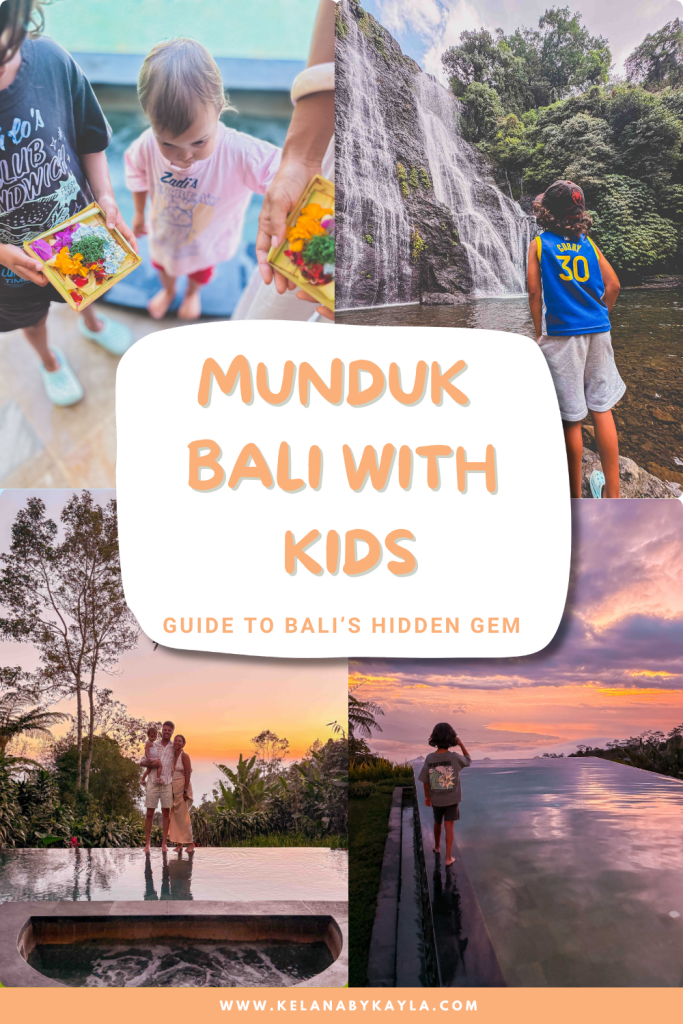
If you’ve spent any time researching your Bali itinerary, chances are your feed is full of the same handful of best areas in Bali – think Canggu cafes, Seminyak restaurants, cliffside Uluwatu beaches, or Ubud restaurants and rice paddy yoga studios. We love all of that too. But after over 30 trips to this island, and being half-Indonesian myself, the place that completely caught me off guard on our most recent family trip wasn’t a beach club or a cafe at all. It was a misty little mountain village in North Bali called Munduk.
We are stoked you’re googling Munduk and you’ve landed on our page, because we LOVE Munduk and we cannot wait to convince you to explore this hidden gem in Bali! We’re going to walk you through the best things to do in Munduk, from coffee plantation tours to waterfalls most visitors never find.
We’d visited Sidemen in the east the year before, where we stayed at the gorgeous Wapa di Ume Sidemen, so I genuinely didn’t think anywhere else could top that feeling of “untouched Bali.” Munduk did. This time, we were coming from Ubud, driving up via Kintamani on our way north. It’s cooler, greener, and so different from the rest of the island that you actually forget you’re in Bali at all.
Oh and before you ask, yes we did bring our kids with us! And it was the highlight of the trip. You go from palm trees and rice paddies down south to thick, woody forest, working farms, and clouds that roll right through your hotel room. If you’re after the best things to do in Bali that nobody else in your group chat has done yet, keep reading.
First time coming Bali?
📌 Want everything to plan your trip in one place?
I’ve turned 30+ trips into The Bali First-Timer Bundle — a complete planning guide with area breakdowns, a budget breakdown, packing list, eVisa guide, sample itineraries and so much more. Everything in this post (and a lot more) in one place, ready before you fly.
Where Is Munduk, Bali?
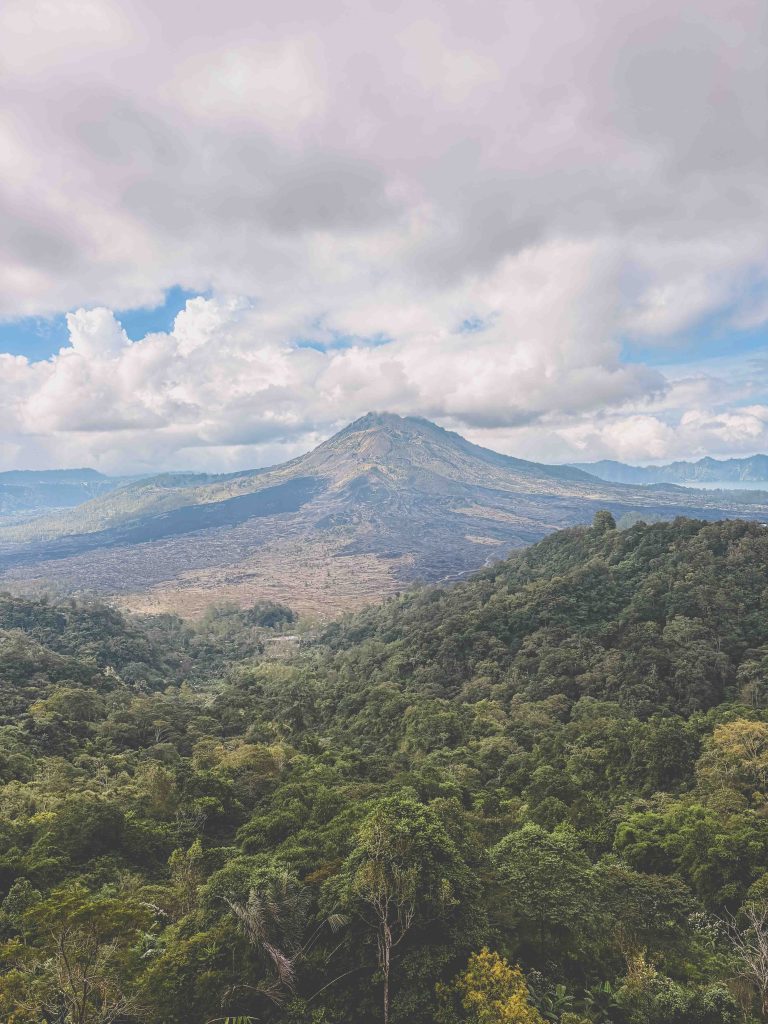
Munduk sits up in Bali’s central highlands, in the Buleleng regency of North Bali, surrounded by clove, cacao and coffee plantations, twin lakes, and an almost stupid number of waterfalls. It’s a totally different ecosystem to the south of the island. The vegetation up here is so, so different – it’s cool to see. You go from a lot of palm trees down in the south to thick, woody forest, more like you’ve landed somewhere in the highlands of Vietnam or Costa Rica than Bali. It’s a proper farming area too, with plantations everywhere you look, which made for one of the most interesting drives of our whole trip.
It’s also genuinely one of the best places in Indonesia to add if you’ve already done the south a few times and want to see a totally different side of the island, without leaving Bali at all.
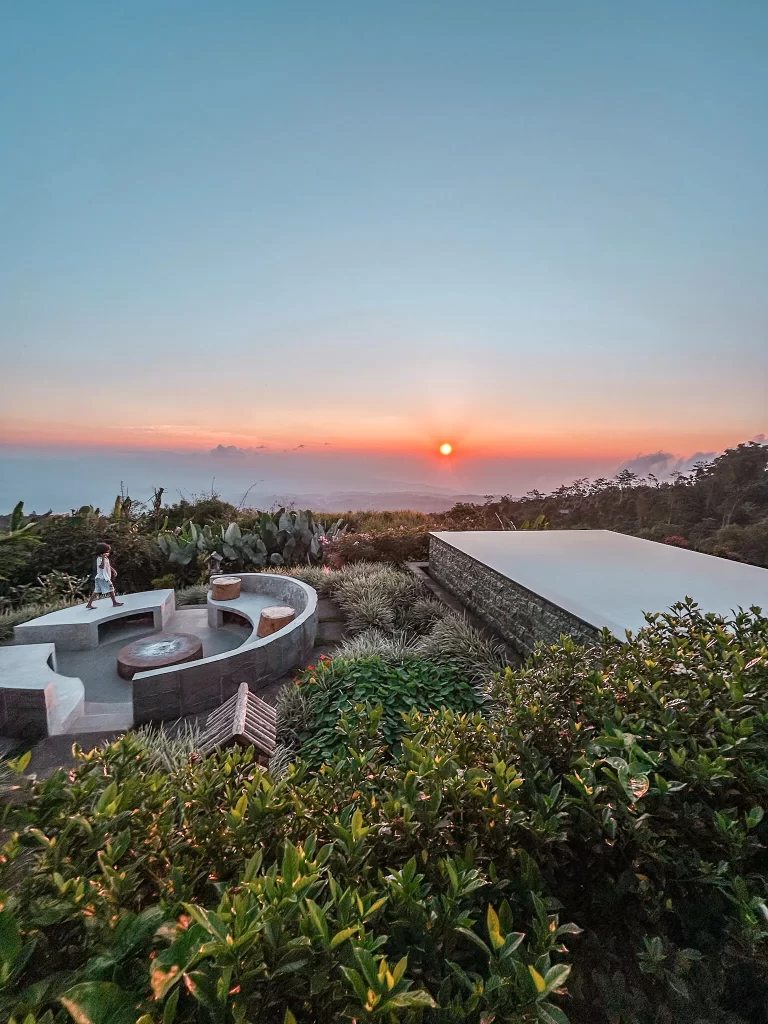
How to Get to Munduk Bali
Most people drive to Munduk as part of a longer loop rather than a straight there-and-back trip, and that’s exactly what we did. Our route was Ubud → Kintamani → Munduk → Jatiluwih, which I highly recommend if you’re building out your Ubud itinerary and want to keep heading north rather than backtrack.
- From Ubud: around 1.5–2 hours
- From Canggu/Seminyak: around 2–2.5 hours
- From Kintamani: around 1.5–2 hours
- From Ngurah Rai International Airport: around 2.5–3 hours
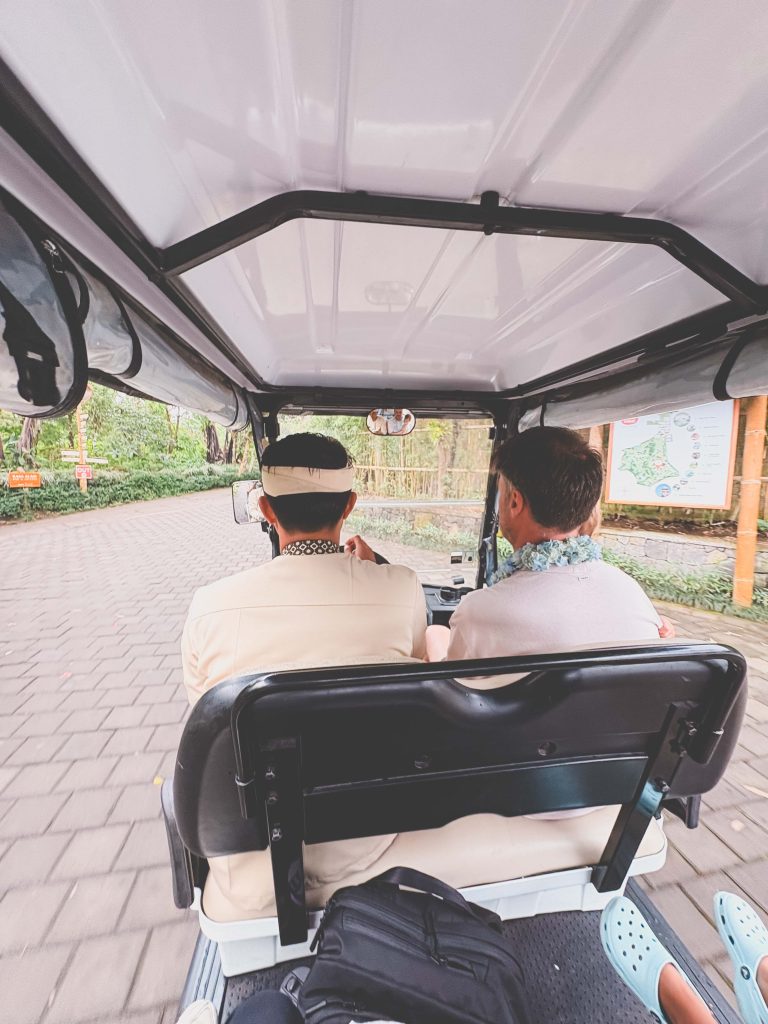
We had a private driver the whole way, which I’d recommend over self-driving here, especially if you’re travelling with kids or a baby. The roads get windy as you climb, and the views are the kind you want to actually look at, not just glance at between gear changes.
Tip: if you’re factoring Munduk into your bali trip cost, private drivers for these mountain day trips are usually one of your better value spends. Ours organised a local Munduk-based driver for our second day so we didn’t have to find someone ourselves once we arrived.
Getting Around in Munduk Bali
Munduk itself is a village, not a town, so don’t expect a Grab on every corner the way you would in Canggu or Seminyak. Munduk Moding Plantation will help you organise a driver; however, we got in contact with our driver, Wayan from Elvin Tours as he had mentioned that he has colleagues who work in Munduk.
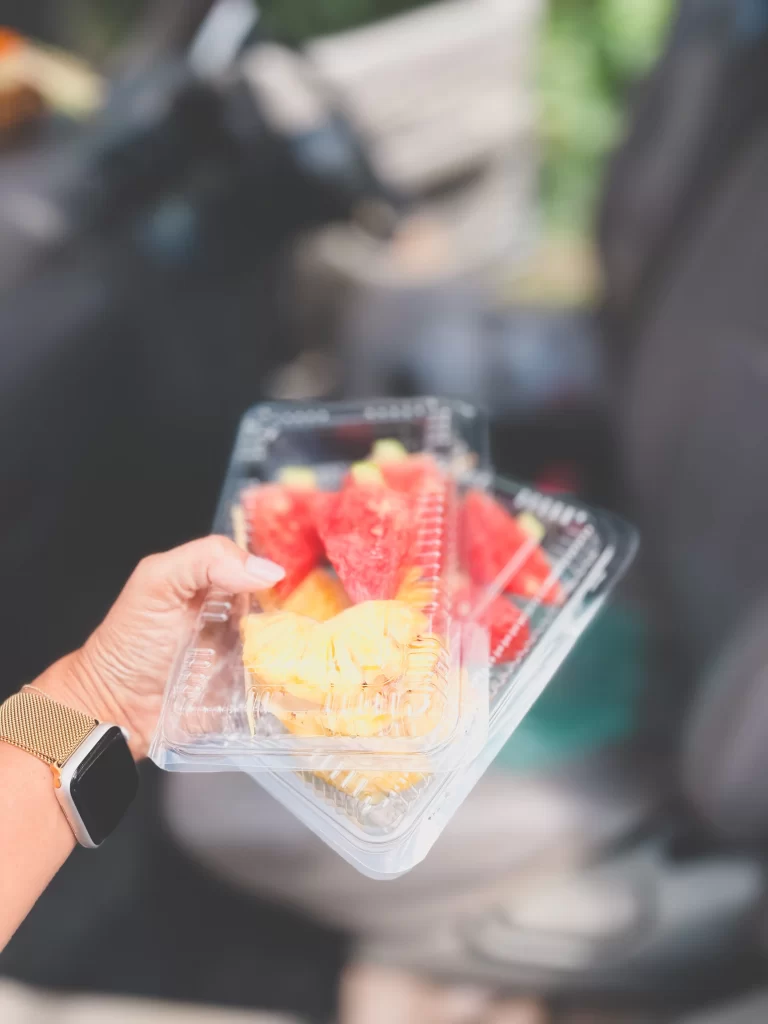
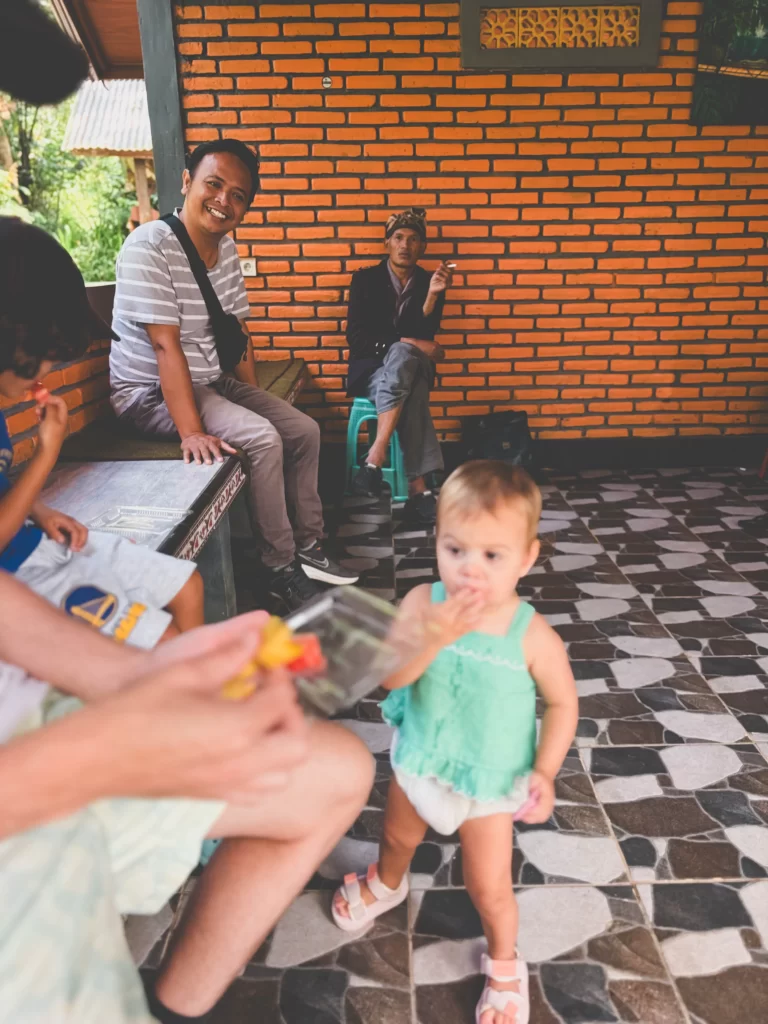
Through him we got in contact with Made, who took us on our day tours and was extremely knowledgeable! He even showed up with packaged watermelon and pineapple snacks that his wife had made for the kids, truly so sweet and thoughtful. I just love the Balinese people so much!
- Hiring a local driver for waterfall and temple day trips (ask your hotel, ours organised this seamlessly through WhatsApp)
- Scooter rental if you’re confident on the mountain roads
- Walking the grounds – a lot of the eco-resorts up here, like Munduk Moding Plantation, are built across working plantations, so you can genuinely spend a full day exploring on foot without leaving the property
Best Time to Visit Munduk Bali
The dry season, April to October, gives you the clearest mountain views and the best chance of seeing Mount Agung and the lakes below without cloud cover. We visited in the wet season transition and had a real mix – our first afternoon was completely clouded in, and by our last morning it was the clearest it had been all trip, to the point where we could see all the way to the mountains of Java, Mount Bromo and Mount Ijen, in the distance. I genuinely thought we were looking at Balinese peaks until our butler told us otherwise.
Just know that up here, the weather changes fast. It can be glorious sunshine at breakfast and sitting in a cloud by dinner. Pack a light jacket regardless of when you go, because even in the “warm” months, Munduk is noticeably colder than anywhere else on the island.
How Many Days in Munduk Bali
We’d suggest 3 nights in Munduk if you can swing it. We spent our first afternoon and evening settling in and getting our bearings, our second full day exploring the resort’s activities and a few nearby sights, and our third day doing a proper loop of waterfalls, temples and viewpoints before heading onward. Honestly, we could have stayed longer. By checkout we were sitting around reception just trying to delay leaving, which says a lot.
If you’re stitching this into a longer trip, Munduk pairs beautifully with Sidemen and Ubud as your “slow Bali” stops, sandwiched between busier stretches in the south like Canggu, Seminyak or Uluwatu.
Our Bali itinerary this trip for 3 weeks went like this Sanur –> Uluwatu –> Ubud –> Kintamani –> Munduk –> Seminyak.
Where to Stay in Munduk Bali
1. Munduk Moding Plantation
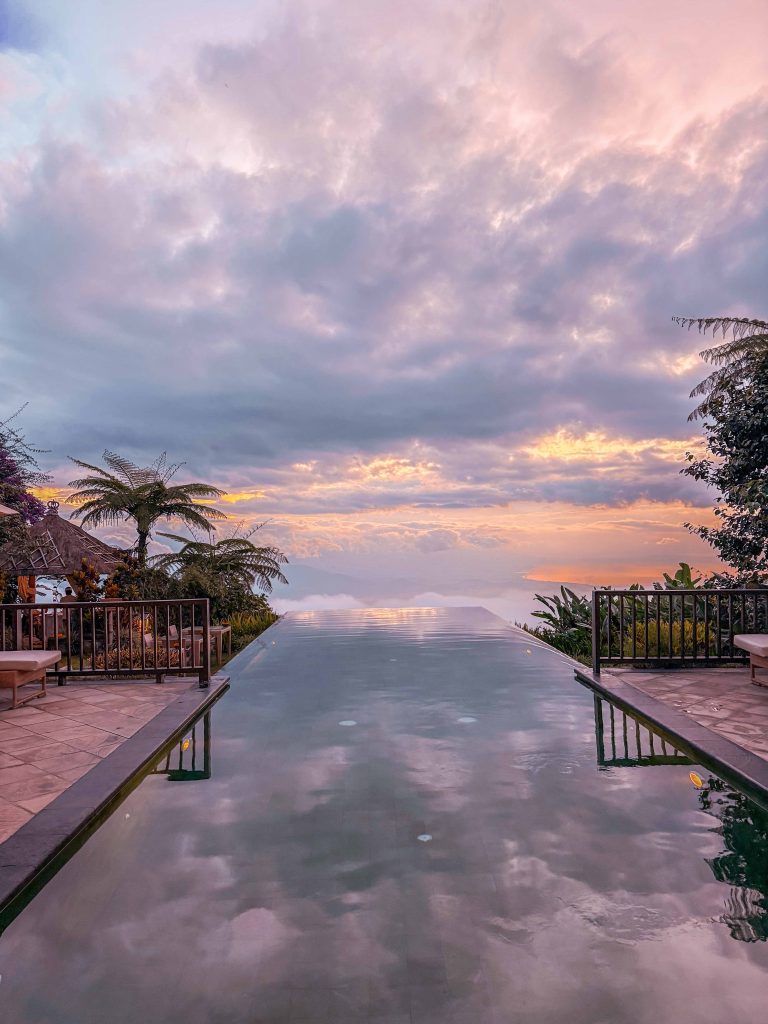
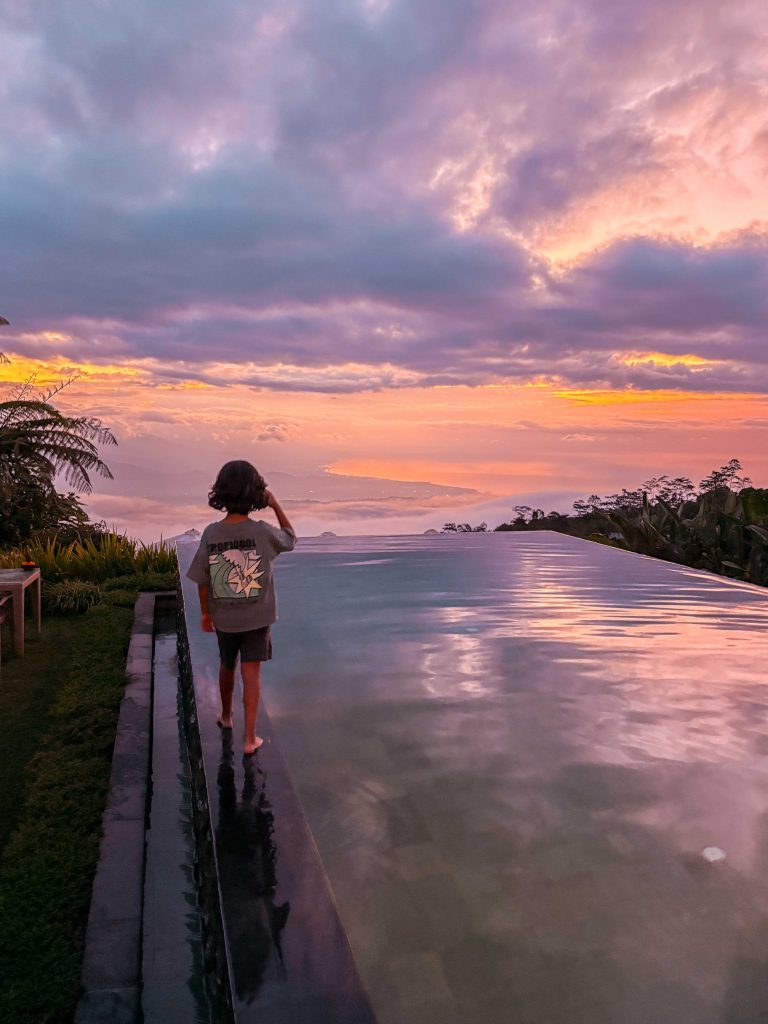
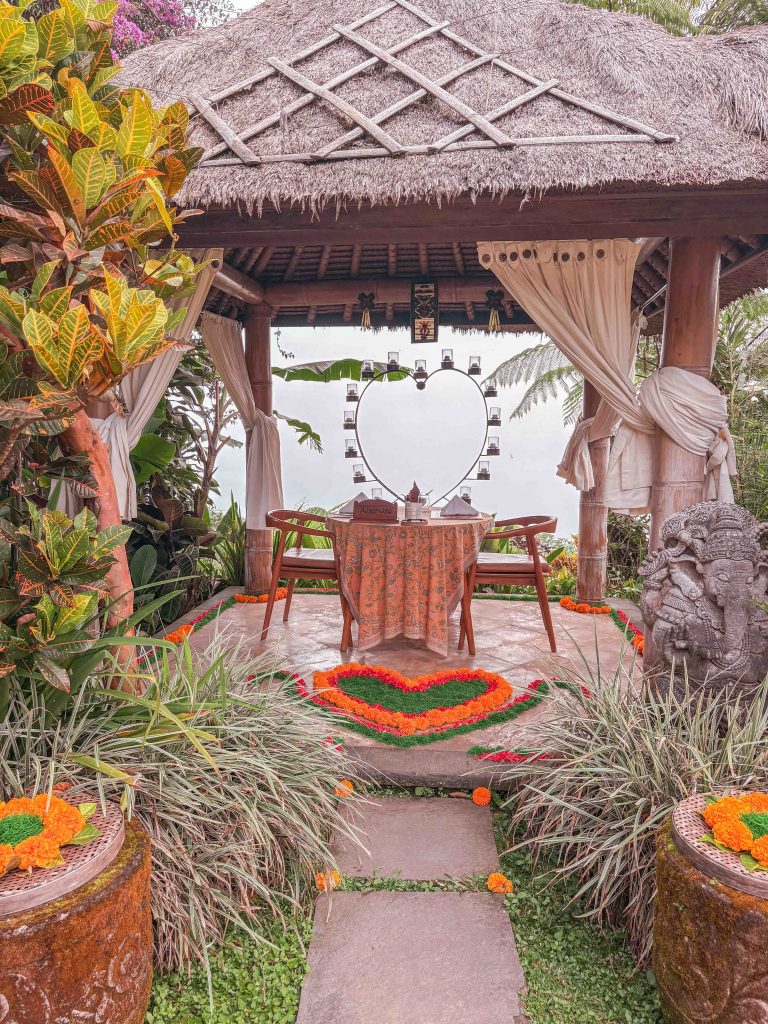
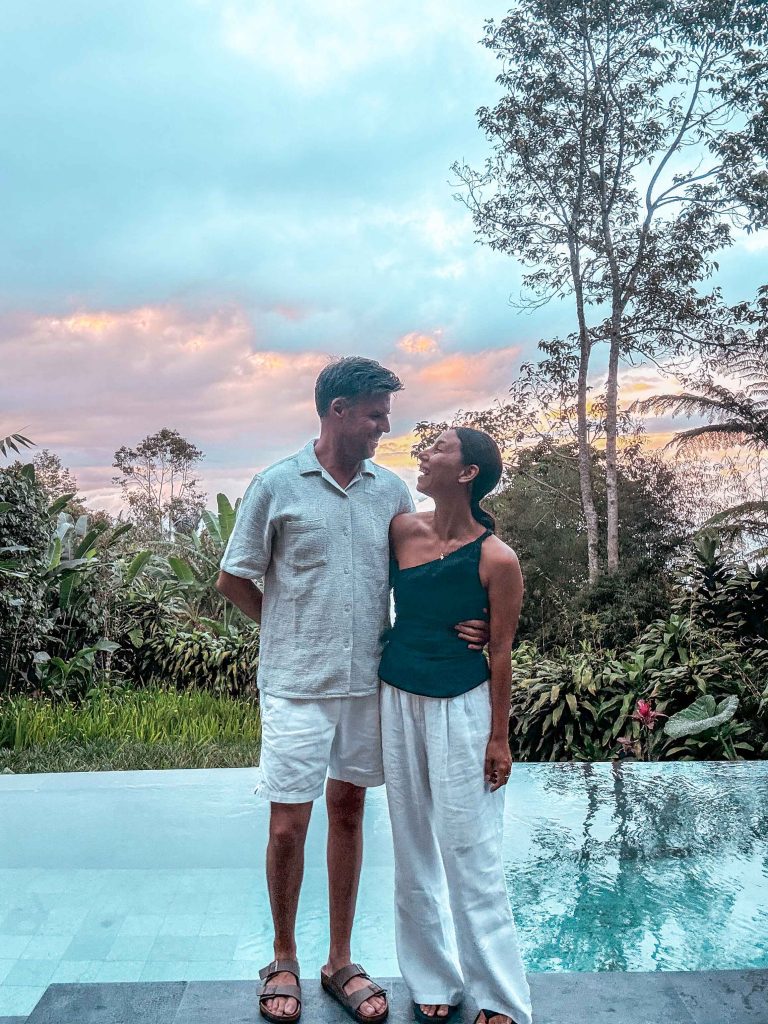
This is, without exaggeration, one of the best places I’ve ever stayed, anywhere. We’ve had great service all over Bali – there’s something about the Balinese people, they deliver everything with a smile – but Munduk Moding Plantation felt different. It felt considered.
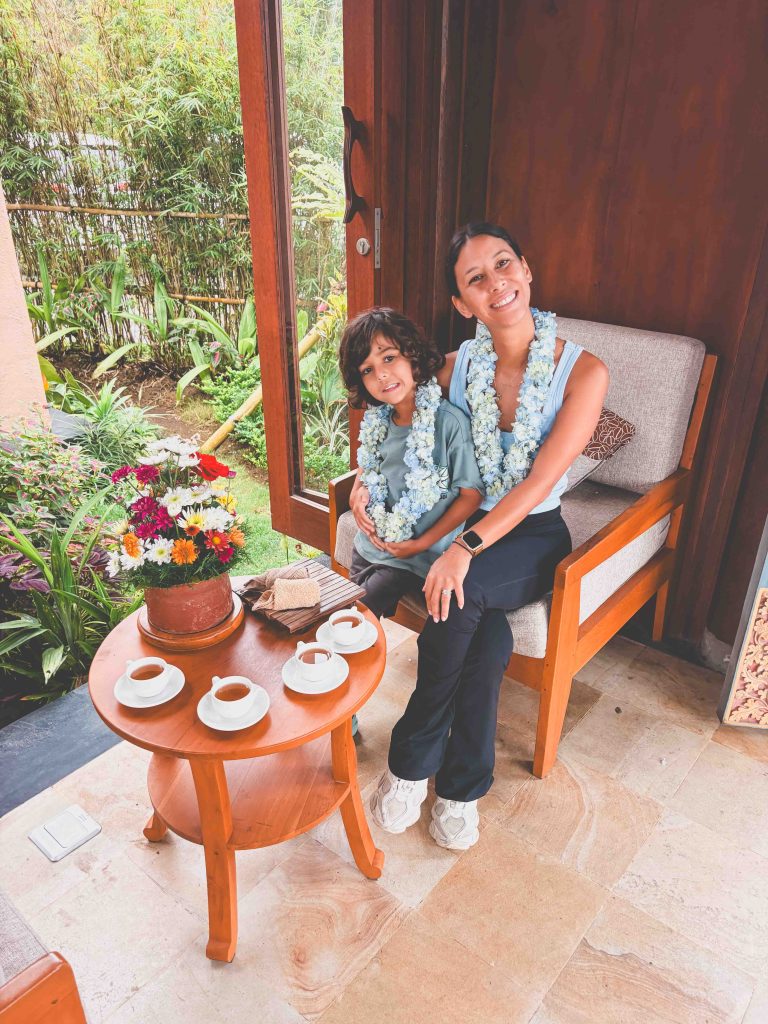
On arrival we were given hydrangea floral necklaces (hydrangeas are my favourite flower, so that one got me immediately), and instead of the usual cold welcome drink you get further south – think hibiscus tea or watermelon juice in Seminyak or Canggu – we were handed hot ginger tea and warm towels instead of cold ones, because it’s genuinely chilly up there. We arrived around 3pm and could already feel it.
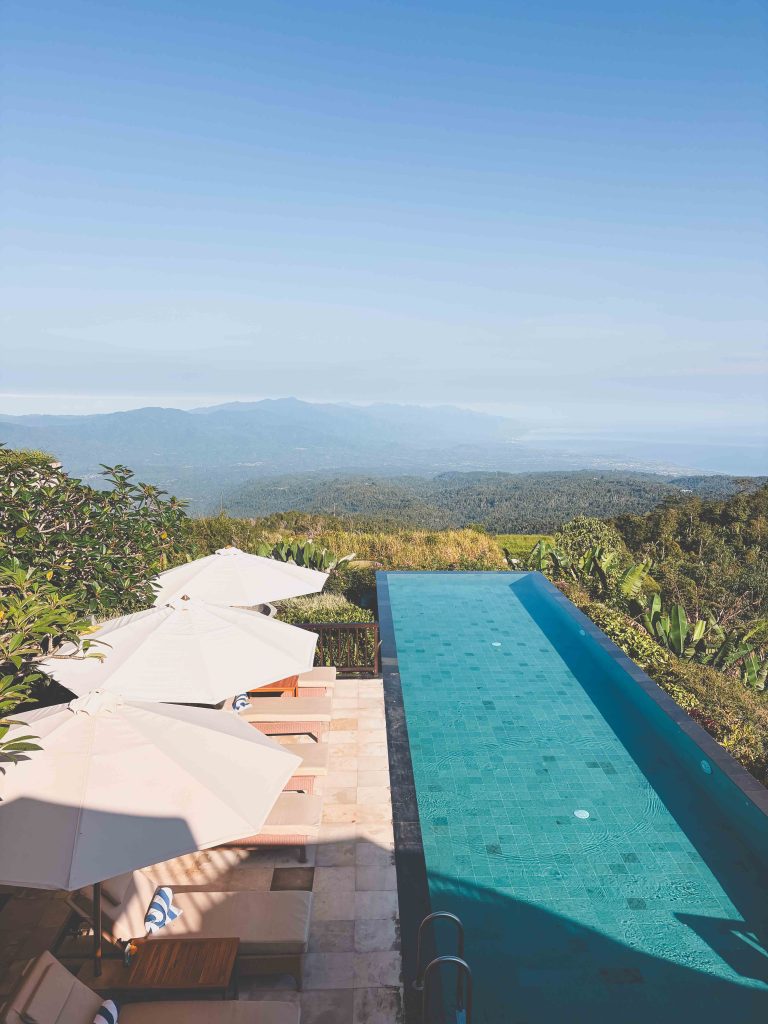
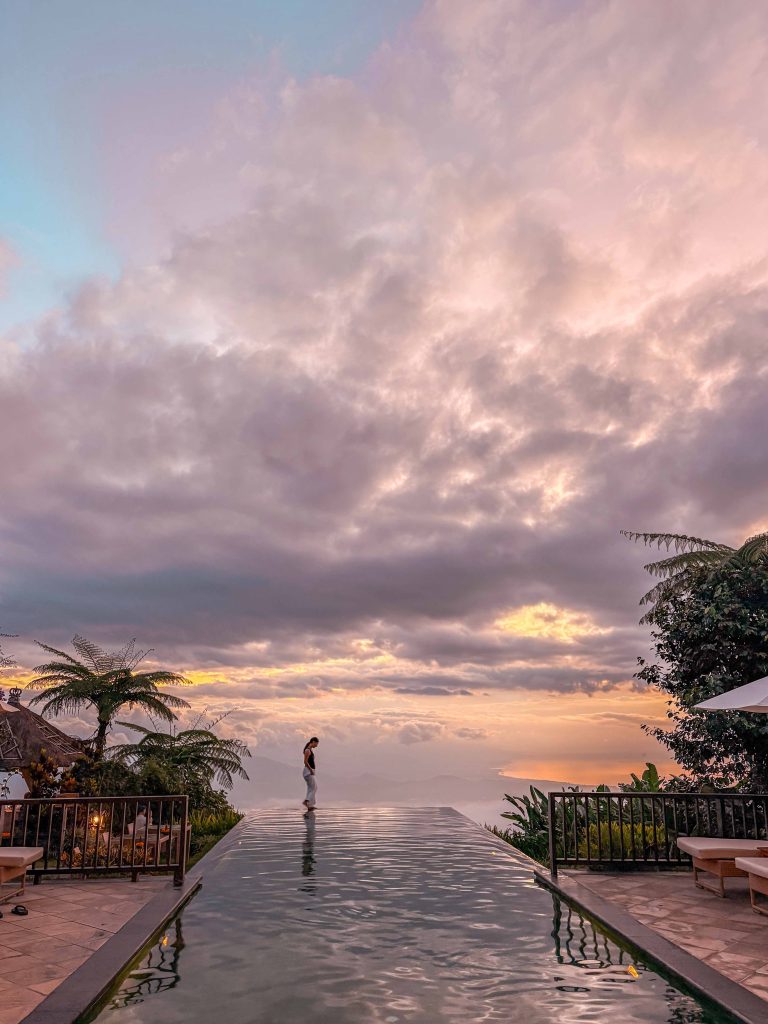
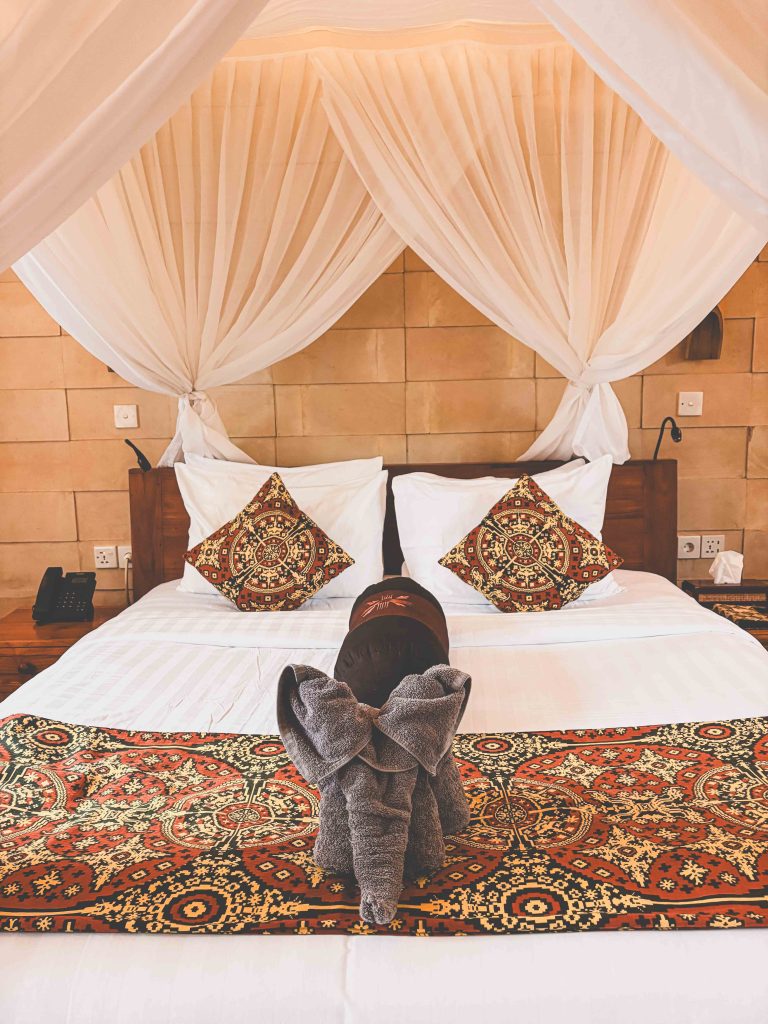
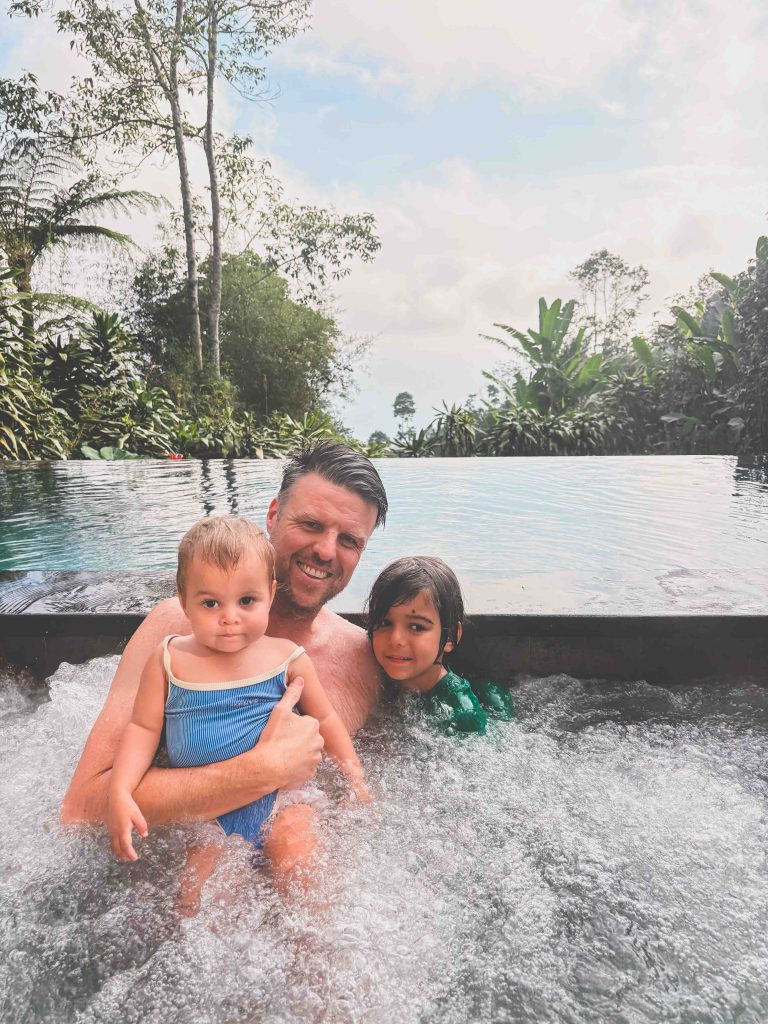
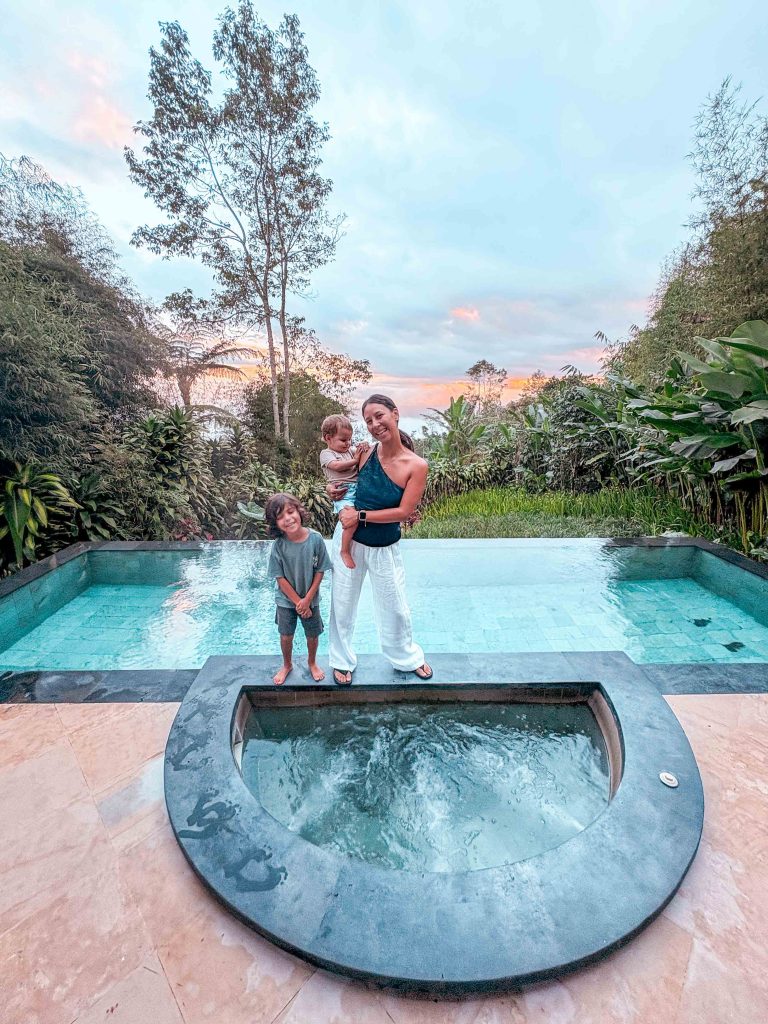
We stayed in the Passionfruit Villa, which had a private pool and jacuzzi, surrounded by greenery with lake and mountain views in the distance once the clouds cleared. Our butler Mahendra (Yes butler) had a daybed made up for our son Kylo within minutes of arriving, organised a fridge for us (rooms don’t come with one as standard, it’s all part of their sustainability ethos – no aircon either, because you simply don’t need it up here), and two weeks before we’d even arrived, the resort had emailed asking our pillow firmness preference and which scent we’d like our toiletries to be. That kind of pre-arrival personalisation is rare, even at high-end resorts further south.
The resort has two on-site restaurants – Mimpi, their main Western-leaning restaurant, and Warung Bongkot, dedicated to Balinese dishes – plus a separate Bamboo Clubhouse for their coffee tours and tastings. If you’re travelling with a baby, note that there’s no microwave in-room (we boiled the kettle and warmed bottles in hot water instead), but the staff are incredible with kids and babies, which made travelling to Bali with a baby so much easier than I expected.
It’s also genuinely one of the most ethical coffee plantations in Bali – more on that below – which matters if you care about how your luwak coffee is actually produced.
2. Puri Sunny Guesthouse
If you want a much more budget-friendly base without sacrificing the views, Puri Sunny Guesthouse sits right in the centre of Munduk village. It’s a family-run guesthouse with simple, traditional Balinese-style rooms, most with a private balcony looking straight out over the valley and rice fields, and an on-site pool and restaurant.
The rooms won’t compete with Munduk Moding Plantation on luxury, but the location is genuinely hard to beat, with waterfall and rice terrace walks starting practically from the front door, and the staff get rave reviews for going out of their way to help guests. It’s a great pick if you’d rather put your budget toward activities and meals than the room itself.
3. Elevate Bali
For something between the two, Elevate Bali is a more contemporary, design-led resort perched up on the ridge with sweeping views across the valley and out toward the coast on a clear day. Think infinity pools, floor-to-ceiling glass and a more polished, couples-leaning feel, paired with the same misty mountain backdrop that makes Munduk so special. It’s a popular choice for honeymooners and couples wanting a quieter, more romantic stay than the family-friendly buzz of Munduk Moding.
4. Munduk Heaven Luxury Villas
If you want something a little different again, Munduk Heaven Luxury Villas is known for its floating villas built on stilts above the jungle canopy, plus a rooftop infinity pool that looks out over the forest and valley below.
It leans more into adults-only and romantic as opposed to Munduk Moding Plantation which is perfect for both couples or families. It still has private jacuzzis on some of the villa terraces and a restaurant that makes the most of the elevated outlook.
Best Things To Do In Munduk
1. Coffee Plantation Tour at Munduk Moding
On our first full morning, after breakfast (a la carte, included, and genuinely excellent – granola, omelettes, avocado toast, good coffee), we did the complimentary coffee plantation walking tour around the grounds. Our guide took us through the property explaining how they grow and harvest the coffee, and the next steps into turning it into a finished product.
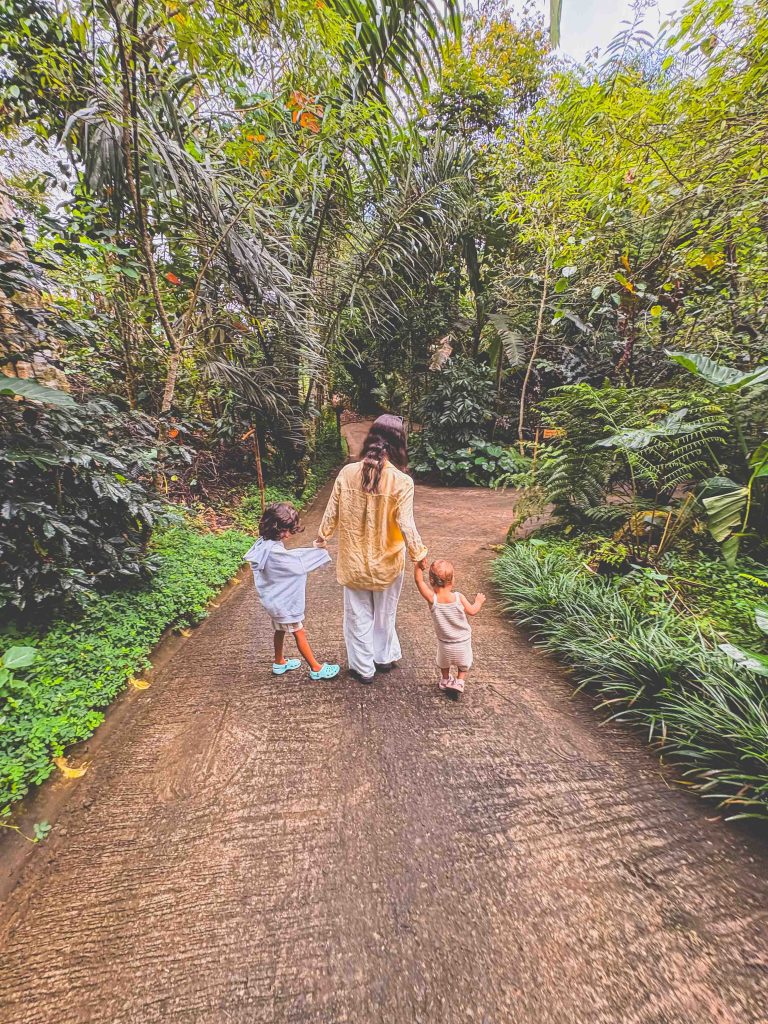
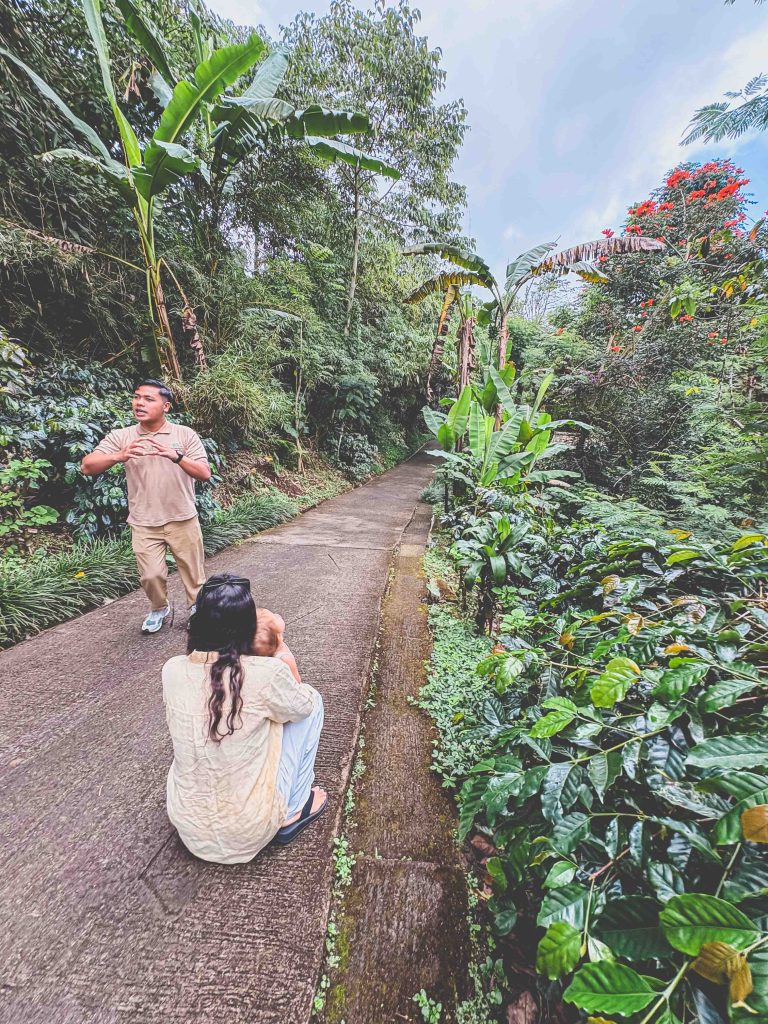
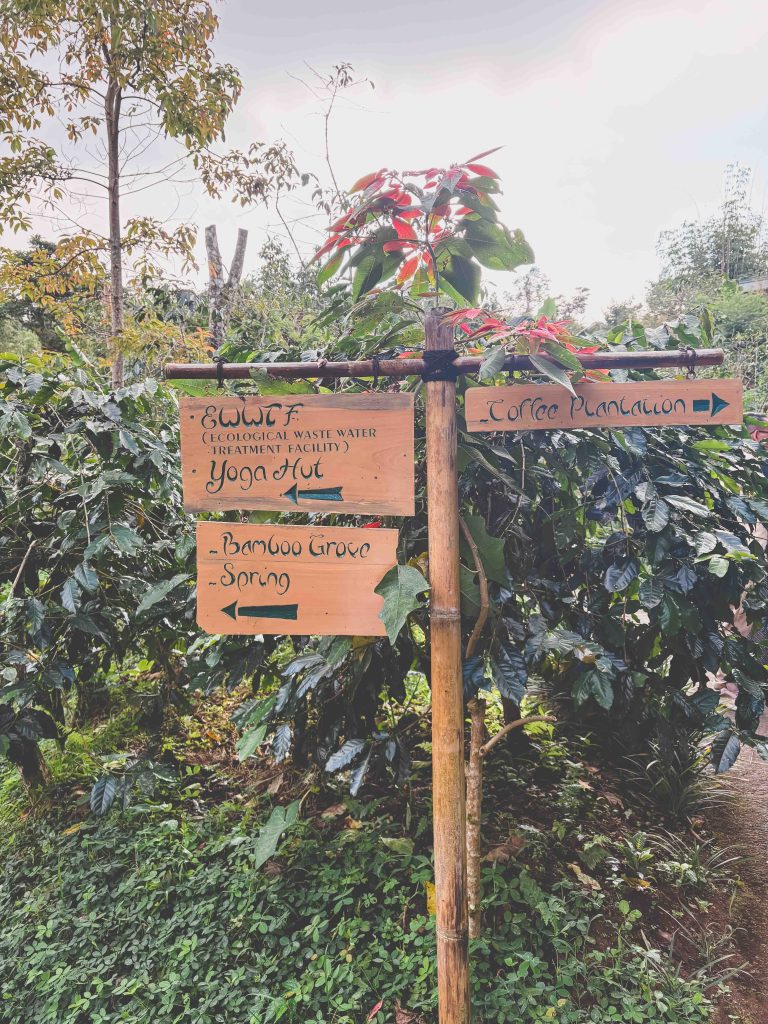
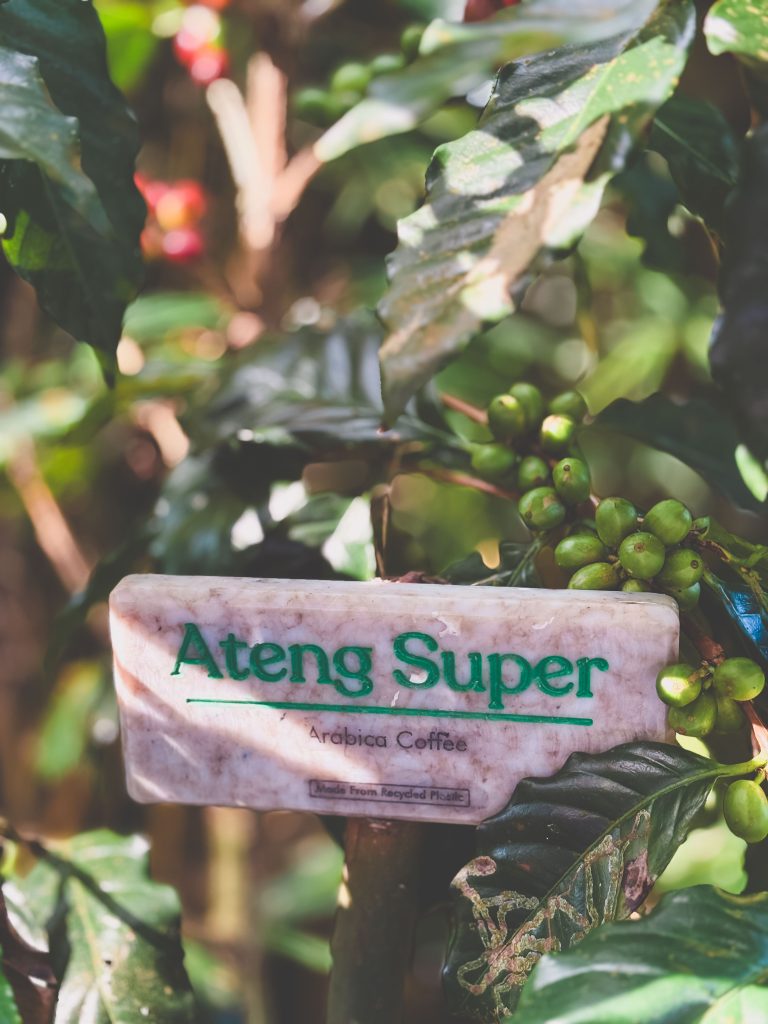

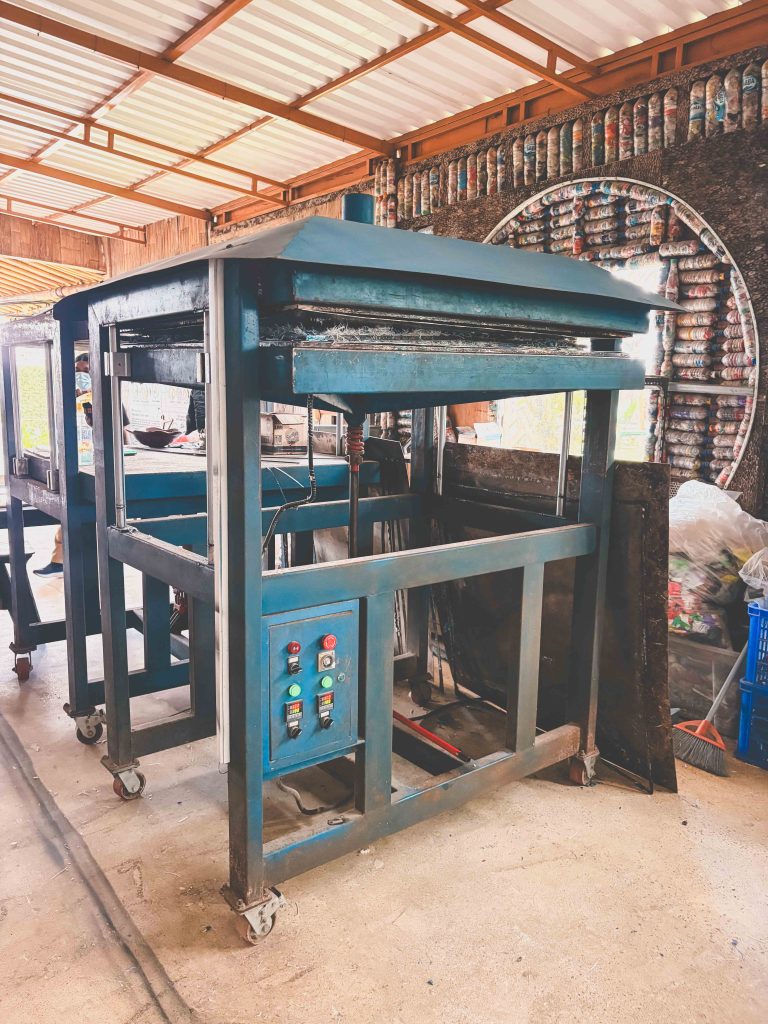
It was nothing like I expected. I’d pictured coffee growing in neat rows like a vineyard, but it’s actually grown amongst a huge mix of other plants and trees – we saw cinnamon trees, pineapples, swings for the kids to play on between stops, and even a small on-site recycling operation where plastic waste gets melted down and turned into furniture, signs and homewares you’ll spot all over the property, right down to your hotel room. There’s also a small animal area with horses, a donkey, goats and rabbits, which the kids loved.
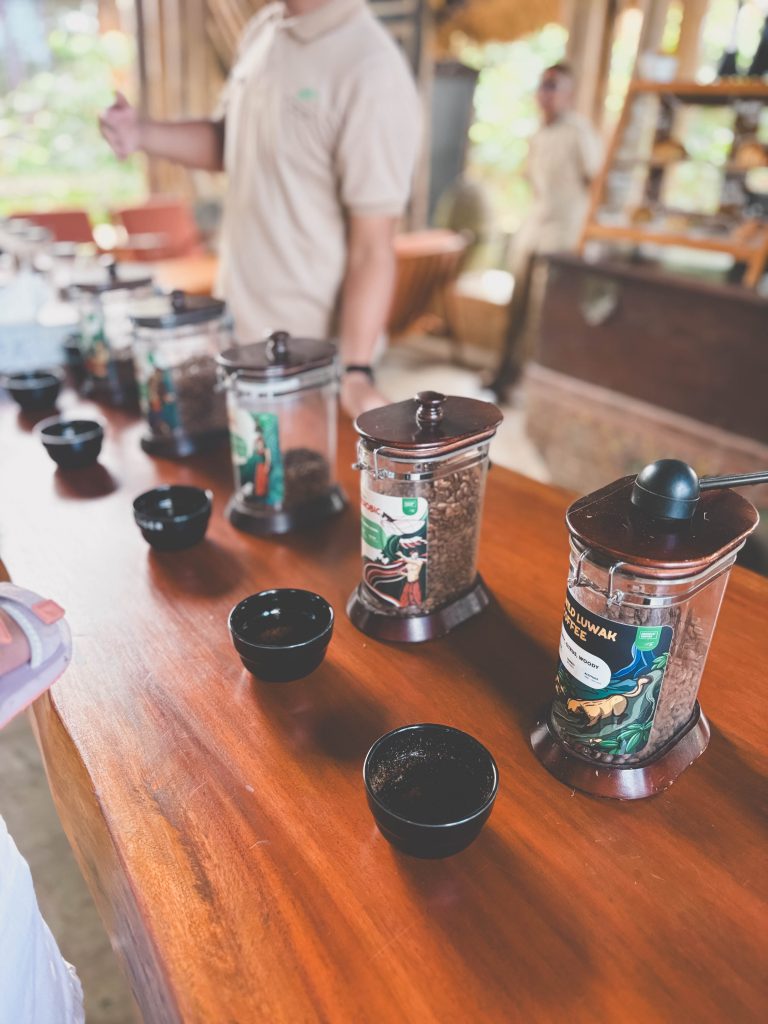
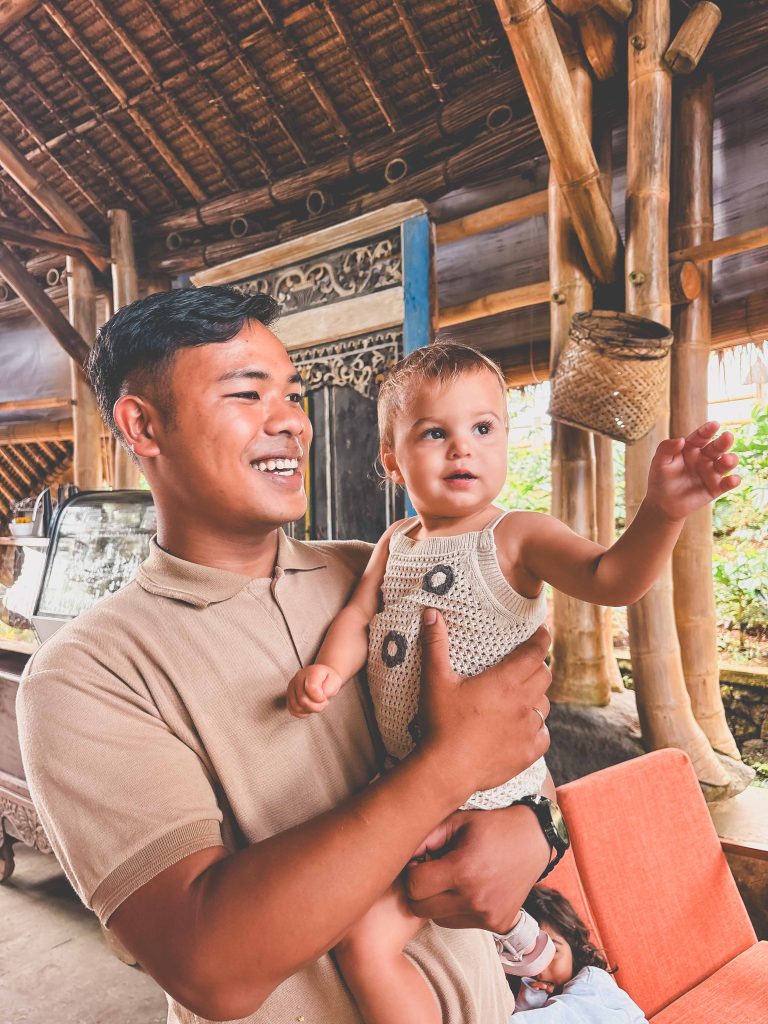
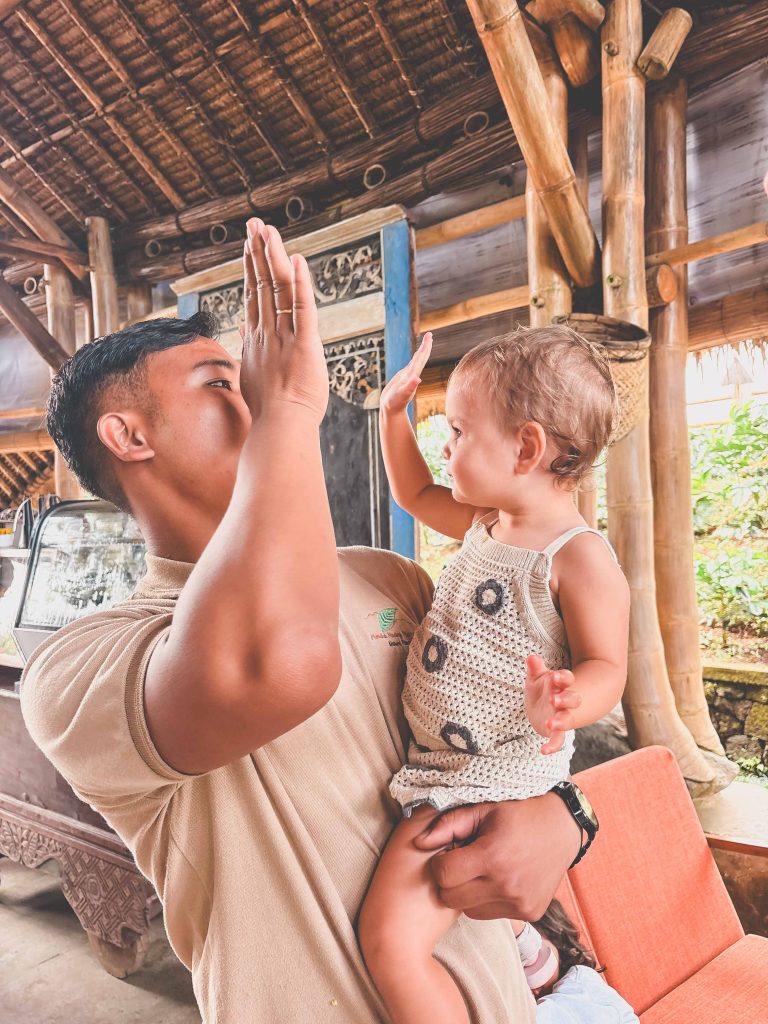
The tour ends at the Bamboo Clubhouse for a guided coffee tasting – around ten different coffees including the Luwak, wash blend and honey blend. Fair warning, most are served black, so if you’re not used to it, expect bitter. The kids were over it by this point, but the staff were brilliant – one waitress appeared with cookies for them, and our guide took our daughter Zadi off for a walk so we could finish tasting in peace.
2. Horse Riding and Kite Making
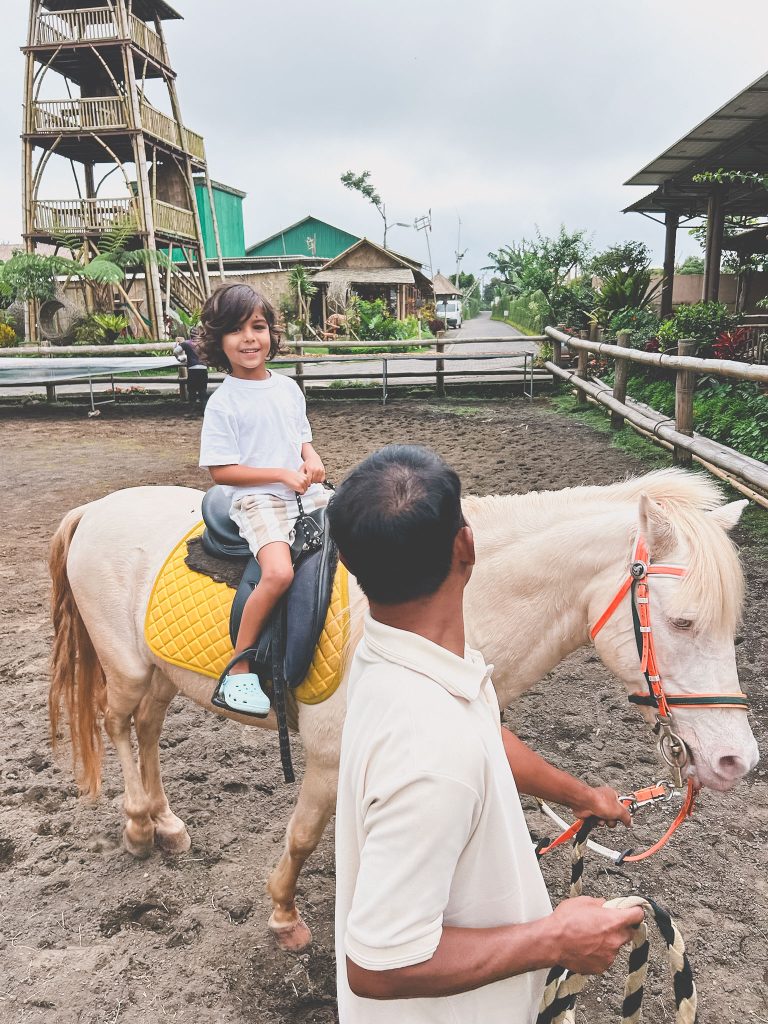
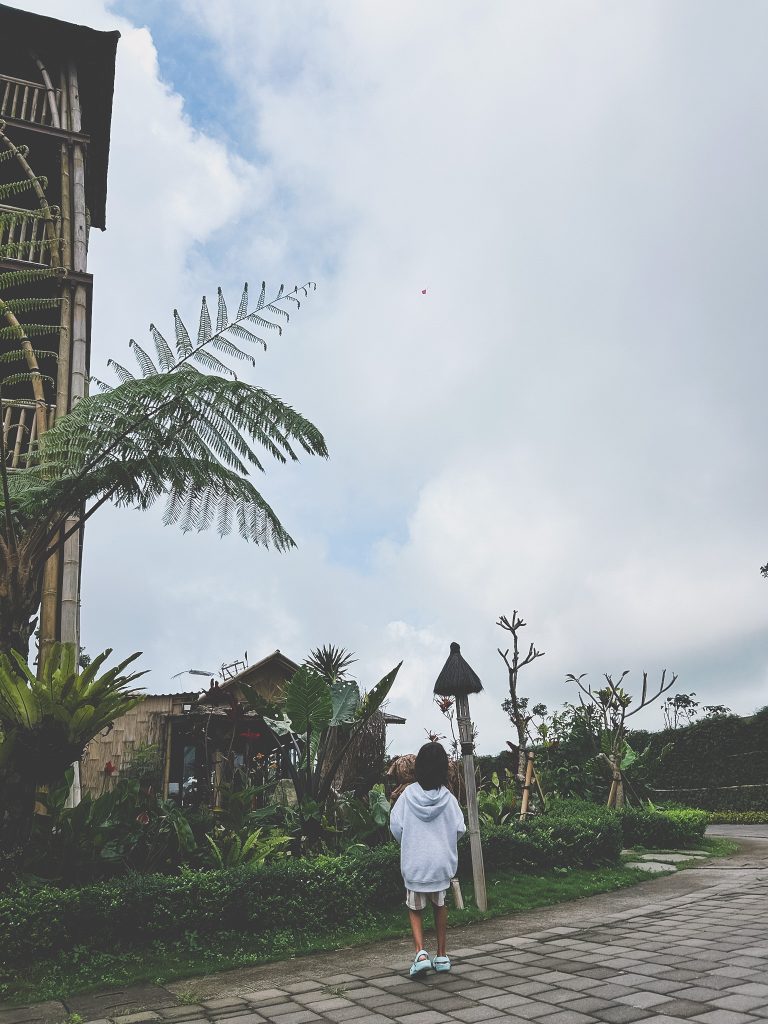
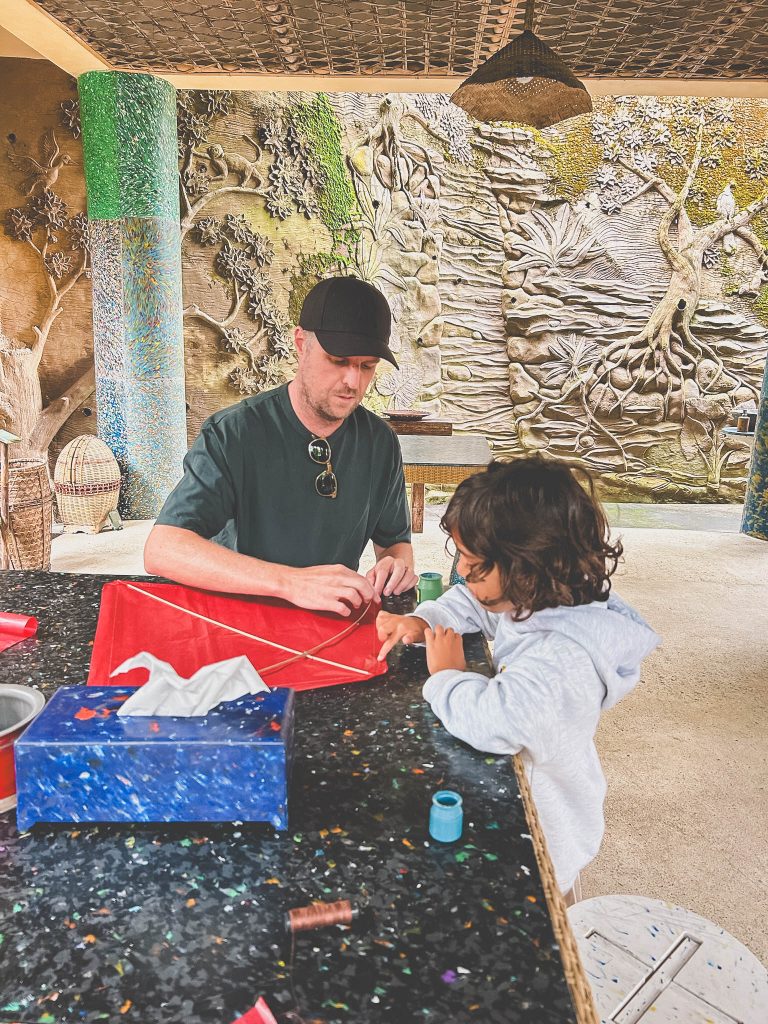
Munduk Moding offers both paid and free daily activities, all booked through WhatsApp once you arrive, which makes it incredibly easy to build your own little itinerary. Our son did a horse riding lesson at the on-site stables, which he absolutely loved, and he and my husband also did a kite-making workshop together. We tried flying it that evening and it crashed almost immediately and tore a hole in itself, but it was honestly one of the most fun fails of the trip.
3. Canang Sari Making Workshop
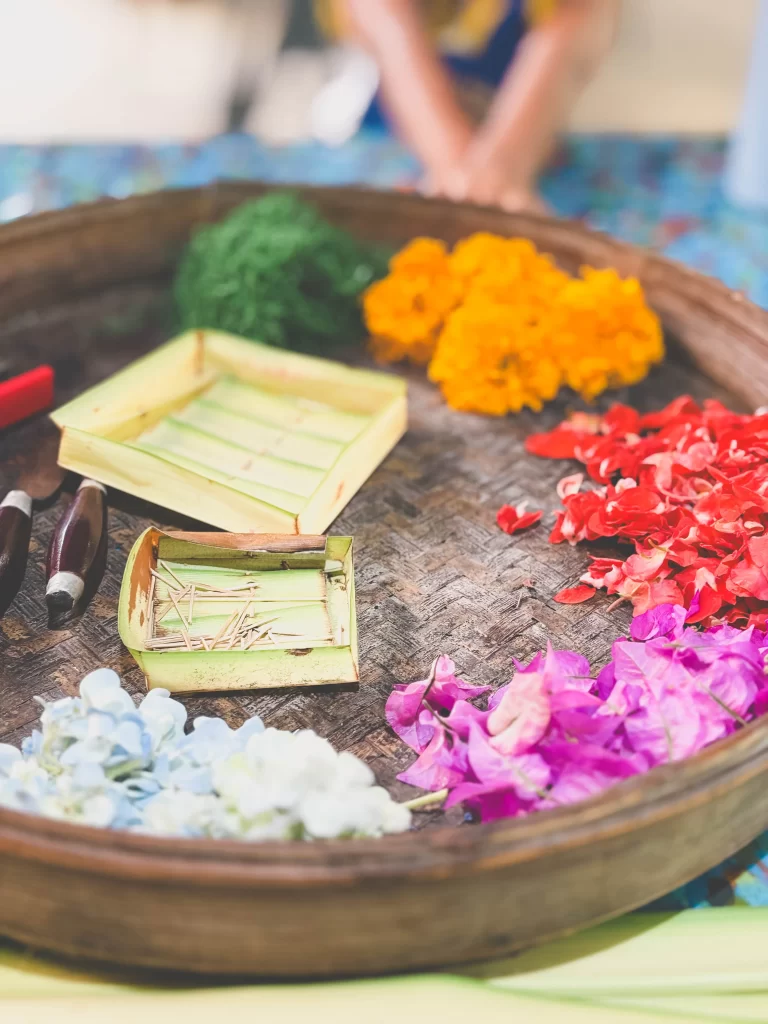
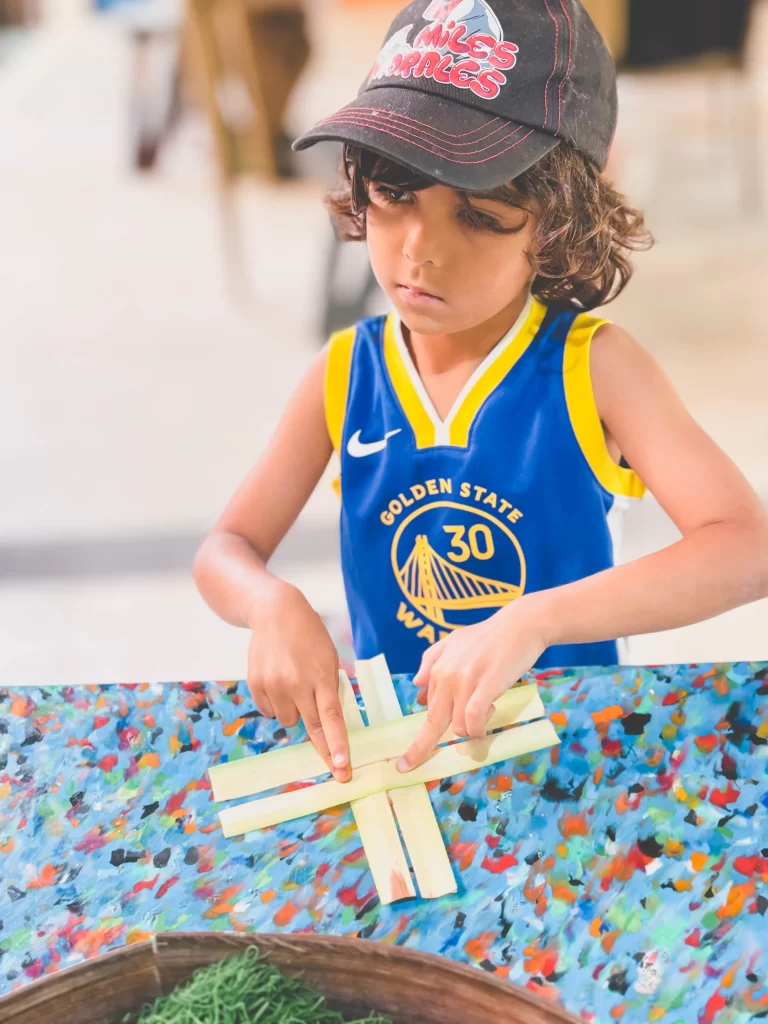
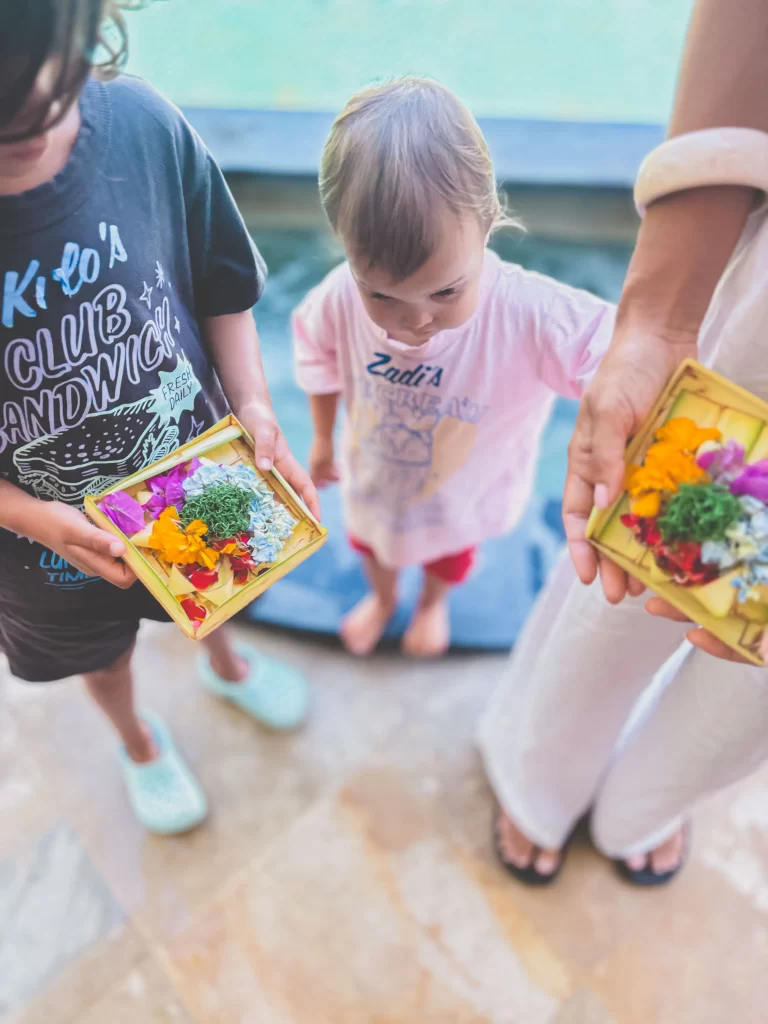
This was one of my favourite things we did anywhere in Bali. A canang sari is the small daily offering you see on footpaths and altars all over the island, and our instructor, Bella, was so patient teaching my son how to make one. I learned that each colour represents a direction – orange, red, purple and blue for east, south, west and north – which is the kind of small cultural detail that makes you appreciate what you’re stepping over on the street every day in Bali. We were genuinely proud of our finished pieces.
4. Floating Breakfasts, Spas, Tennis Courts and a Bamboo Gym
Beyond the headline activities, the grounds at Munduk Moding kept surprising us. There’s a paddle court, a proper tennis court, vegetable gardens, and a gym with a bamboo roof and jungle views that might be the nicest hotel gym I’ve ever stepped into. There’s also a spa built into the hillside with panoramic valley views, where I had a Balinese massage, and afternoon tea delivered to our villa most days – think hot chocolate, mochi, and sticky rice wrapped in banana leaf.
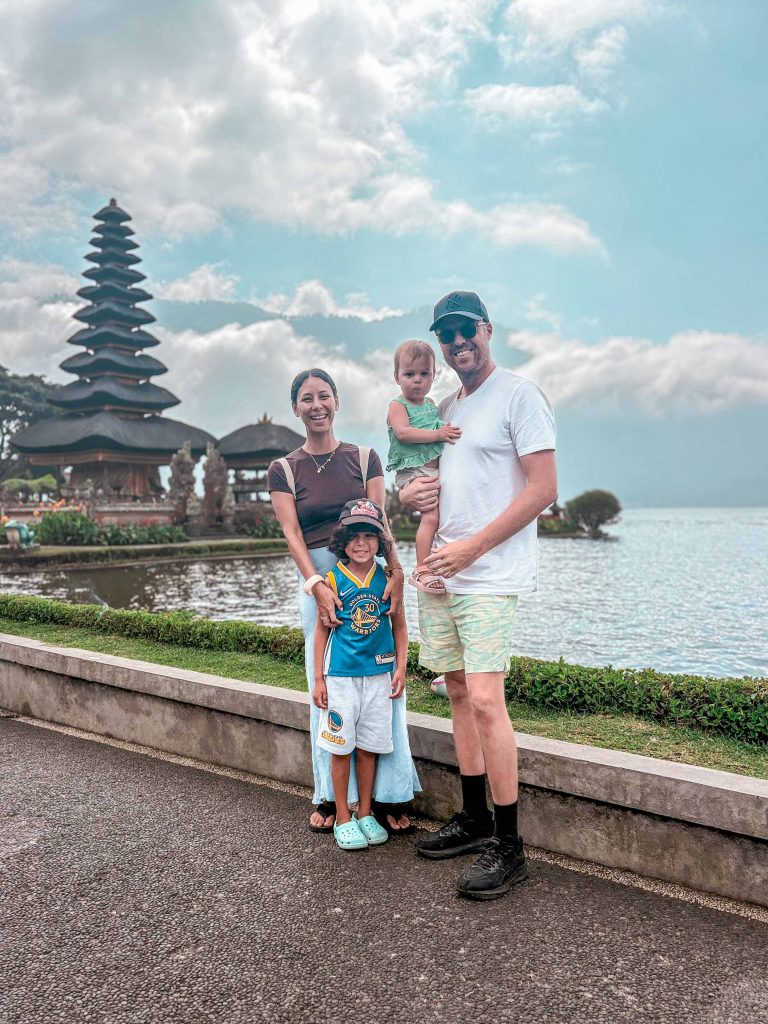
5. Ulun Danu Beratan Temple
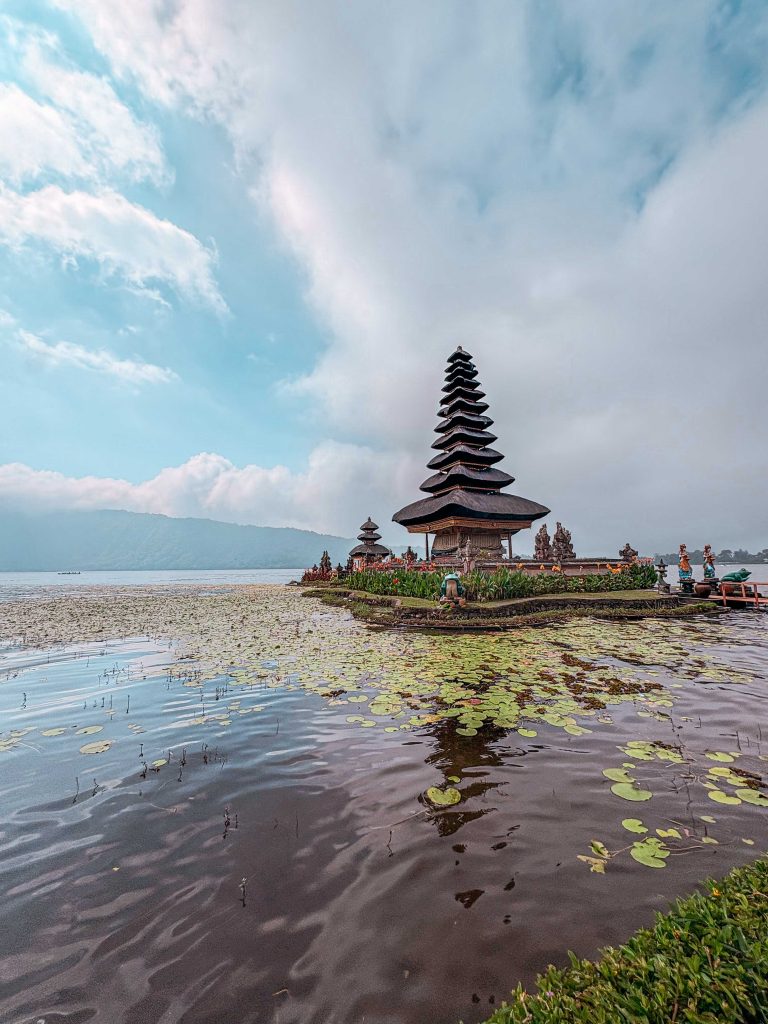
About 30–45 minutes from Munduk village, this is one of the most photographed temples in Bali (it’s the one on the 50,000 rupiah note), sitting right on the edge of Lake Beratan with a backdrop of misty mountains. It’s bigger than I expected from photos, with beautifully kept gardens, playgrounds, cafes and fish feeding for the kids, which cost us about 10,000 rupiah for a bag of food.
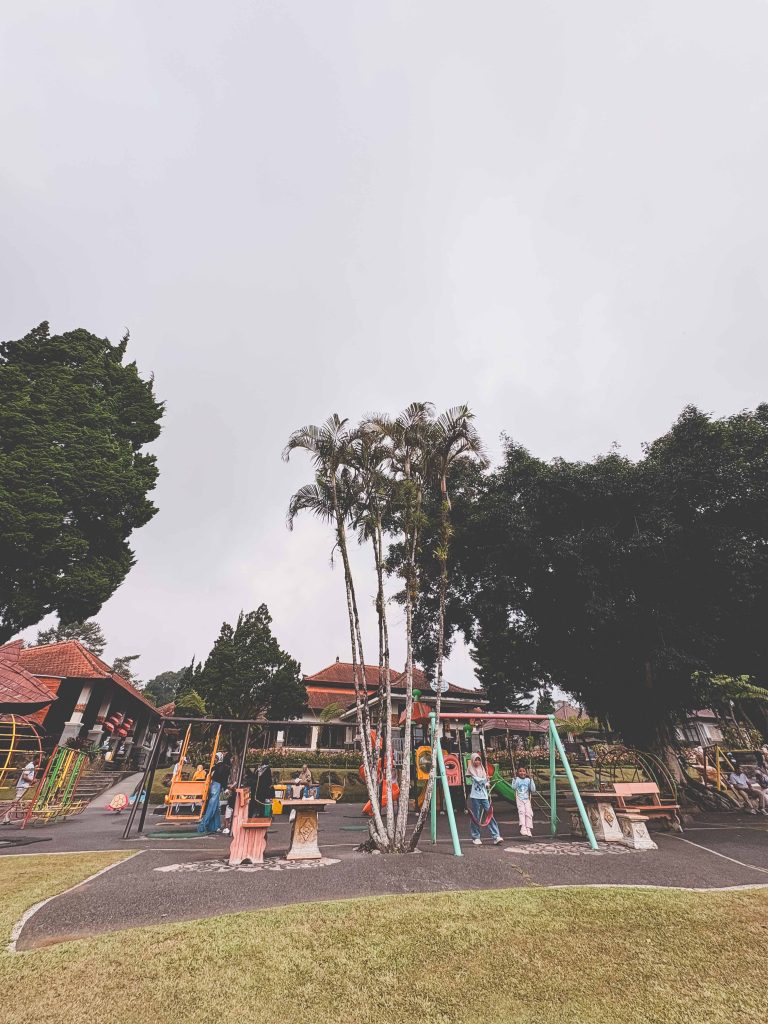
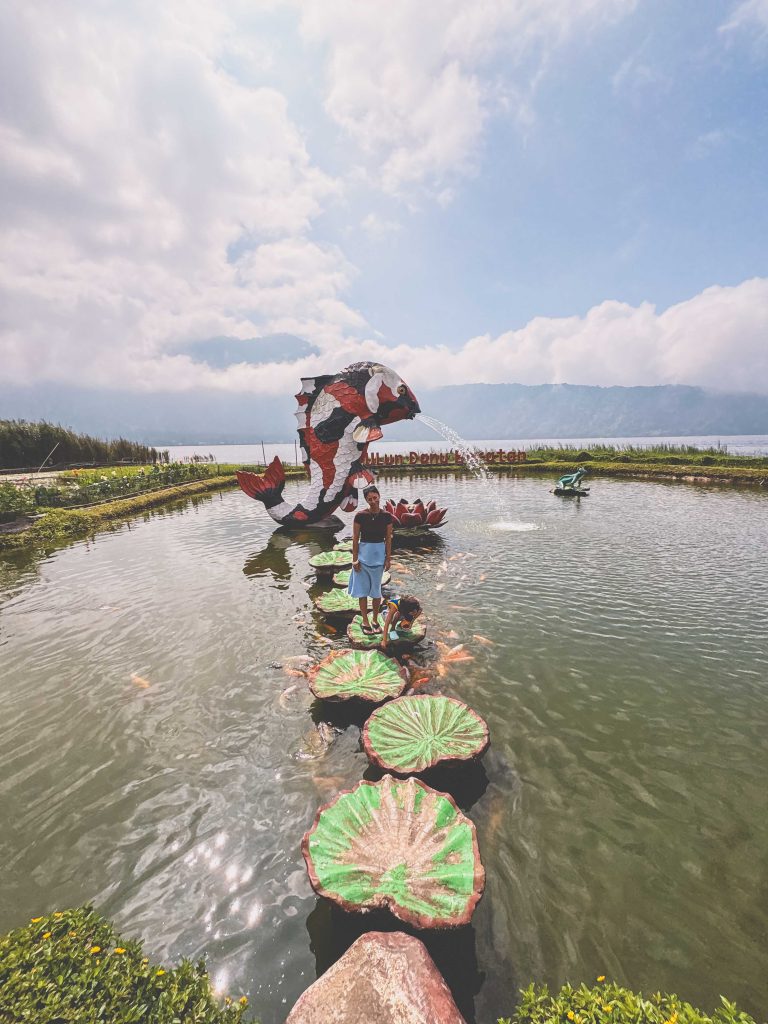
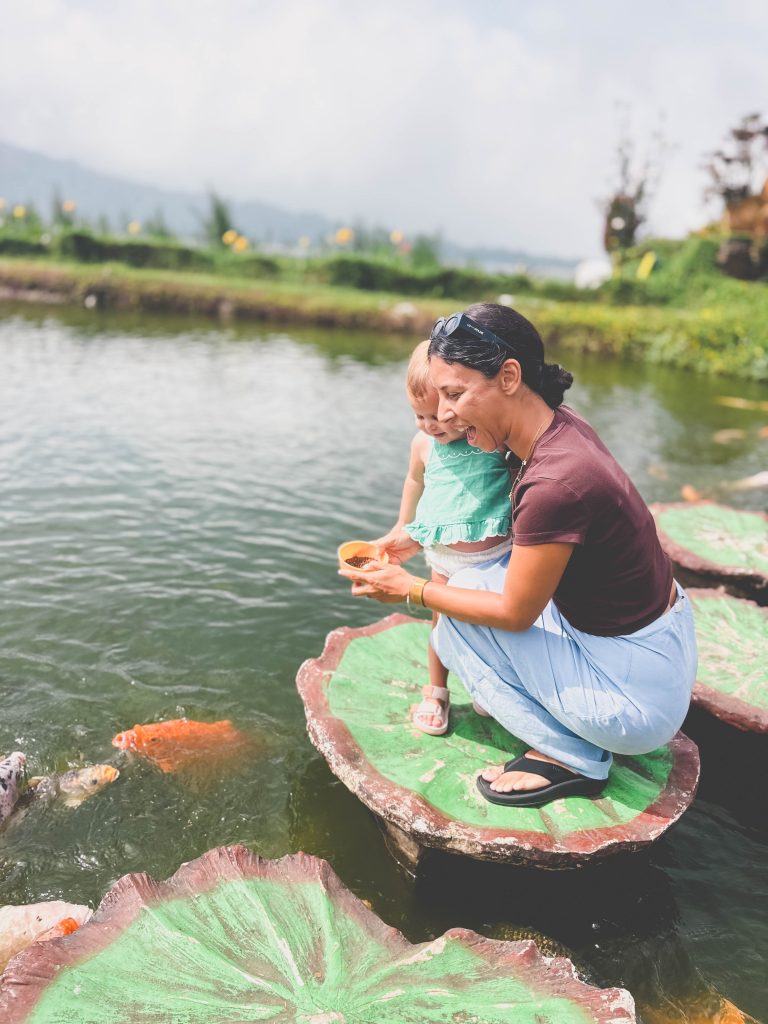
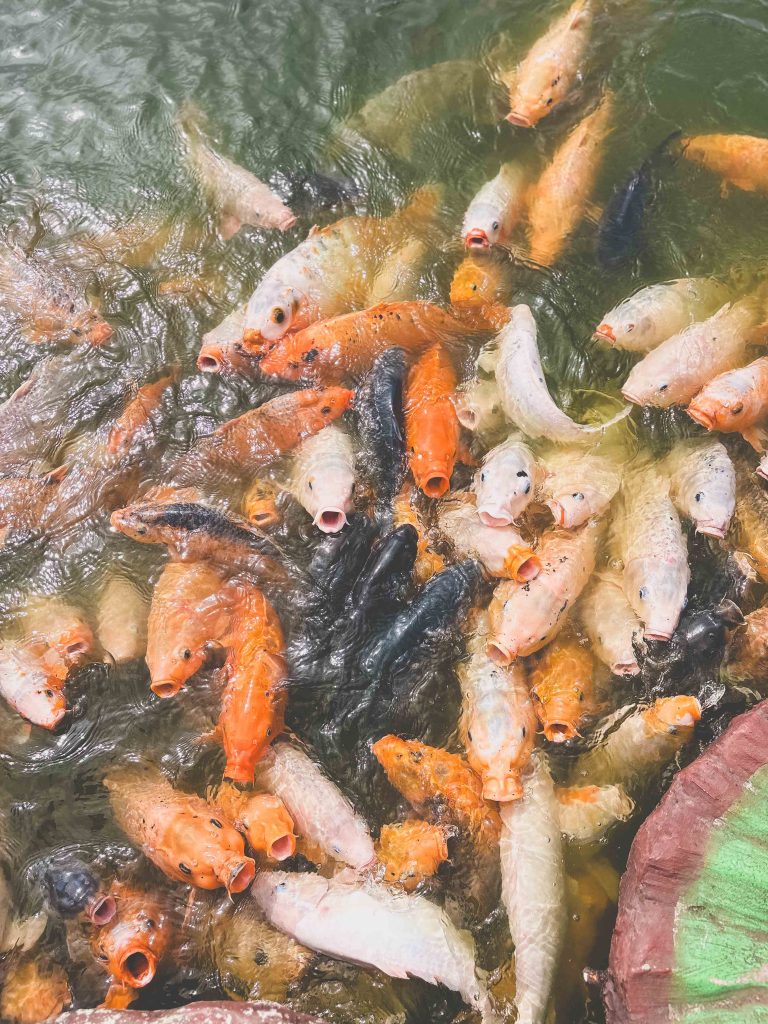
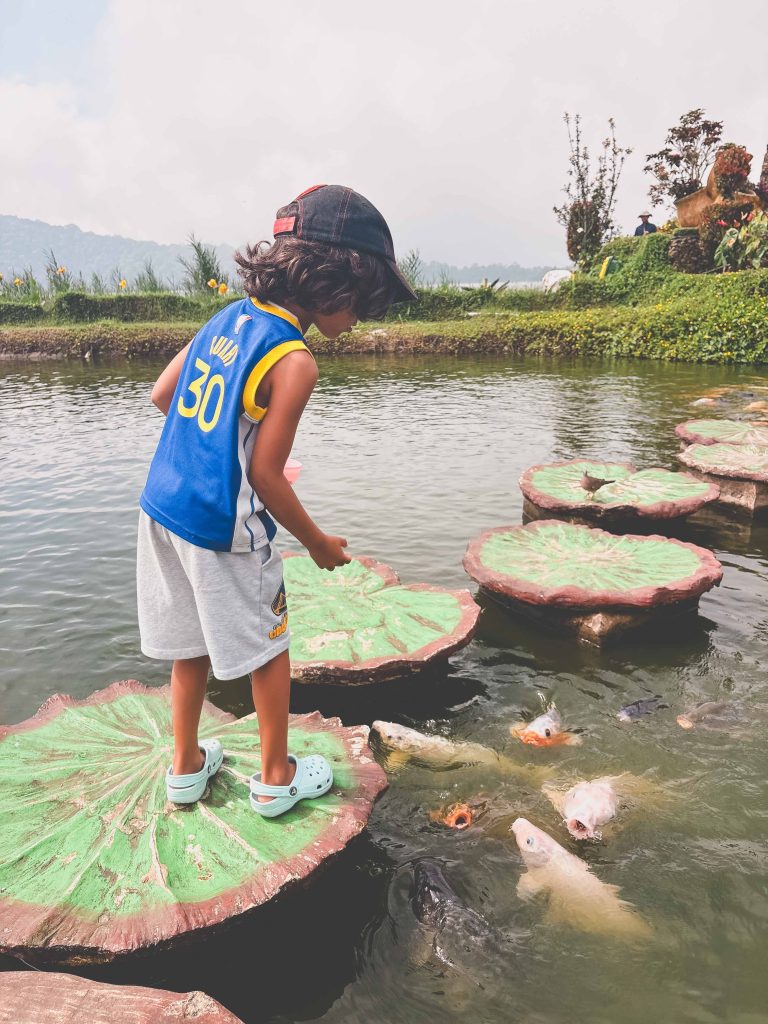
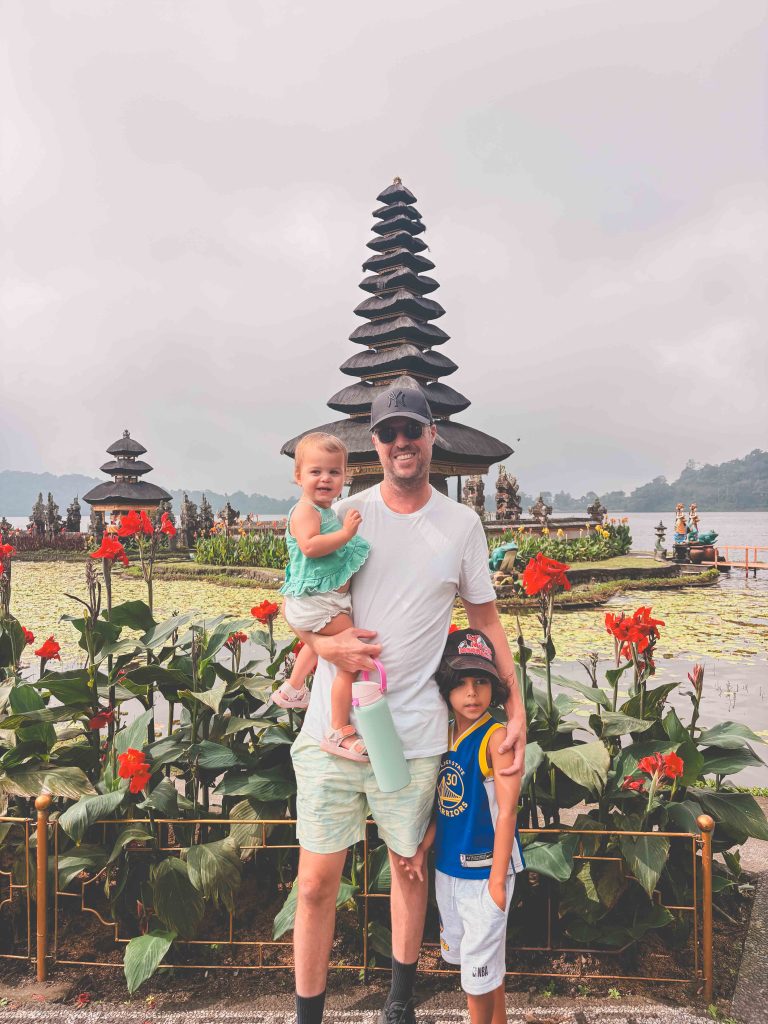
We spent a good hour wandering, taking photos by the temple, and letting the kids run off some energy on the playground. If you’re at all into temples, this one’s a must, but go early to beat the crowds and the tour buses.
Entrance Fee: 75,000 per person (kids were free they are under 5)
6. Wanagiri Twin Lakes Viewpoint
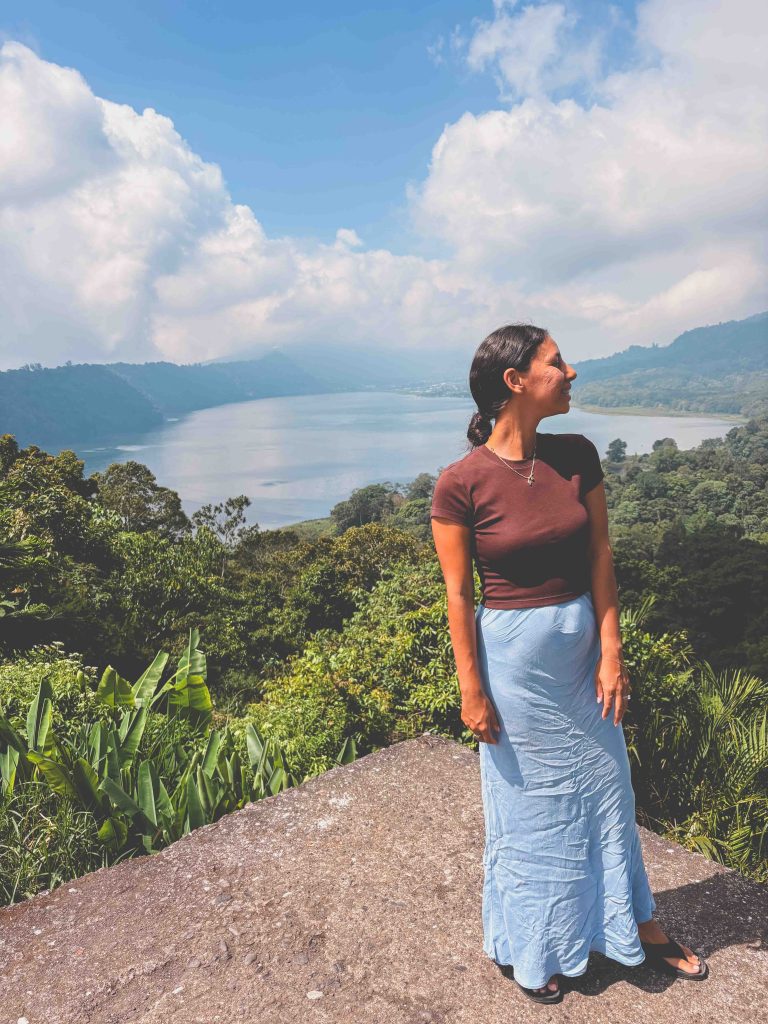
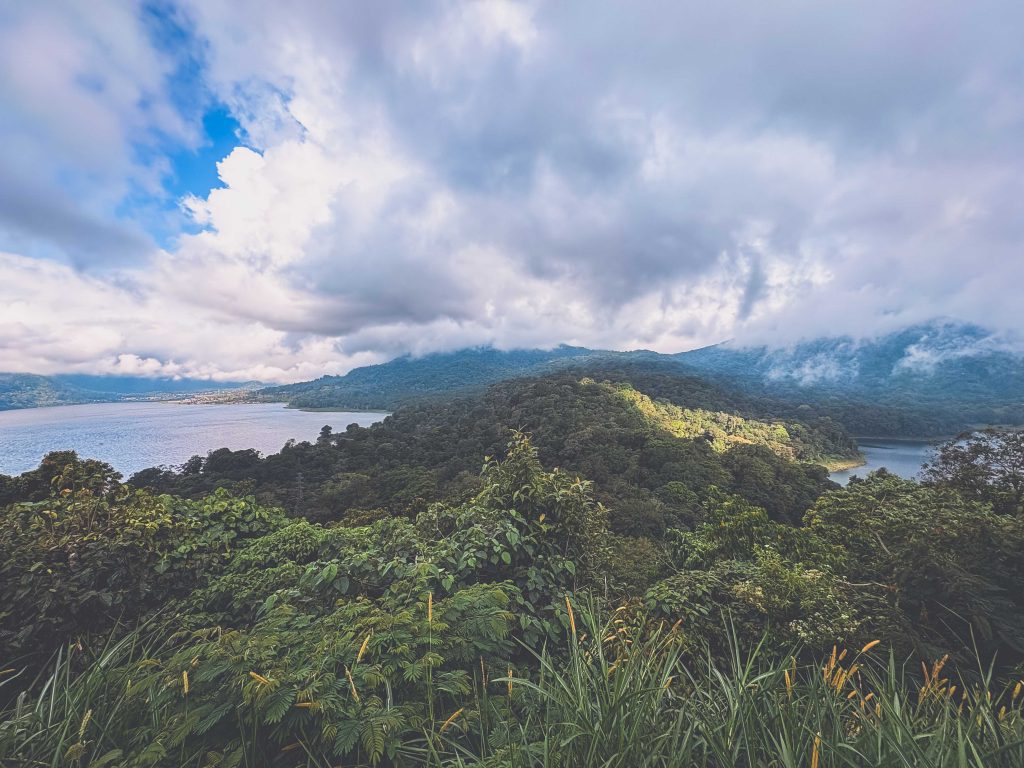
Just up the road from Ulun Danu Beratan, the Wanagiri viewpoint overlooks Lake Buyan and Lake Tamblingan, the famous “twin lakes” of central Bali. It’s a much quieter, less commercial stop than the temple, and the view across both lakes from up high is genuinely worth the short detour. There’s also guided trekking through this area if you have more time, with the option of finishing on a traditional canoe ride across Lake Tamblingan, which we’d love to do on our next visit.
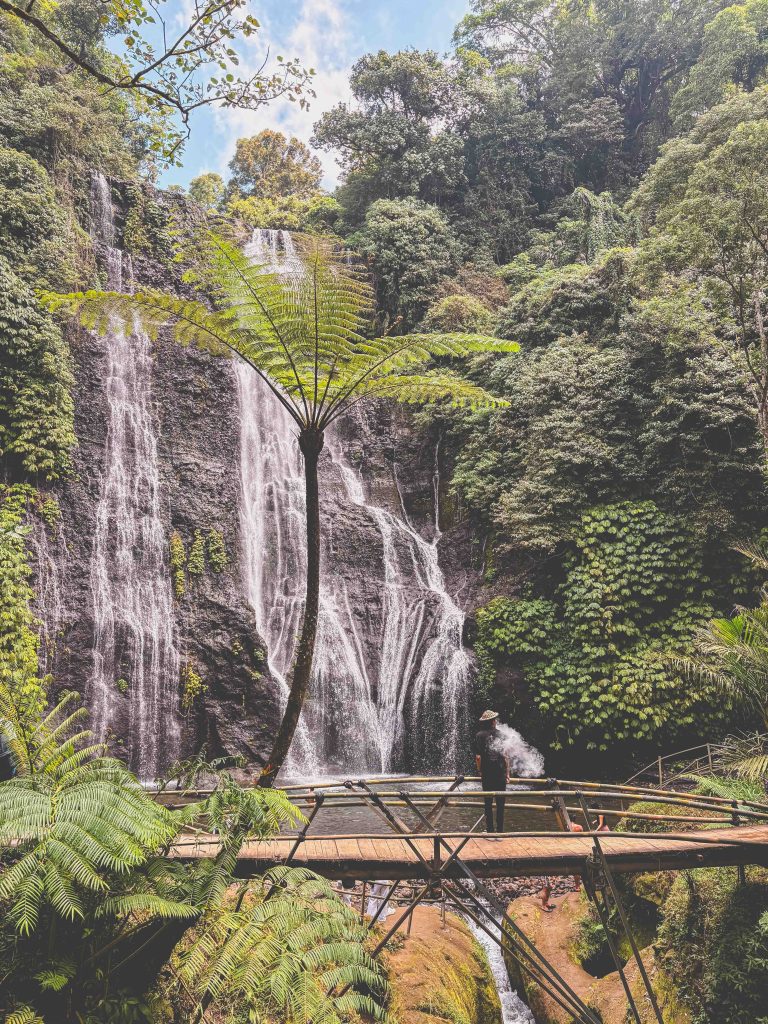
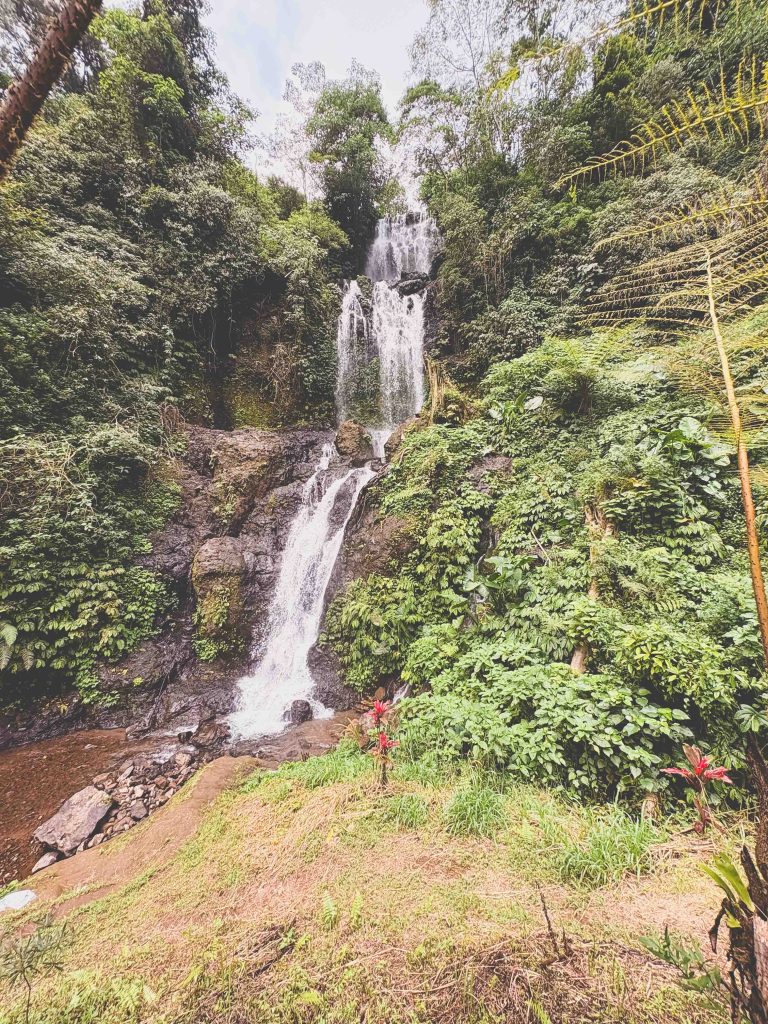
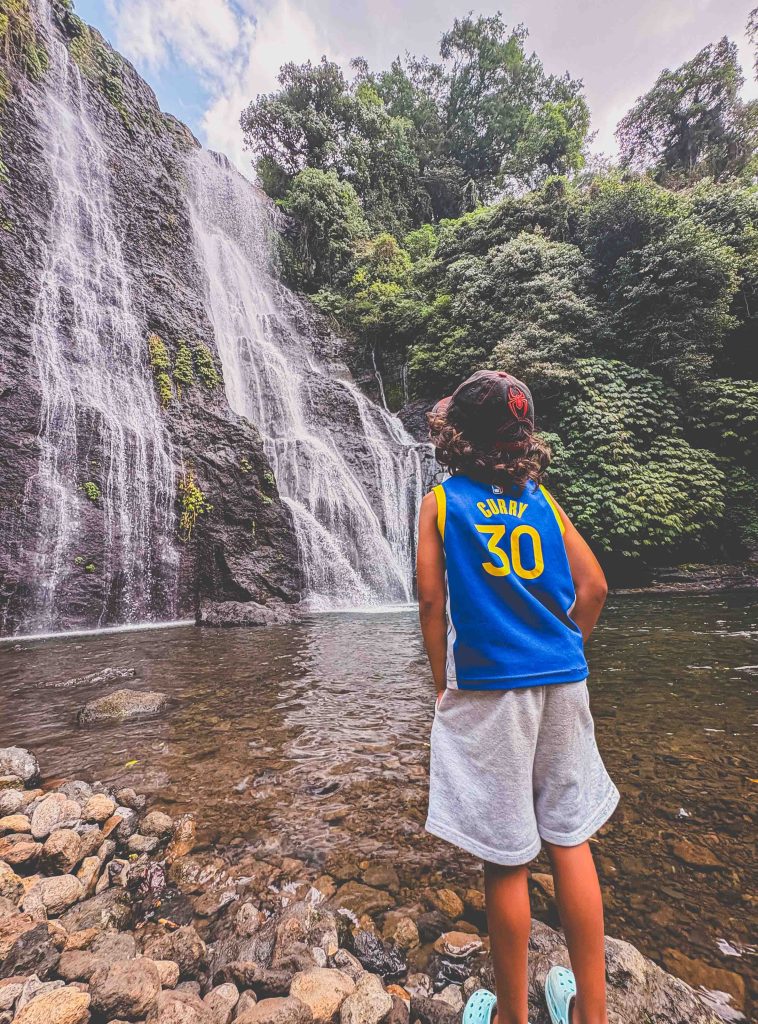
7. Banyumala Twin Waterfalls (and other waterfalls nearby)
Munduk is famous for its waterfalls, and our driver took us to the twin waterfall, which was a much bigger mission than the one we’d visited in Ubud. You park, then walk a fair distance just to reach the ticket booth, before heading down a steeper, more uneven path with stairs and slippery sections to the falls themselves. You can hire a motorbike for the first stretch, but with kids in tow we walked it, and my son was thoroughly over the return hike by the end (he had to be bribed, parenting win).
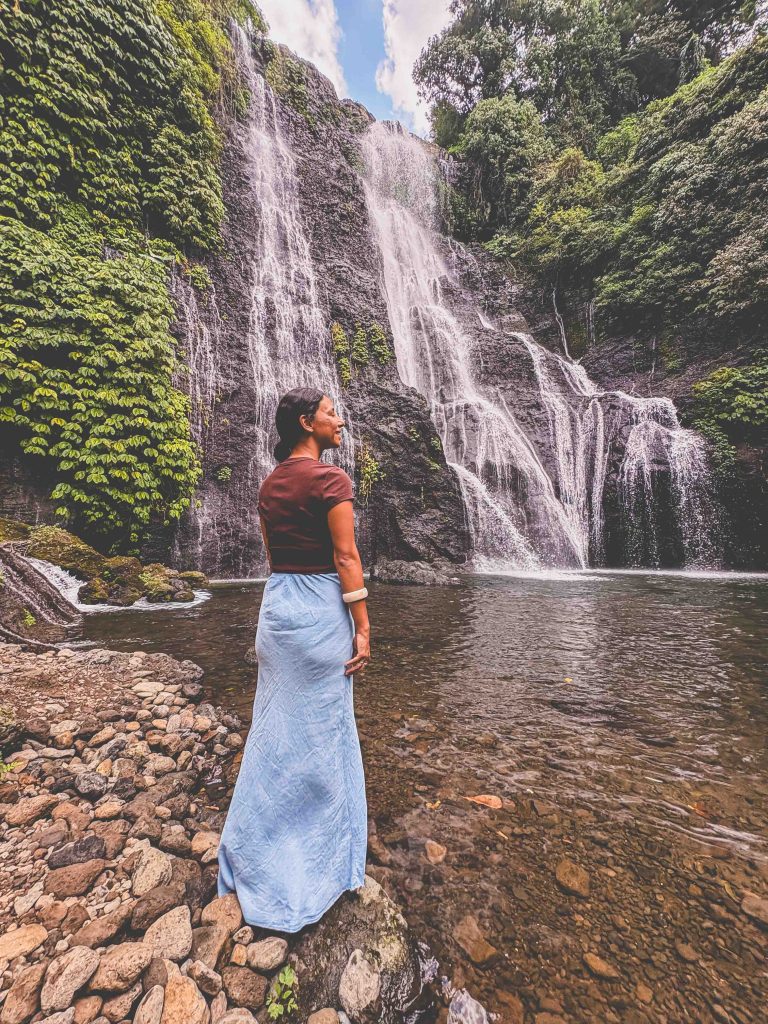
It’s a genuinely beautiful double waterfall, though busier than I expected, with a lot of people swimming and climbing around the rocks, which made it tricky to get a clean photo. There’s a second waterfall just nearby worth a quick look too.
If you want something quieter, ask your driver about Sekumpul or Banyumala, both of which are considered some of the most stunning – and least crowded if you time it right – waterfalls in all of Bali. Sekumpul especially is a proper trek (around a 1.9km walk each way with a climb on the way back), but it’s regularly rated as the most spectacular waterfall on the island, with a double drop into dense jungle that feels almost prehistoric.
Entrance Fee:
8. Munduk Rice Fields and Village Walk
No matter where you stay in Munduk, you’re surrounded by rice terraces, just on a smaller, quieter scale than somewhere like Jatiluwih or Tegalalang in Ubud. We didn’t get to do a dedicated rice field trek this trip with two small kids in tow, but the walking paths through Munduk village and the surrounding farms are well worth wandering if you have the time, especially early morning before the heat and cloud roll in.
9. Bali Farm House
If you’re driving through the Bedugul area on the way to or from Munduk, Bali Farm House is a brilliant stop, especially if you’re travelling with kids. It’s a Tuscan-style farm sanctuary where you can hand-feed alpacas, donkeys, Shetland ponies and rabbits, wander through landscaped gardens, and grab a coffee or simple meal at the on-site cafe overlooking the hills.
Entry is around 175,000 rupiah for adults and 140,000 for kids, which includes a small food voucher, and there are extra paid add-ons like the “Brunch with Alpacas” experience if you want to make a longer morning of it. It’s the kind of spot that photographs beautifully too, with that cool European-farmhouse feel you don’t get anywhere else on the island.
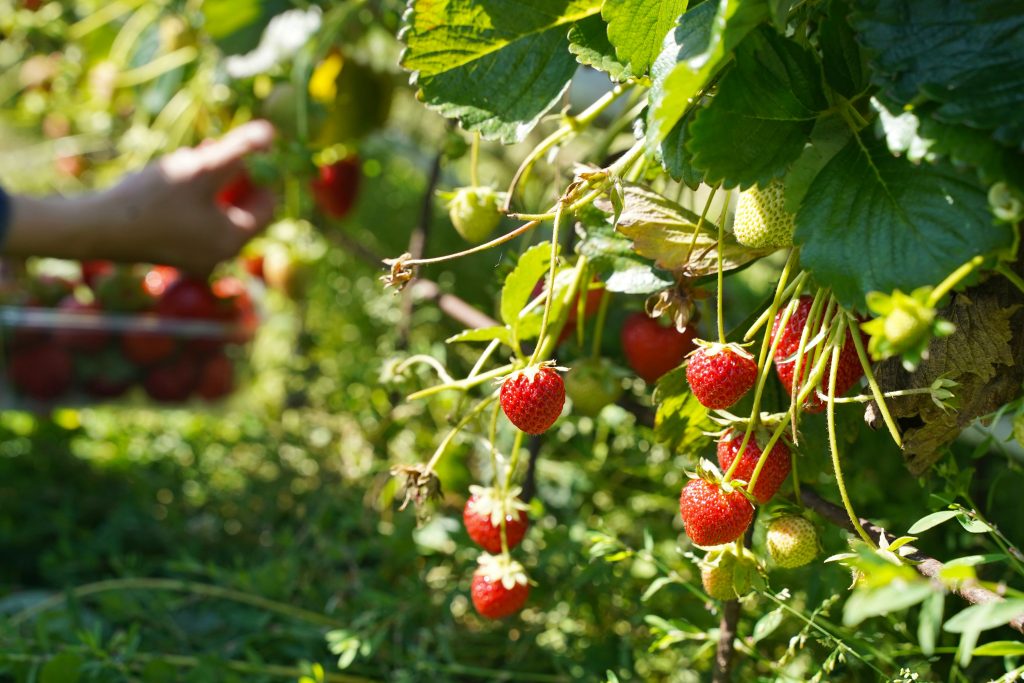
10. Strawberry Picking in Bedugul
Just down the road from Bali Farm House, the Bedugul highlands are dotted with strawberry farms where you can pick your own berries straight from the field, then eat them on the spot or take them with you. It’s a genuinely lovely, low-key activity for Bali with kids, and most farms also do a strawberry-themed menu (think strawberry pizza, juices and milkshakes) at their on-site cafes.
Entry is usually free or a small fee, and you pay for whatever weight of strawberries you pick. It’s an easy add-on if you’re already doing the Ulun Danu Beratan and Bali Farm House loop, and it gives the kids something hands-on to do between car rides.
11. Jatiluwih Rice Terraces
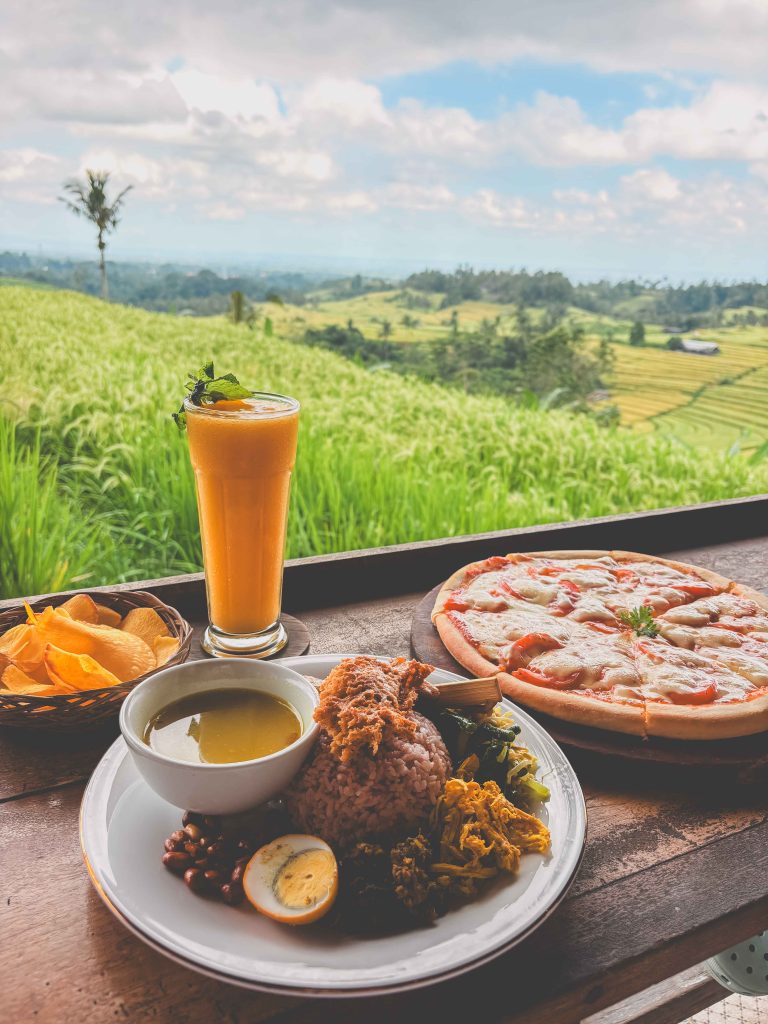
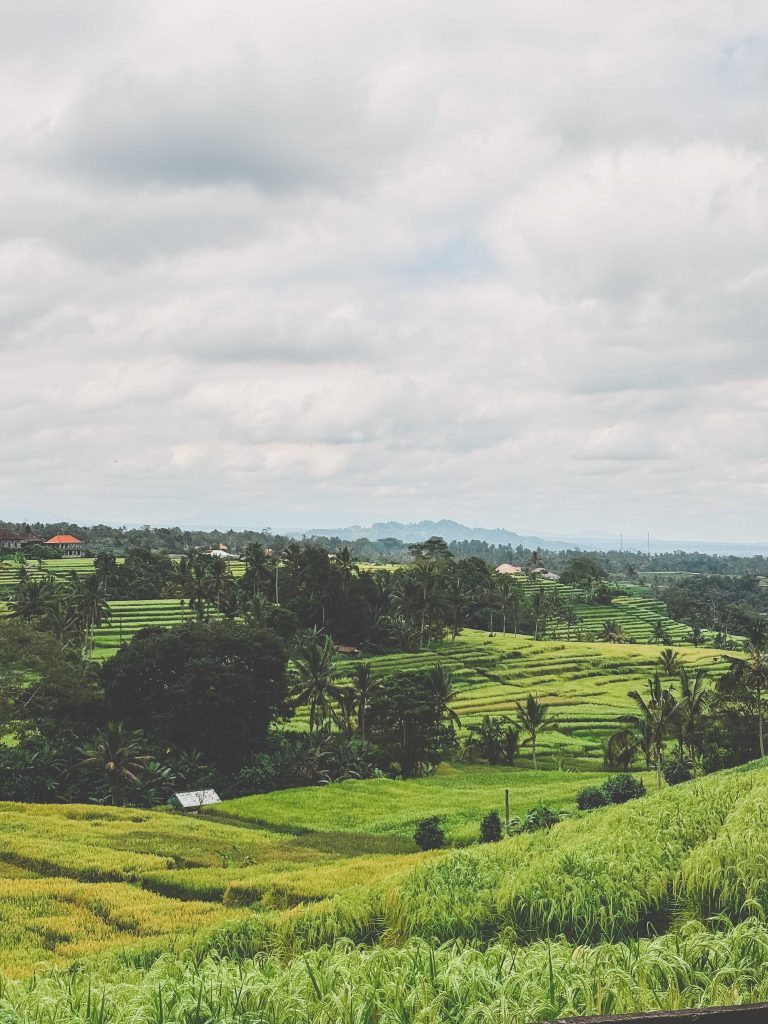
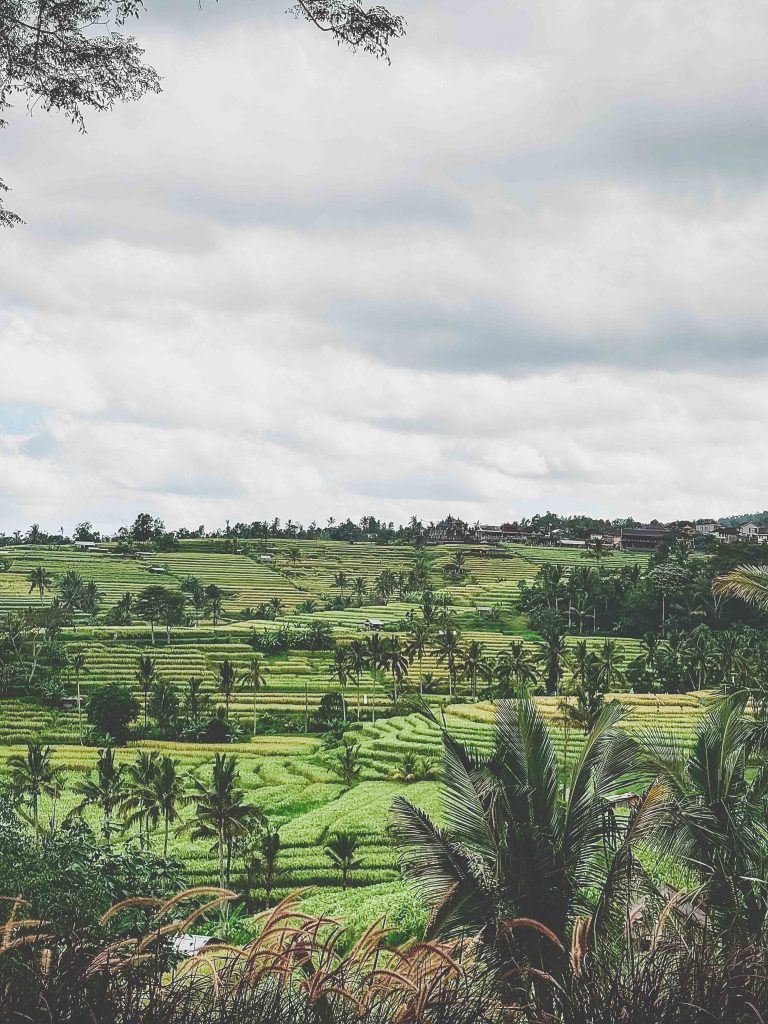
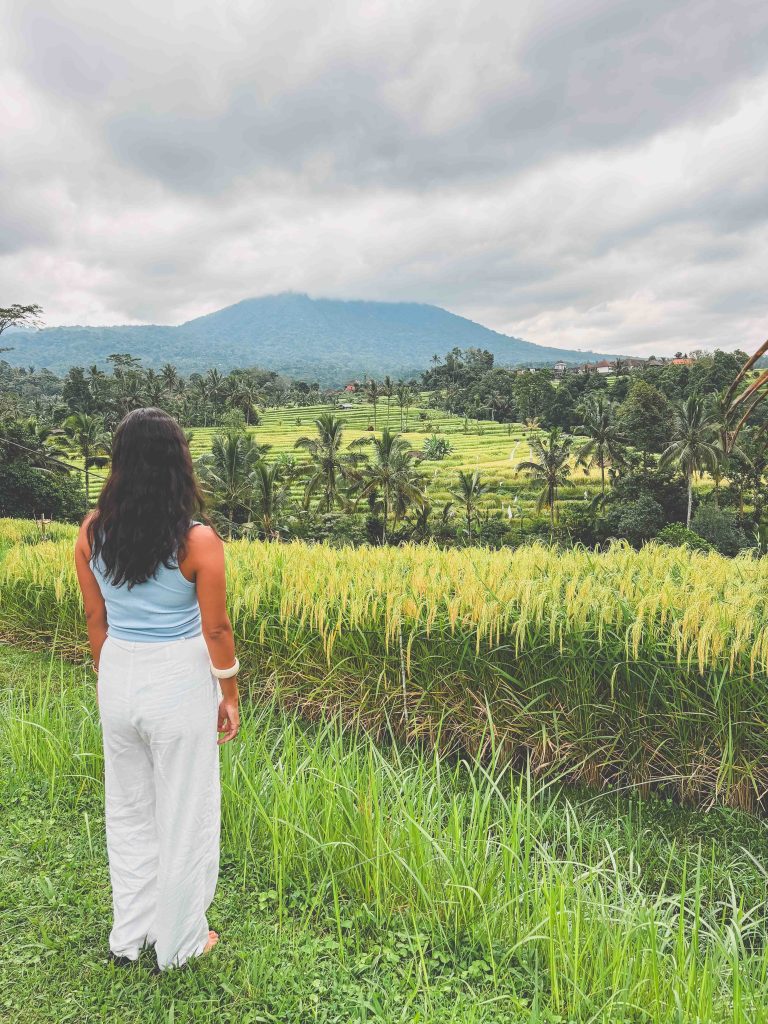
On our final morning, we made the detour to Jatiluwih on the drive from Munduk back down toward Seminyak, and I’m so glad we did. It’s vast, it’s a UNESCO World Heritage site, and we got lucky timing-wise – the rice was just days from harvest, so it had that golden colour rather than the bright green you usually see in photos. If you’re planning your own loop, time your rice terrace visits carefully, because if you arrive just after planting, you’ll be looking at not much more than a mud field.
There are a few lovely restaurants here with views straight over the terraces, with playgrounds for the kids while you wait for food. We ate at one with a fantastic outlook, ordering nasi campur, sate ayam, and the usual pizza and mie goreng combo our kids have basically lived on this entire trip.
What to Skip in Munduk Bali
Handara Gate
I have to be honest about this one. Handara Gate gets thrown into almost every Munduk and North Bali itinerary because of that one iconic Instagram shot, the split stone gate with the mountains framed perfectly behind it. We skipped it on purpose, and I’d suggest you do too.
Here’s the thing nobody mentions in those photos: it’s not a temple, it’s not a sacred site, and it has zero cultural or historical significance. It’s literally just the entrance to a golf course, built for a resort that no longer even operates the way it used to. You’ll pay an entry fee to stand in line for a photo at what is essentially a glorified driveway. With everything else Munduk actually has to offer, real temples, real waterfalls, real plantations, and views you don’t have to queue for, I’d rather you spend that time and money somewhere with a bit more substance!
Where to Eat in Munduk
Mimpi Restaurant, Munduk Moding Plantation
Mimpi is the main restaurant at Munduk Moding Plantation, and it’s where we ended up eating most of our meals during our stay, simply because the food was that good. This is where we had our sate ayam with tempeh, boiled egg, shredded chicken and sambal, our first night, and where the kids worked their way through a fair few pizzas.
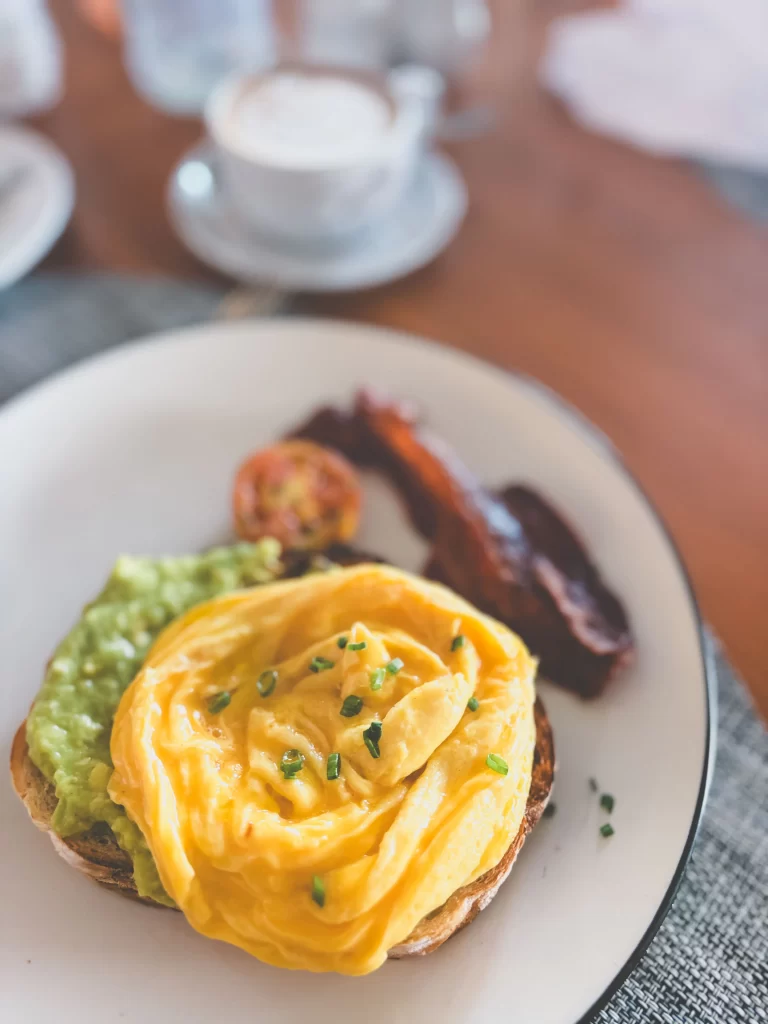
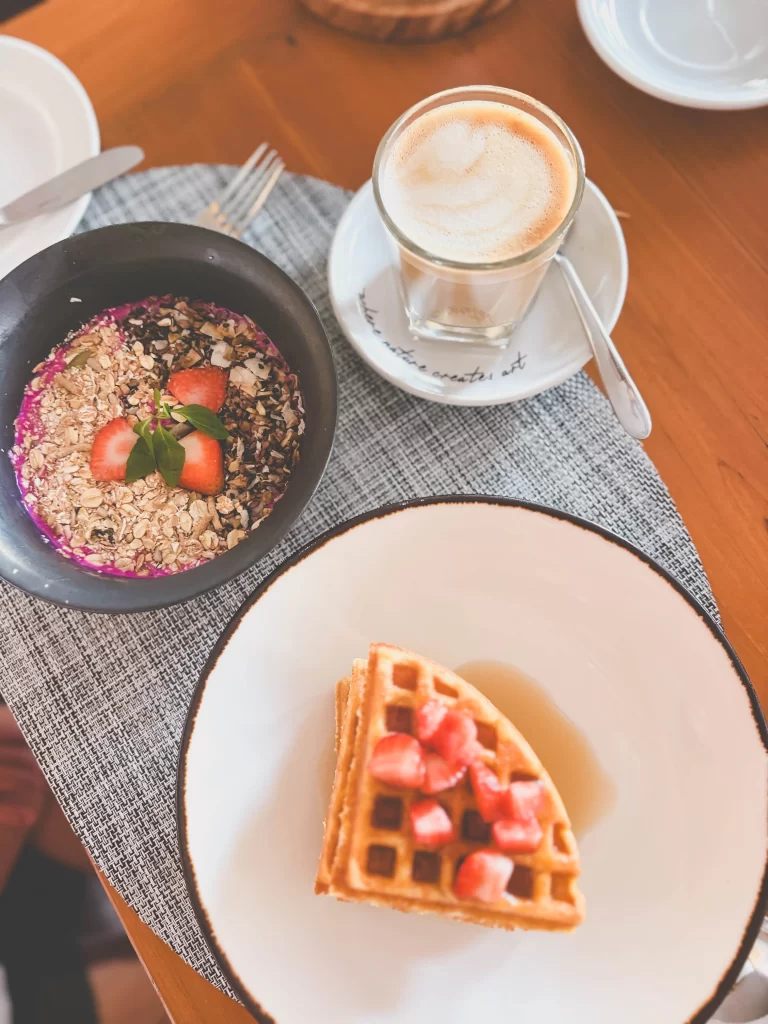

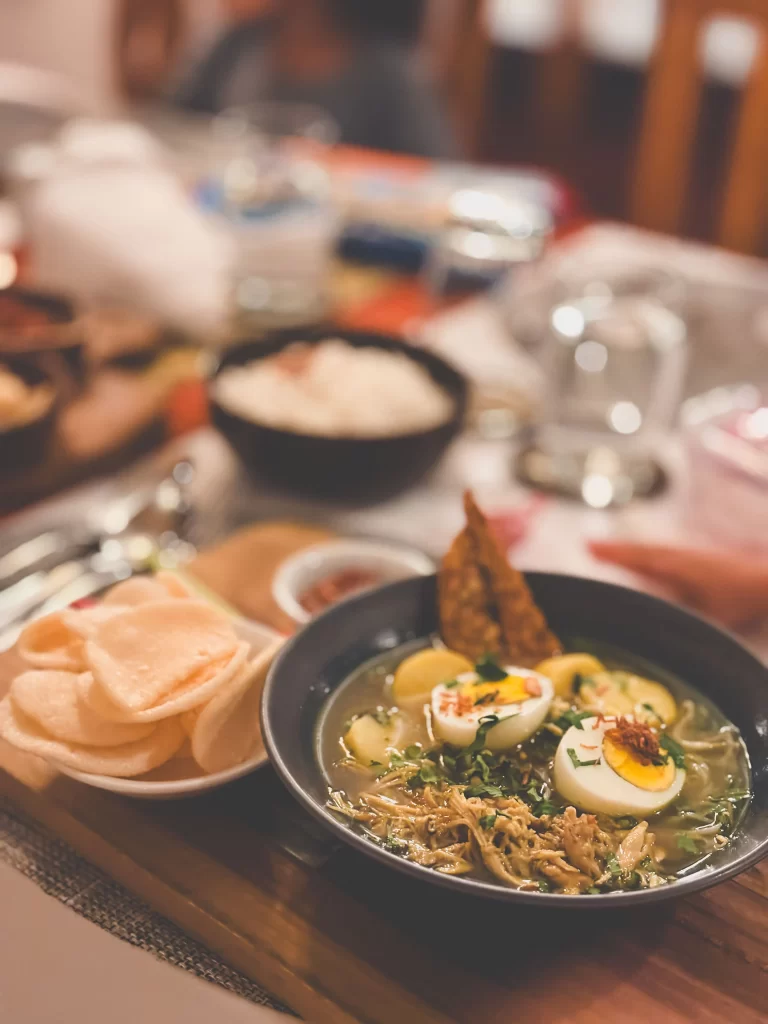
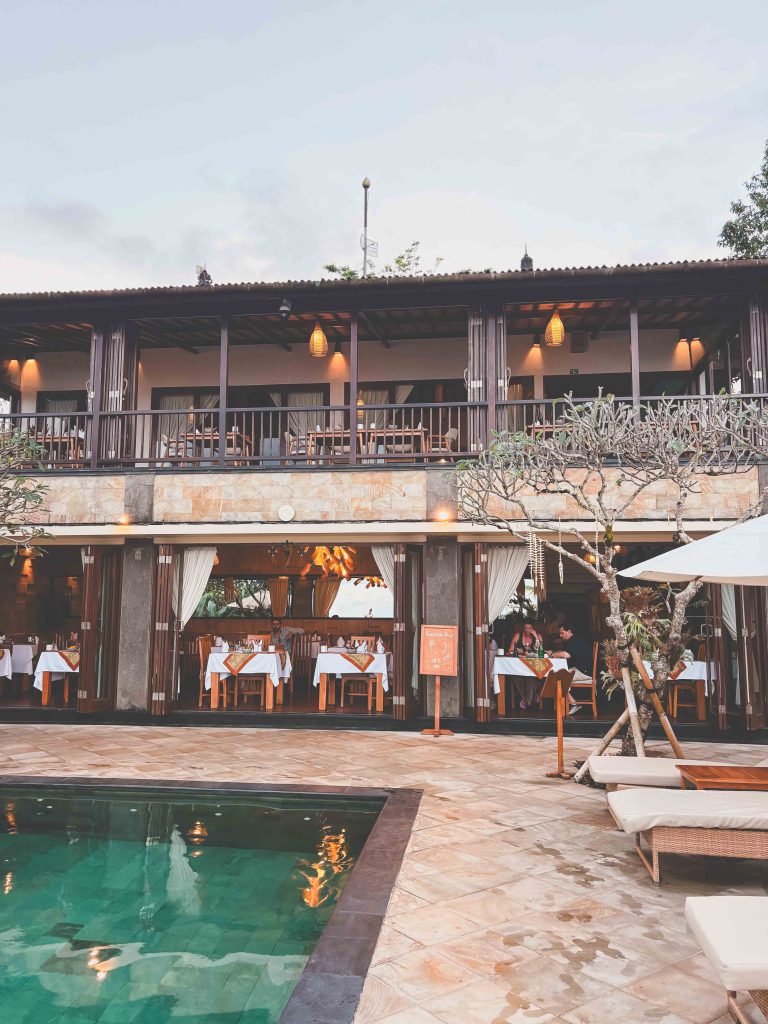
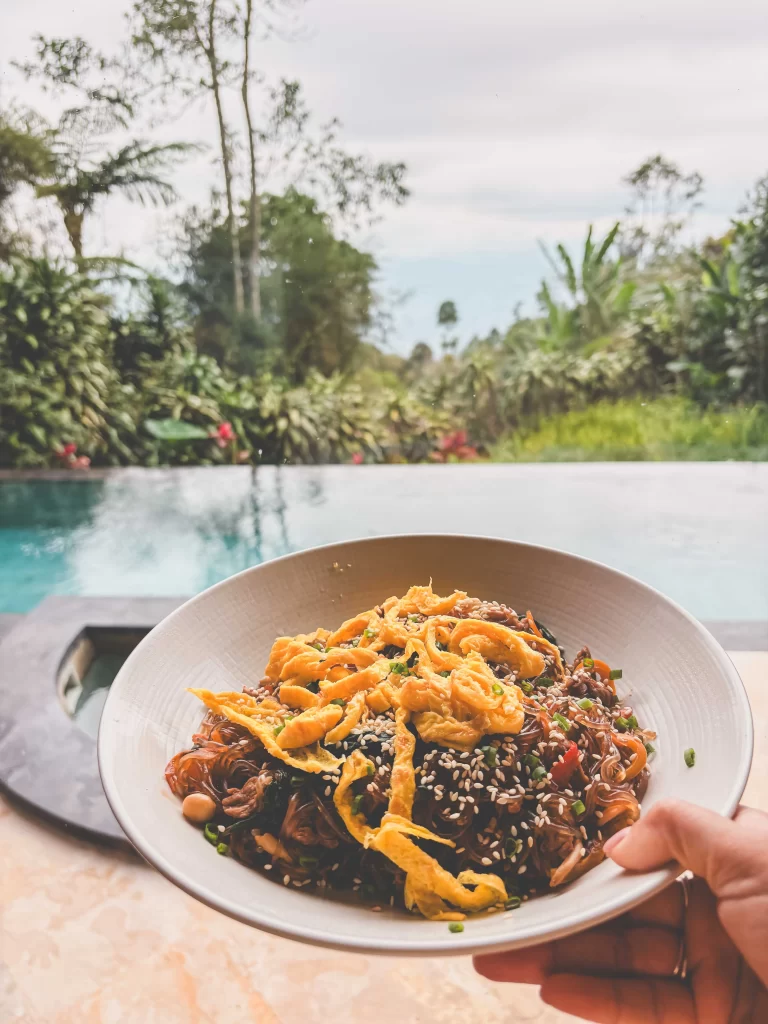
It’s also where one of our room service orders, a japchae-style Korean beef noodle dish, ended up being one of the best things I ate on the entire trip, hands down. The setting overlooking the valley makes it worth booking in for sunset if you can time it right.
Warung Bongkot, Munduk Moding Plantation
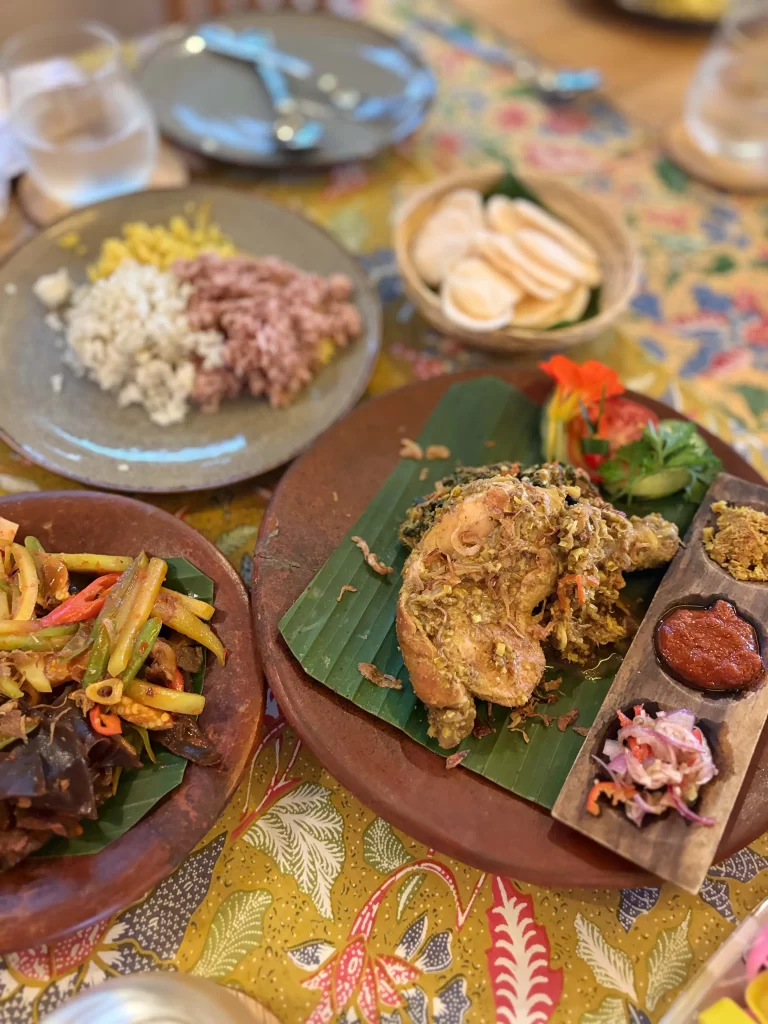
Warung Bongkot is the resort’s dedicated Balinese restaurant, and it’s a lovely change of pace from Mimpi if you want something a bit more traditional. We shared a betutu-style dish here that came with three different sambals, turmeric rice, red rice and nasi putih, plus a side of vegetables. We went early to avoid a wait with the kids, and ended up having the whole place to ourselves, with the second pool, jacuzzi and fire pit right outside to keep them entertained while we waited for food.
Eco Cafe 2
If you’re after something a lot more low-key and budget-friendly, Eco Cafe 2 is worth a stop. It’s set on the main road side of Munduk with a gorgeous view over the rice fields and clove valley to the mountains beyond, and it’s the kind of place where you can grab a simple Indonesian meal, a proper local coffee and a cold Bintang for around 50,000 rupiah (about $5 USD) a head. It’s not fancy, but that’s the charm, you’re paying for the view and the atmosphere as much as the food.
Warung Made’s Munduk
This one comes up again and again when you ask locals and other travellers where to eat in Munduk, and for good reason. It’s a proper family-run warung that’s been going since the late nineties, with mains ranging from around $3 to $6 USD, and the nasi campur is our top pick if you only try one thing. It’s the kind of unpretentious, genuinely fresh Indonesian cooking that makes you remember why you fell in love with the food here in the first place, and they also run cooking classes if you want to take a bit of Munduk home with you.

Ulekan
Ulekan is the more elevated option in Munduk, and if the name sounds familiar, it’s because they also have a sister restaurant down in Canggu. The Munduk location does beautifully presented, elevated Indonesian food in a properly designed space, which makes a nice contrast to the warungs further up this list. Mains run from around 90,000 to 200,000 rupiah ($9 to $20 USD), so it’s a step up in price, but worth it if you want one slightly dressier meal in amongst all the casual warung dinners.
The Clove Bar
Right alongside Ulekan, The Clove Bar leans more into cocktails, with share plates and bigger mains on the menu too if you want to make a proper night of it. Mains sit in a similar range to Ulekan, around 120,000 to 200,000 rupiah ($12 to $20 USD). It’s a nice one to know about if you want a proper cocktail after a day of waterfall trekking, which, trust me, you’ll have earned.
Munduk, Bali — Frequently Asked Questions
What are the best things to do in Munduk? The best things to do in Munduk centre around its extraordinary natural landscape — the waterfalls, the twin lakes, the spice and coffee plantations, and the highland trekking trails that look nothing like southern Bali. The twin lakes of Buyan and Tamblingan are worth a morning — kayaking across Tamblingan at sunrise is one of those quiet, unhurried Bali experiences that stays with you. And Ulun Danu Beratan Temple on the edge of Lake Beratan — a short drive from Munduk — is one of the most beautiful temples in all of Bali.
How many days do you need in Munduk? 3 nights is the sweet spot — enough for a full day of the best things to do in Munduk (waterfalls, plantation walk, sunset views) and a half-day to explore the lakes and surrounding area before moving on. One night is possible if you’re passing through, but Munduk really rewards slowing down — the mornings especially, when the mist sits over the caldera and the air is cool and quiet, are the kind of thing you don’t want to rush through. Three nights works well if you want to add trekking, cycling, or a Lovina dolphin watching trip from the northern coast.
How do you get to Munduk from Ubud? The drive from Ubud to Munduk takes approximately 1.5–2 hours by private car or driver, winding through the Bedugul highlands and the clove and nutmeg forests of North Bali. The road climbs steadily and the landscape changes dramatically as you ascend — by the time you reach Munduk the air is noticeably cooler and you genuinely feel like you’ve arrived somewhere different. There is no public transport to Munduk so a private driver or car rental is the only practical option. We always use a private driver for this stretch — the roads are winding and the journey is part of the experience.
Is Munduk worth visiting? Absolutely — and we’d argue it’s one of the most underrated destinations in all of Bali. Most visitors to the island never make it this far north, which means Munduk has retained a quietness and authenticity that the south left behind years ago. The things to do in Munduk are genuinely different from anywhere else on the island!
What is the weather like in Munduk? Significantly cooler than southern Bali — expect temperatures between 18–25°C depending on the time of year, with early mornings and evenings dropping to 16°C or below. A light layer or jacket is genuinely needed, particularly at dawn and dusk, which surprises most visitors arriving from the heat of Ubud or Seminyak.
What is Munduk Moding Plantation like? It’s one of the most spectacular places we’ve stayed in Bali — and we say that having stayed across a lot of properties over 30+ trips to the island. The Passionfruit Villa has its own private pool and jacuzzi, the butler service is genuinely exceptional— from the warm towels and hot ginger tea on arrival (a thoughtful swap from the cold drinks offered in southern Bali) to the frangipani hydrangea necklaces that greeted us — makes you feel deeply looked after rather than just accommodated.
What should I pack for Munduk? A light jacket or wrap — non-negotiable. Munduk’s highland temperatures feel dramatic compared to the south, especially first thing in the morning. Proper walking shoes or trail runners if waterfall trekking is on your list (the paths can be steep, muddy and slippery). Insect repellent for plantation walks. A good camera — the light in Munduk, particularly at sunrise, is unlike anywhere else in Bali.
Munduk Bali is the cool, quiet, completely different side of the island that most travellers skip entirely in favour of another day at the best cafes in Canggu or another sunset at a Uluwatu beach club. We’ve done plenty of those too, and we love them, but Munduk gave us something none of our trips to Seminyak accommodation, Uluwatu accommodation, or even our beloved Nusa Lembongan have given us: total stillness, with a side of alpacas and floating breakfasts.
So if you’re mapping out your Bali itinerary and wondering what else is out there beyond the usual hotspots, put Munduk on the list alongside Sidemen. You’ll come home cold for the first time in Bali, full of coffee, and already planning your next trip back.
Let us know if you visit – and feel free to drop questions in the comments or message us for personalised recs!
Found this post help? Save and pin for later!