Nepal rarely makes the shortlist for a family holiday, and the reason is usually a mental image problem. Say “Nepal” to most parents and the picture that appears is a frozen ridgeline, oxygen bottles and something that belongs on a bucket list rather than a school holiday.
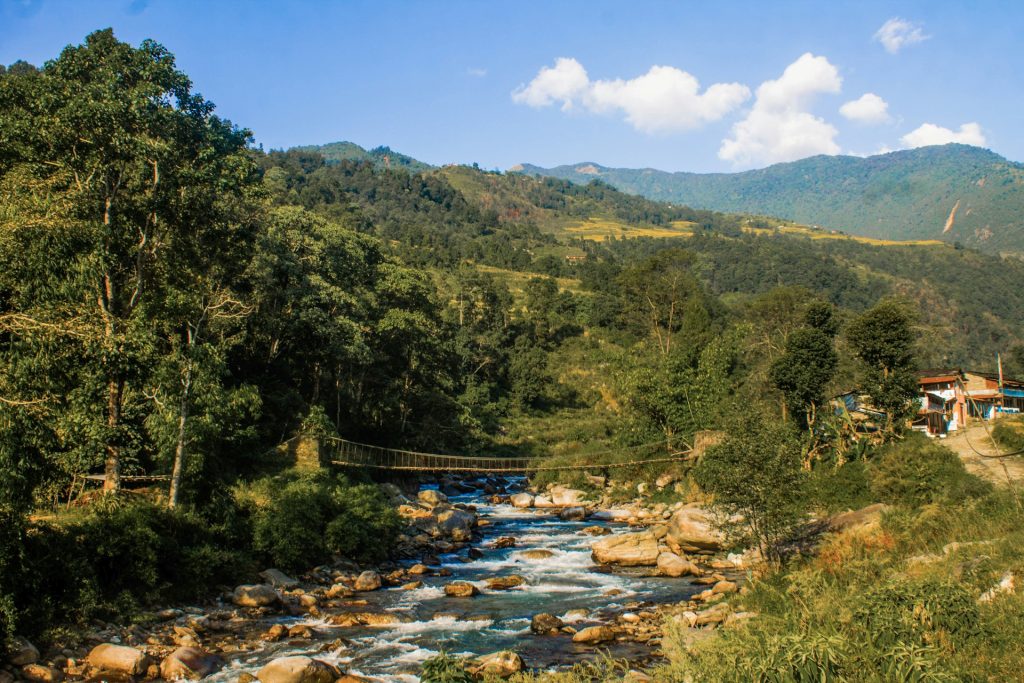
The reality on the ground is different. Below about 3,200 metres, Nepal is a country of stone villages, terraced hillsides, tea houses with hot lemon and fried potatoes, and trails that thousands of Nepali children walk to school on every day. Families have been trekking here for decades. The trips just look nothing like the documentaries.
This guide covers what a family trip to Nepal genuinely involves: which ages work, what altitude means in practice, which routes suit children, what tea house nights are like, what the whole thing costs from Australia, and a sample itinerary that leaves room for the days when nobody wants to walk.
How Nepal Compares to a Beach Holiday
Worth saying plainly at the start: Nepal is not a swap for a resort week. There is no pool, no swim-up bar, no kids club, and no fifteen-minute transfer from the airport to the sunbed.
What replaces those things is a different kind of holiday altogether. Children walk between villages instead of being driven. Days end at four in the afternoon because the light goes and everyone is tired. There is no screen time because there is barely any signal. Meals happen around one wood stove in a dining room shared with whoever else walked in that day.
Families who love it tend to be the ones already doing bushwalks at home, already comfortable with a bit of grubbiness, and already tired of holidays where the children ask what is next by ten in the morning. Families who want to switch off and be looked after will find Nepal hard work.
The other honest difference is effort at the front end. Bali is close, cheap to reach and forgiving of a loose plan. Nepal takes a long flight, some genuine research, and a decision made months ahead about season. The payoff is a trip children talk about for years.
What Age Actually Works
There is no single cutoff, but the routes sort themselves into three broad bands.
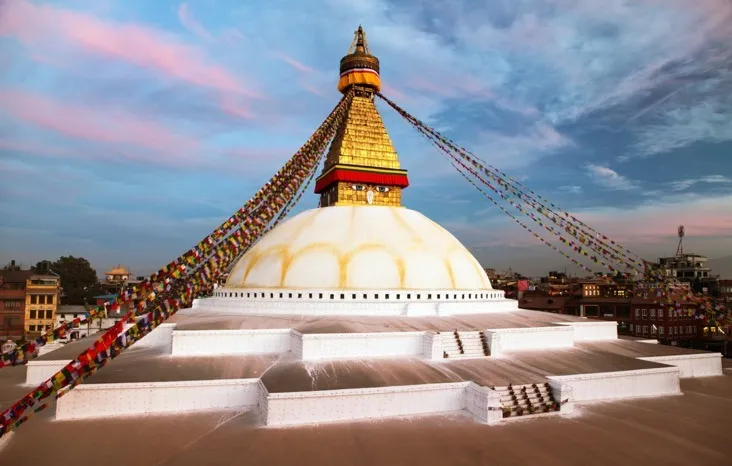
Toddlers and preschoolers, roughly one to five. Kathmandu Valley and Pokhara work beautifully at this age. Bhaktapur and Patan are walkable, full of courtyards and pigeons and temple steps, and forgiving of a pram-free day carried in a hiking pack. Day hikes around Nagarkot, Shivapuri or the Pokhara ridgelines give real mountain views with a hotel bed at the end of it. Multi-day trekking at this age is possible with a porter carrying the child, though most families find the logistics outweigh the reward.
Six to nine. This is where a short tea house trek becomes realistic. Children in this band can usually manage three to five hours of walking with frequent stops, provided the daily distances are short, and the itinerary has slack in it. Expect at least one day where somebody needs to be carried for the last hour, and hire the porter capacity to make that possible.
Ten and up. Older children often outwalk the adults. At this age the full range of low and mid altitude routes opens up, and the trip can start to feel like a proper trek rather than a family walk with mountains in the background.
The single biggest predictor of a good trip is not fitness. It is how many days the itinerary has spare. A five-day route stretched over seven days is a completely different holiday.
Altitude, Explained Without the Drama
Altitude sickness is real, and it is the one thing worth understanding properly before booking.
The mechanism is simple: above roughly 2,500 metres, thinner air means less oxygen per breath, and the body needs time to adjust. Ascend faster than the body can adapt, and symptoms follow, starting with headache, poor appetite, disturbed sleep and irritability. In children, those symptoms are harder to spot, because a tired seven-year-old with a headache and no appetite looks much like a tired seven-year-old.
That difficulty in reading symptoms is exactly why family itineraries stay low. Keeping sleeping altitude under about 3,000 metres, and time above 3,200 metres brief, removes most of the risk from the equation. The popular family routes are designed around precisely this.
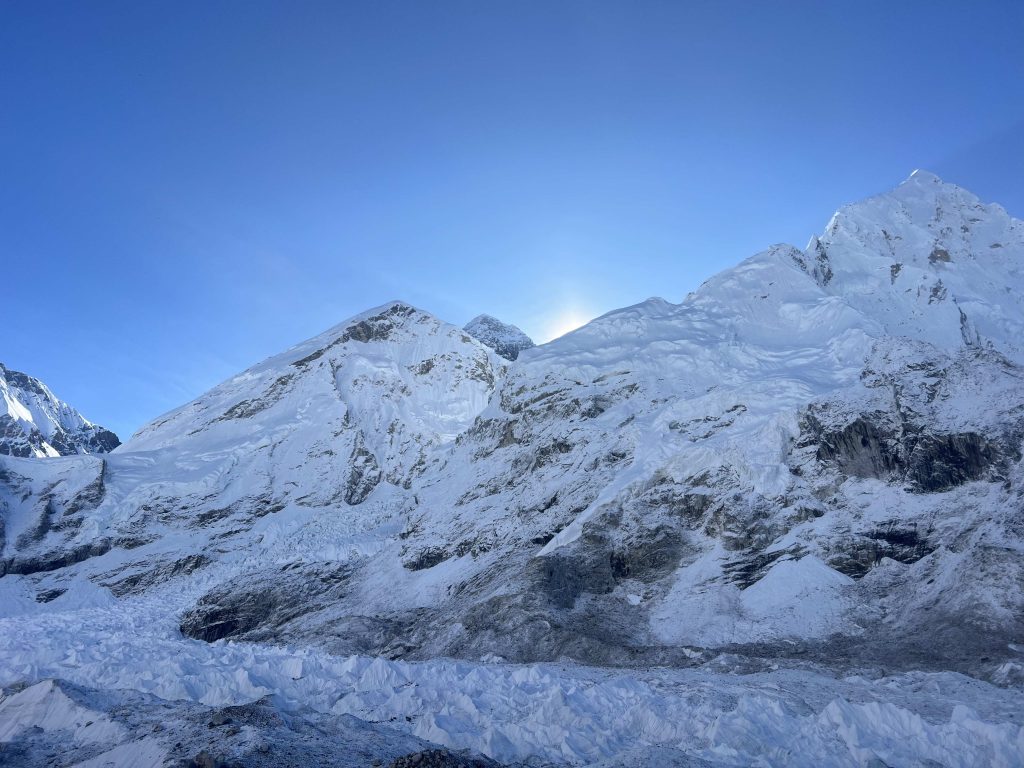
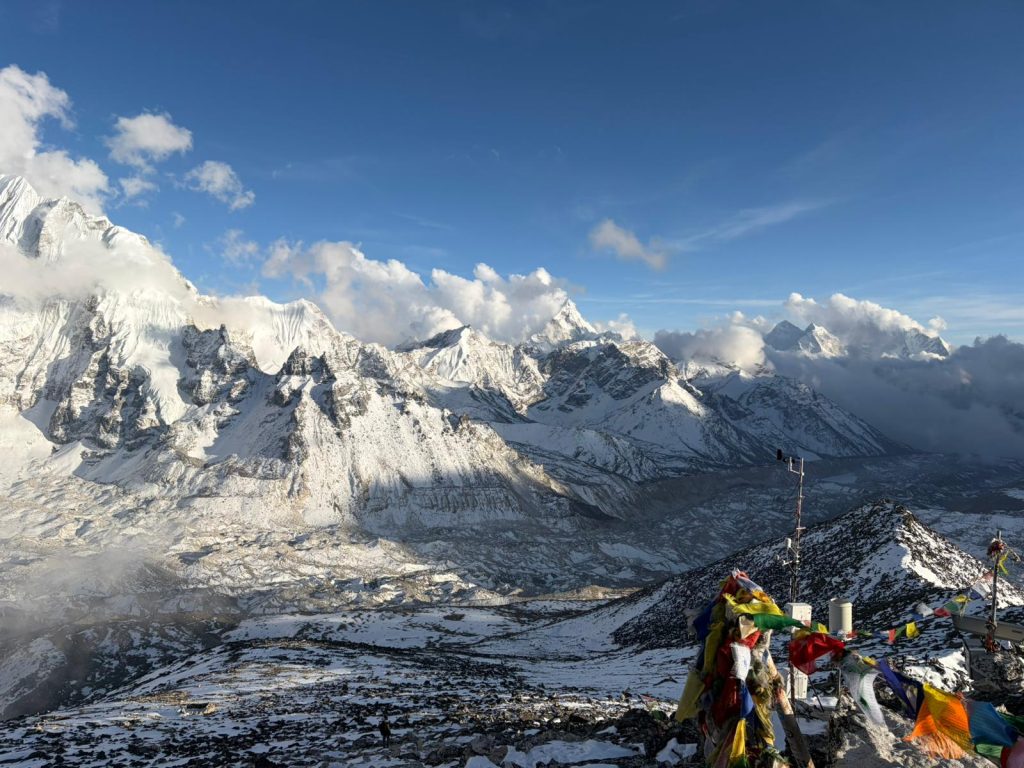
It also explains what stays off the list for now. The walk to the base of Mount Everest sleeps above 4,000 metres for several consecutive nights and finishes at 5,364 metres, which is a serious undertaking for adults and unsuitable for younger children regardless of how fit they are. It is a trip for the same family in ten years, with teenagers, not something to attempt early.
Two practical rules cover almost everything else. Ascend gradually, gaining no more than about 500 metres of sleeping altitude per day once above 3,000 metres. And treat descent as the answer to any symptom that does not clear overnight, which on low altitude routes usually means walking down for an hour rather than abandoning the trip.
Which Treks Suit Families
1. Ghorepani Poon Hill
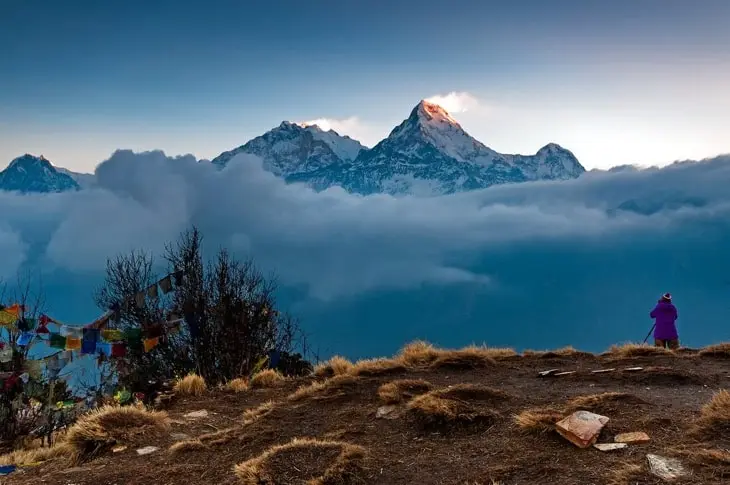
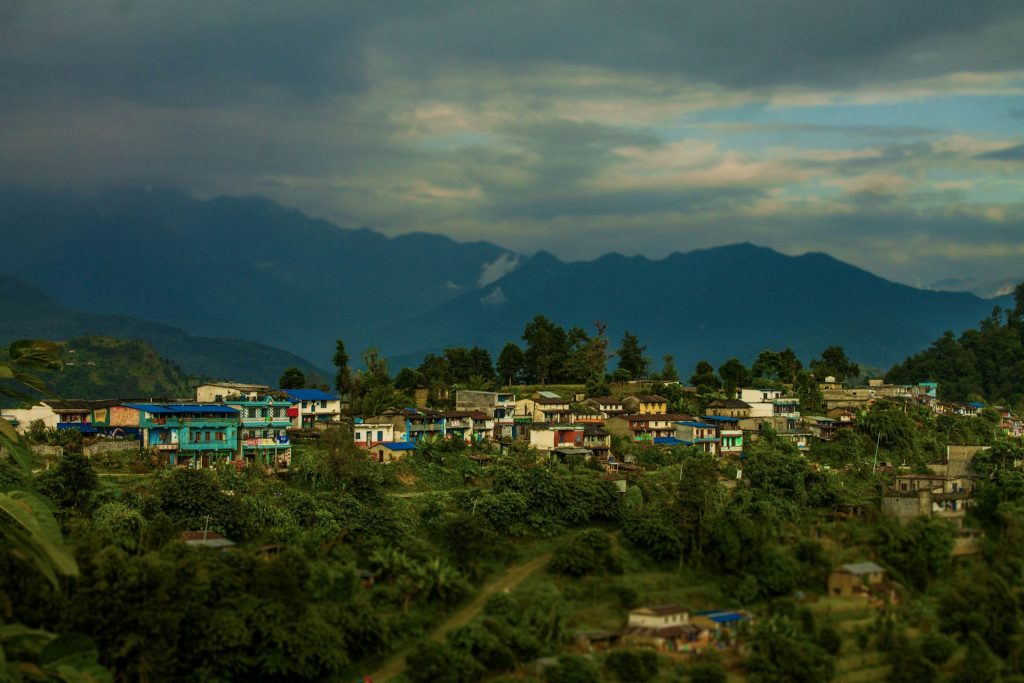
The default recommendation, and deservedly so. Four to five days from Pokhara through Gurung and Magar villages, rhododendron forest and terraced farmland, with a pre-dawn climb to the Poon Hill viewpoint at 3,210 metres for sunrise over Annapurna and Dhaulagiri. Daily walking is manageable, tea houses are comfortable and close together, and the route never commits you to anything that cannot be reversed in a few hours. The one warning: the climb through Ulleri is a long staircase of several thousand stone steps, and it is the day children remember for the wrong reasons. Break it in half if the itinerary allows.
2. Mohare Danda
A quieter alternative on the same side of the Annapurna range, running through community-owned lodges rather than private tea houses. Fewer trekkers, similar altitudes, slightly more remote feel. A good choice for families who have done one trek already or who want the trail to themselves.
3. Kathmandu Valley day walks
Nagarkot to Changunarayan, the Shivapuri ridge above Budhanilkantha, or the Champadevi hike south of the city. Three to four hours each, real views on a clear morning, and a hotel room waiting at the end. This is the right structure for families with children under six.
4. Australian Camp and Dhampus
Two days out of Pokhara, low altitude, big Annapurna views, and short enough that a reluctant walker can be talked into it. A useful trial run before committing to anything longer.
Tea House Life With Children
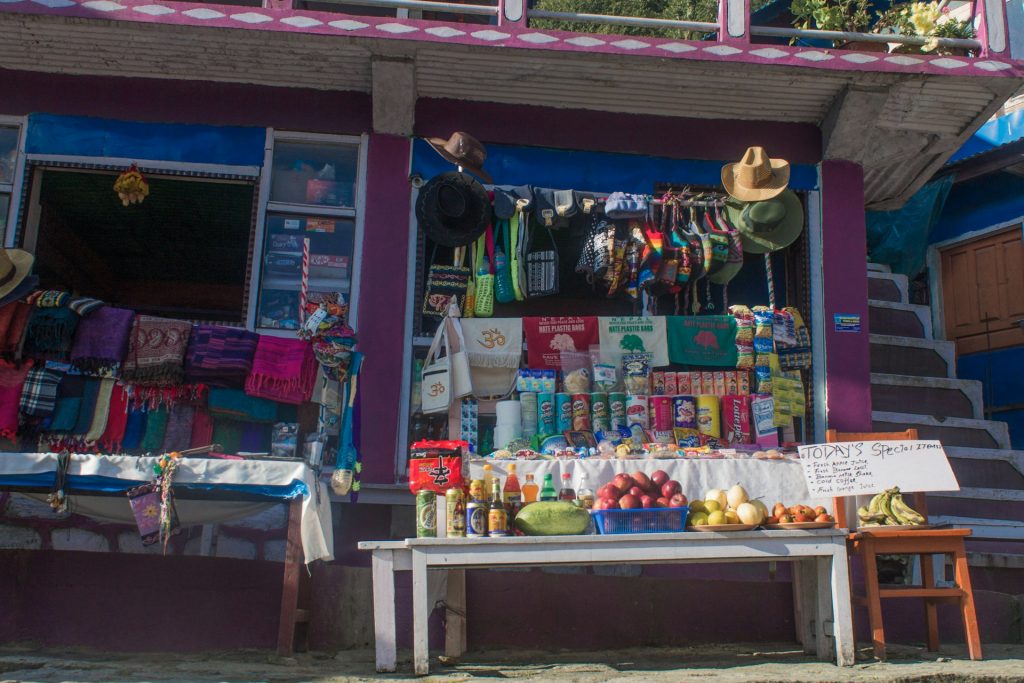
Tea houses are family-run lodges strung along the trails, and understanding what they actually offer prevents most of the unpleasant surprises.
Rooms are basic: twin beds, plywood walls, a thin mattress, a blanket. Bring sleeping bag liners and warm layers for sleeping, because heating in rooms does not exist. The dining room has the stove, and everyone gathers there in the evening.
Food is the same menu everywhere, which turns out to be good news with children. Dal bhat, fried rice, fried noodles, potatoes in several forms, eggs, pancakes, soup, momos on the busier routes. Portions are large and dal bhat comes with refills. Picky eaters do fine on chips and eggs for a few days.
Bathrooms range from shared squat toilets to en suite western ones on the popular routes. Hot showers are usually available for a small fee, though the water heats by solar and the timing matters. Wash in the afternoon, not the evening.
Charging and wifi are sold by the hour or by the device in most lodges. Bring a power bank and treat connectivity as a bonus.
Practical items that matter more than expected: a headtorch each, hand sanitiser, a basic first aid kit with rehydration sachets, plenty of snacks from Kathmandu or Pokhara, and a water purification method. Buying bottled water on the trail is expensive and generates plastic that has nowhere to go, so a filter bottle or purification tablets are worth the packing space.
What It Costs
Budget in three parts.
- Getting there: Flights from the east coast of Australia to Kathmandu run via Kuala Lumpur, Singapore or Bangkok, and total travel time is generally fourteen to eighteen hours including the connection. Visas are issued on arrival, with thirty day tourist visas around USD 50 per adult at the time of writing, and children under ten typically exempt from the visa fee. Confirm current rates before travelling, since these are revised periodically.
- On the ground: Nepal is inexpensive once you land. Tea house rooms cost a few dollars a night, and lodges make their money on food rather than beds, so expect USD 25 to 35 per person per day for meals and drinks on the trail. Permits for the Annapurna region include the conservation area permit and a trekking card, together running roughly USD 40 per adult, with reductions or exemptions for younger children.
- Guides and porters: Budget around USD 30 to 35 per day for a licensed guide and USD 25 to 30 per day for a porter, plus tips at the end. For a family, hiring one more porter than the luggage strictly requires is the best money spent on the whole trip, because it buys the option of carrying a child on a bad afternoon.
Internal flights between Kathmandu and Pokhara cost roughly USD 100 to 125 each way for a twenty-five-minute hop, against seven to eight hours on a tourist bus. With children, the flight is usually worth it in at least one direction.
When to Go
Two clear windows. October and November deliver the most reliable weather of the year: clear skies after the monsoon, moderate temperatures, and the best mountain visibility. This is peak season and the trails are busy. March and April bring warmer days, rhododendron forests in full flower, and slightly hazier views, with fewer people on the trail.
Avoid the monsoon from June to August, when trails are wet, leeches appear and the mountains are hidden behind cloud for days at a time. December and January are clear but genuinely cold at altitude and unpleasant in unheated lodges with children.
Is It Worth It
Nepal asks more of a family than most destinations. The flights are long, the planning takes real effort, and there will be at least one afternoon where somebody is crying on a hillside.
What comes back is a holiday where children carry their own packs, meet families living completely unlike their own, and stand on a hill at sunrise watching light hit an eight thousand metre mountain. Those are not small things, and they last considerably longer than a week by a pool.
Start low, build in spare days, hire the extra porter, and go in October or March. The rest tends to look after itself.