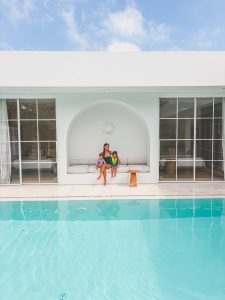
Ubud is the part of Bali that stays with you longest. Not because of any single thing — not the rice terraces or the monkey forest or the waterfall — but because of the accumulation of it. The morning light on the valley. The smell of incense from a temple ceremony you stumble across on a side street. The cooking class where your three-year-old discovered he has opinions about shallots. Ubud does something to people, and it’s done it to us across every visit.
We’ve been coming here for years across multiple Bali trips — as a couple, on family holidays with Kylo and Zadie, staying at Wapa di Ume, exploring with our local driver Wayan who knows every back road and hidden temple in the region. This guide to things to do in Ubud is what we’d tell a close friend: what’s genuinely worth your time, what’s overrated, what works with kids, and what to save for a different kind of trip.
If you’re looking for a day-by-day plan, see our 4-Day Ubud Itinerary. This post covers every Ubud attraction in full so you can build your own version.
Ubud at a glance – Which activities are right for you?
| I want… | Best Ubud Attraction |
|---|---|
| Culture & ceremony | Kecak Dance at Ubud Palace, Goa Gajah |
| Nature & easy walks | Campuhan Ridge Walk, Tegalalang |
| Waterfall adventure | Ulu Petanu Waterfall |
| Hands-on experience | Wapa di Ume Cooking Class, Ock Pop Tok |
| Wildlife | Sacred Monkey Forest |
| Wellness & spa | Yoga Barn, flower bath, spa day |
| Day trip | Kintamani volcano, Tirta Empul, Jatiluwih |
| Families with young kids | Campuhan Ridge Walk, cooking class, Monkey Forest |
| Rainy day | Cooking class, Ubud Art Market, museum |
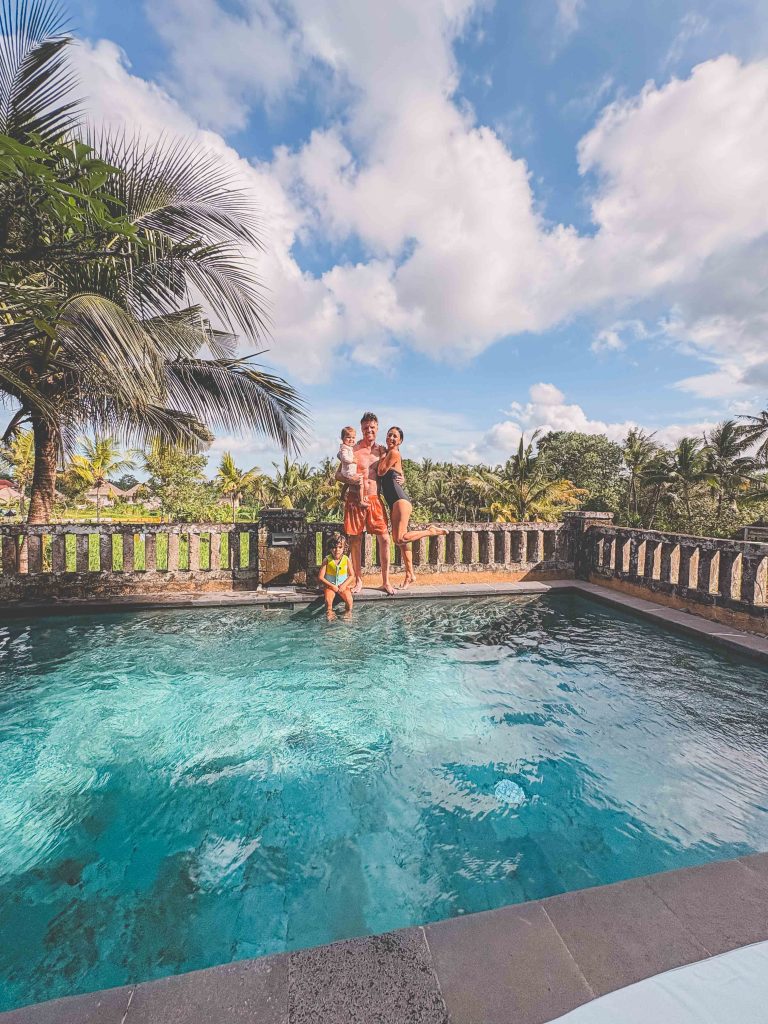
Wapa di Ume Ubud – Where we stayed!
🏆 9.5 rating on booking.com
We stay in the private pool family villa, which was perfect. The staff here were so amazing with the kids! We did on-site private cooking class and bbq cultural dinner which were incredible!
CULTURE & TEMPLES
1. Watch the Kecak Fire Dance at Ubud Palace
Every evening at Ubud Palace in the centre of town, the Kecak fire dance tells the story of the Ramayana — a chorus of men chanting the hypnotic “cak cak cak” rhythm as the drama unfolds against the palace backdrop. It’s a completely different experience to the clifftop Kecak at Uluwatu — more intimate, more theatrical, right in the heart of the town you’ve been walking through all day.
We’ve seen it multiple times and it still holds our attention completely. For kids who are old enough to engage with a performance (roughly 5+), it’s one of the most memorable things we’ve done in Bali — Kylo talked about it for weeks afterwards.
Entry: IDR 100,000 per adult
Performance time: Daily 7:30pm, approximately 1 hour
Location: Puri Saren Agung (Ubud Palace), Jl. Raya Ubud
2. Explore Goa Gajah — The Elephant Cave
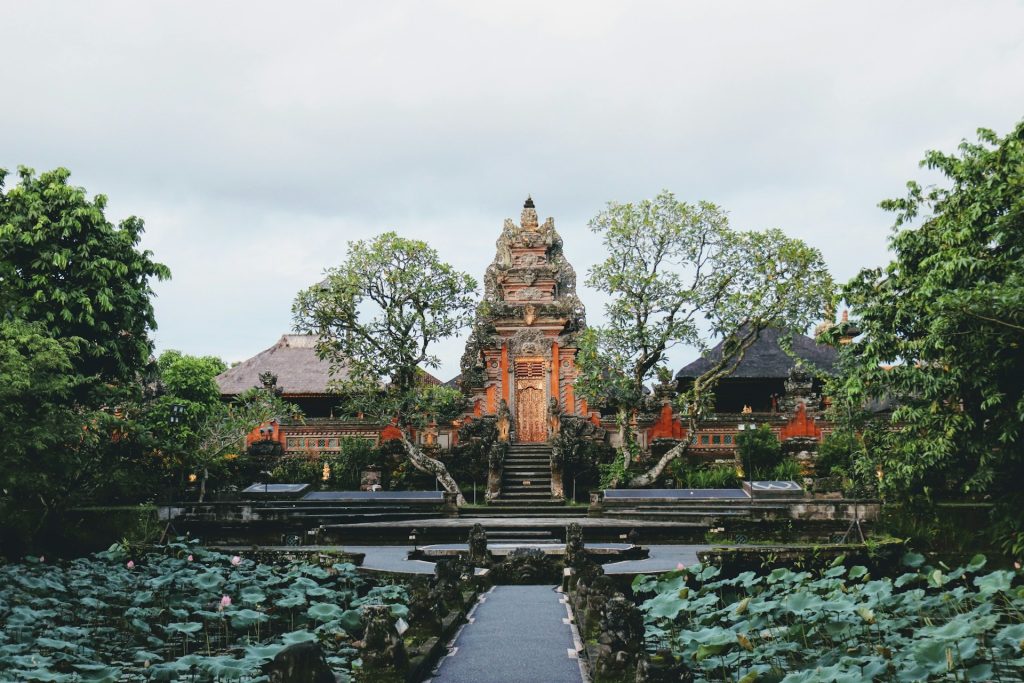
Goa Gajah (Elephant Cave) is one of Ubud’s most significant spiritual sites — a 9th-century cave sanctuary with a dramatic demon-face entrance, ancient bathing pools fed by spring water, and carved niches inside the cave where offerings are still placed daily. The surrounding grounds have been inhabited and used for ceremony continuously for over a thousand years.
It’s one of those Ubud attractions that rewards slowing down. Walk past the main cave entrance, follow the steps down to the bathing pools, then take the less-visited path that winds through the ravine to the river below — most visitors don’t go this far and it’s the most atmospheric part of the whole site.
Entry: IDR 50,000 adults / IDR 25,000 children (sarong rental included)
Hours: Daily 8am–5pm
Location: Jl. Raya Goa Gajah, Bedulu — 3km east of central Ubud
💡 Tip: Go early morning before the tour groups arrive. The bathing pools are most photogenic with no one in them.
3. Ubud Art Market — Pasar Seni Ubud
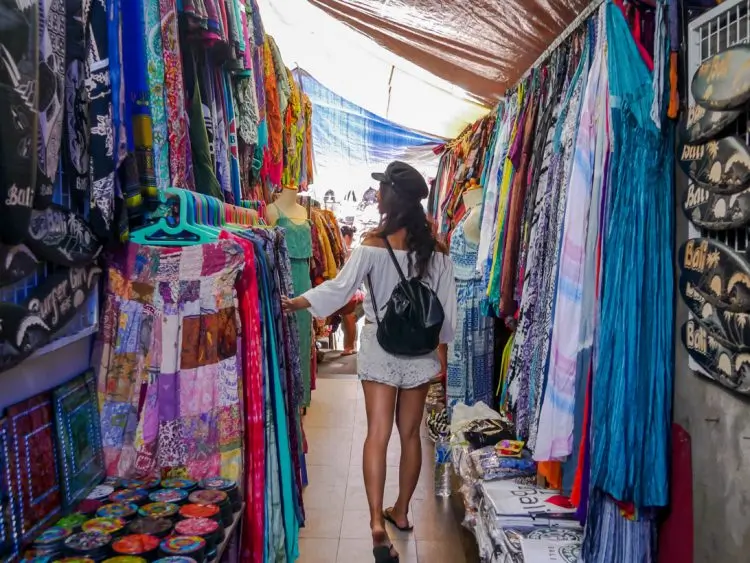
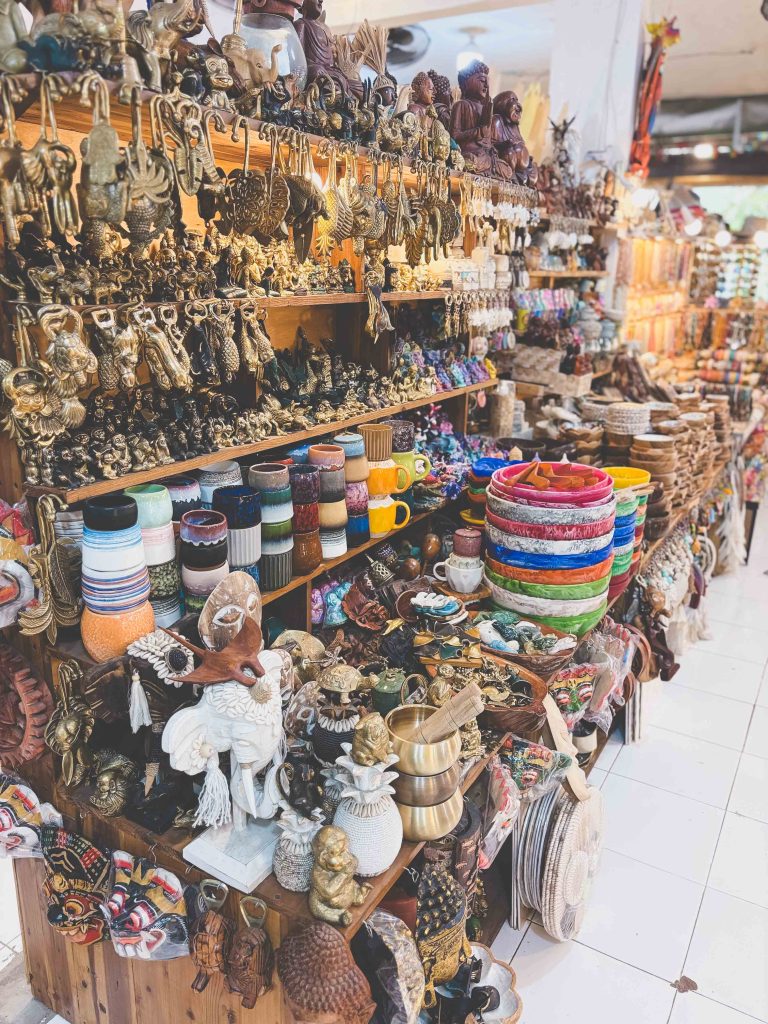
The Ubud Art Market sits directly opposite the palace and is one of Bali’s best markets for quality artisan goods — silk scarves, handmade ceramics, woodcarvings, jewellery, and textiles from local makers. The vendors are friendly and bargaining is expected, though we’d encourage paying fairly rather than driving prices down aggressively — most items are already well-priced.
We always come here for gifts — the carved wooden items and the batik fabrics especially are genuinely beautiful and hard to find in equivalent quality elsewhere in Bali. Go in the morning when it’s cooler and the market is freshest. Prices are slightly higher on the main market strip; the stalls at the back have better deals and are less crowded.
Hours: Daily 7am–6pm
Location: Jl. Raya Ubud, opposite Ubud Palace
💡 Tip: Go early to beat the crowds. Don’t be afraid to barter!
4. Legong Dance & Cultural Dinner
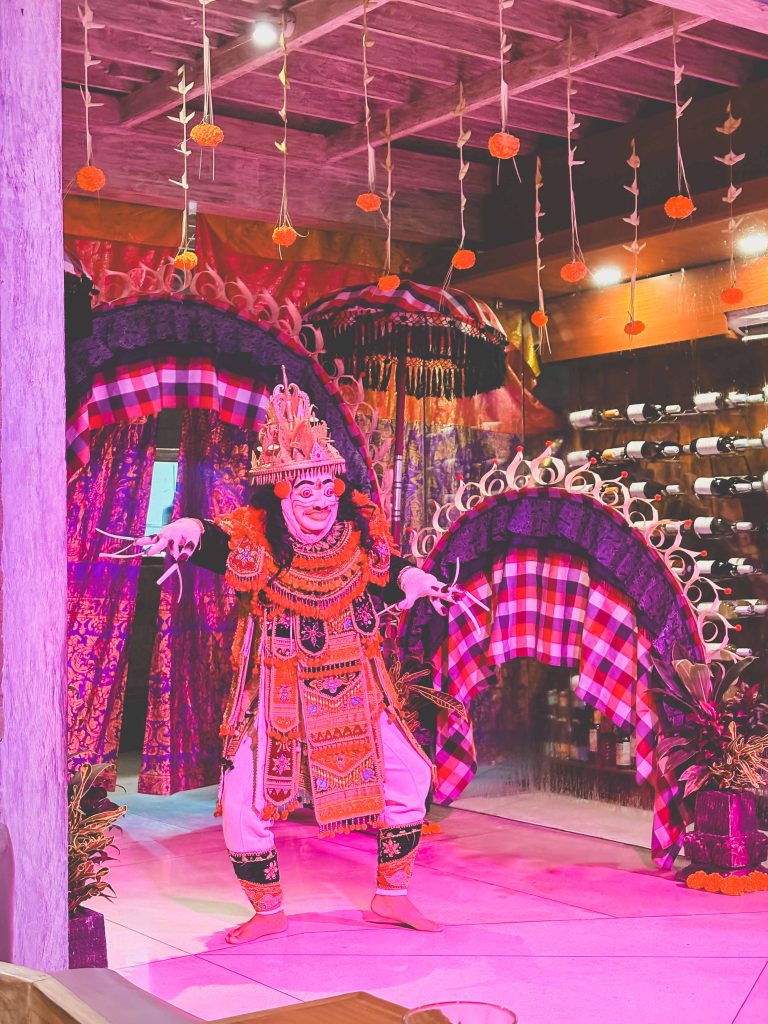
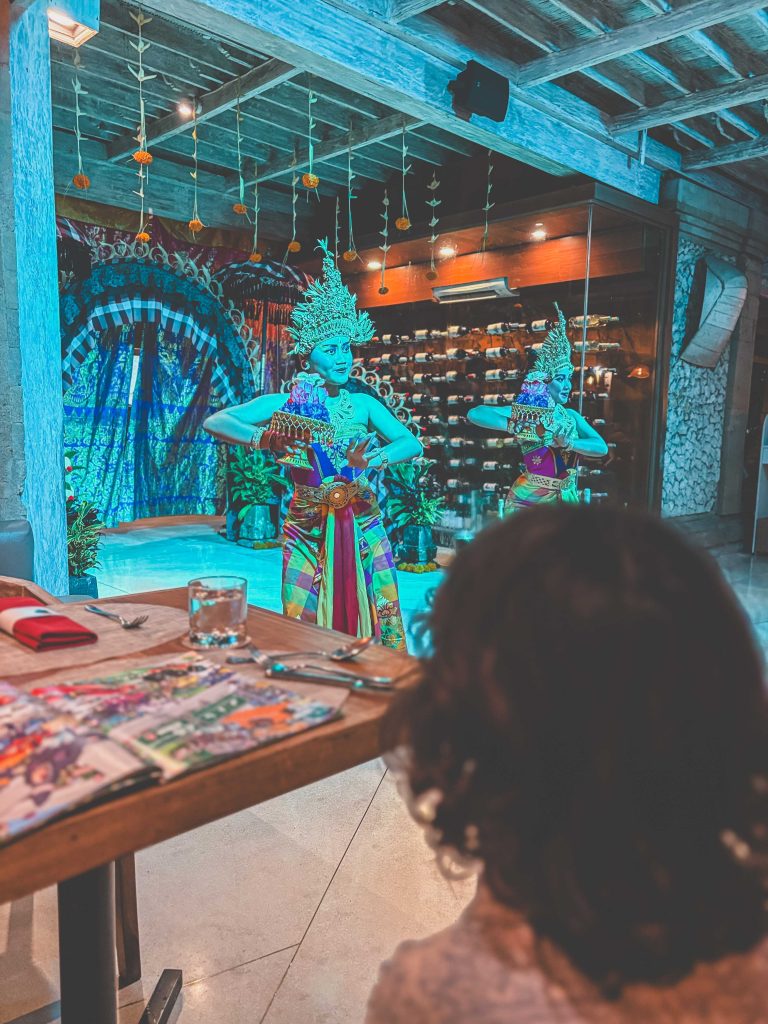
The Legong dance is one of Bali’s most refined classical dance forms — young women in elaborate gold headdresses and layered silk costumes moving through a precise vocabulary of gestures and expressions that tell mythological stories. The detail is extraordinary once you start paying attention: every finger position, every eye movement, every tilt of the head carries meaning that has been passed down through generations of Balinese dancers.
We experienced this as part of a traditional cultural dinner at Wapa di Ume in Ubud — an evening that combined a Balinese feast with a live performance in the most beautiful setting. Sitting open-air with the jungle below, watching the dancers perform by lamplight while eating food we’d helped prepare in the cooking class earlier that day, felt like one of those rare evenings where everything lands exactly right. It’s the kind of experience that makes Ubud feel genuinely unlike anywhere else in Bali. If you’re staying at Wapa di Ume, don’t miss it — and if you’re not, it’s worth the trip from wherever you’re based.
For standalone performances, the Legong is performed regularly at Pura Dalem Ubud and the Ubud Palace courtyard — check local listings when you arrive for current schedules. The Ubud Palace version pairs well with dinner beforehand on Jalan Raya Ubud.
Entry: IDR 100,000–150,000 per person depending on venue
Cultural dinner at Wapa di Ume: Book directly through the resort — recommended for anyone staying in or around Ubud
NATURE & WALKS
4. Campuhan Ridge Walk ⭐ Our Top Ubud Recommendation
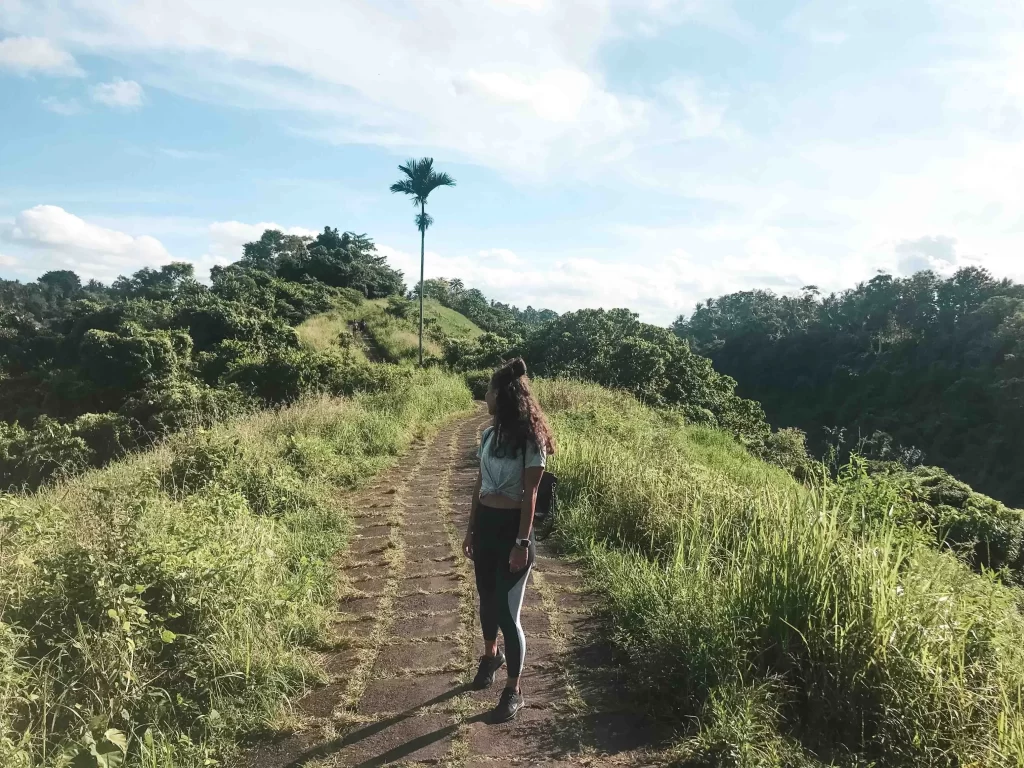
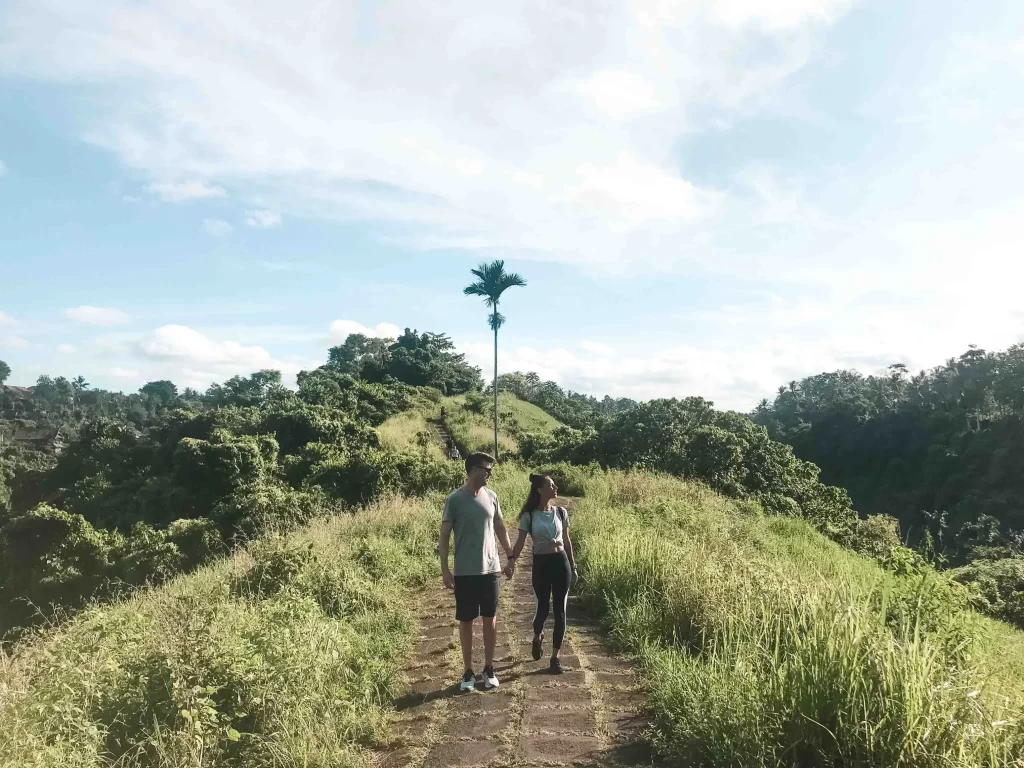
The Campuhan Ridge Walk is the thing we tell everyone to do first in Ubud — before the monkey forest, before the rice terraces, before anything else. A paved walking path that follows a narrow ridge above the confluence of two rivers, through swaying grass and scattered jungle, with views across the valley on both sides.
We’ve done this walk at different times of day across multiple trips and the verdict is consistent: go at sunrise or early morning. By 9am the path gets warm and the light flattens. At 6:30am with the mist still in the valley and almost nobody else on the path, it’s one of the most beautiful 45 minutes you can spend in Bali. The walk takes about 1–1.5 hours at a gentle pace and ends near a cluster of cafes where breakfast is waiting.
Distance: Approximately 5km return
Best time: Sunrise or early morning
Cost: Free
Start: Pura Gunung Lebah temple, Jl. Raya Campuhan
👨👩👧 Family note: Good for families with kids who are comfortable walking. The path is paved and well-maintained.
5. Tegalalang Rice Terraces
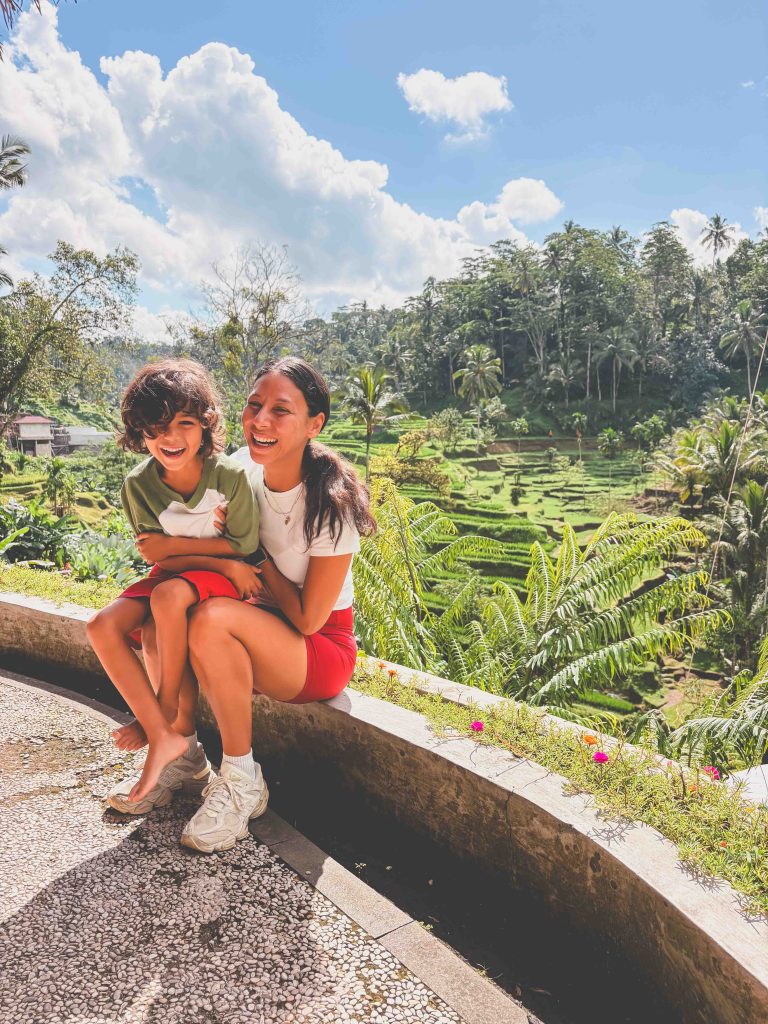
The Tegalalang rice terraces are one of those places that looks exactly like you think it will from the photos — cascading green steps, swaying palms, the kind of landscape that makes you stop talking — and is still worth seeing in person because the photos don’t do the scale justice.
We always view them from the cafe level rather than making the full descent — on our most recent trip with the kids the path down was muddy and slippery and we made the sensible call. Tiss Cafe sits right at the edge of the terraces with some of the best views, and a coffee or smoothie there while watching the light move across the steps is exactly enough.
If you want to walk down and through, allow a couple of extra hours and wear shoes with grip. In dry season the paths are manageable; in wet season, go cautious.
Entry: IDR 50,000 per person (some viewing platforms charge separately)
Location: Jl. Raya Tegalalang — 20 minutes north of central Ubud by scooter or car
Best time: Early morning before tour groups arrive
👨👩👧 Family note: Good for a cafe stop and views with kids; the path down is steep and best skipped with toddlers

6. Ulu Petanu Waterfall
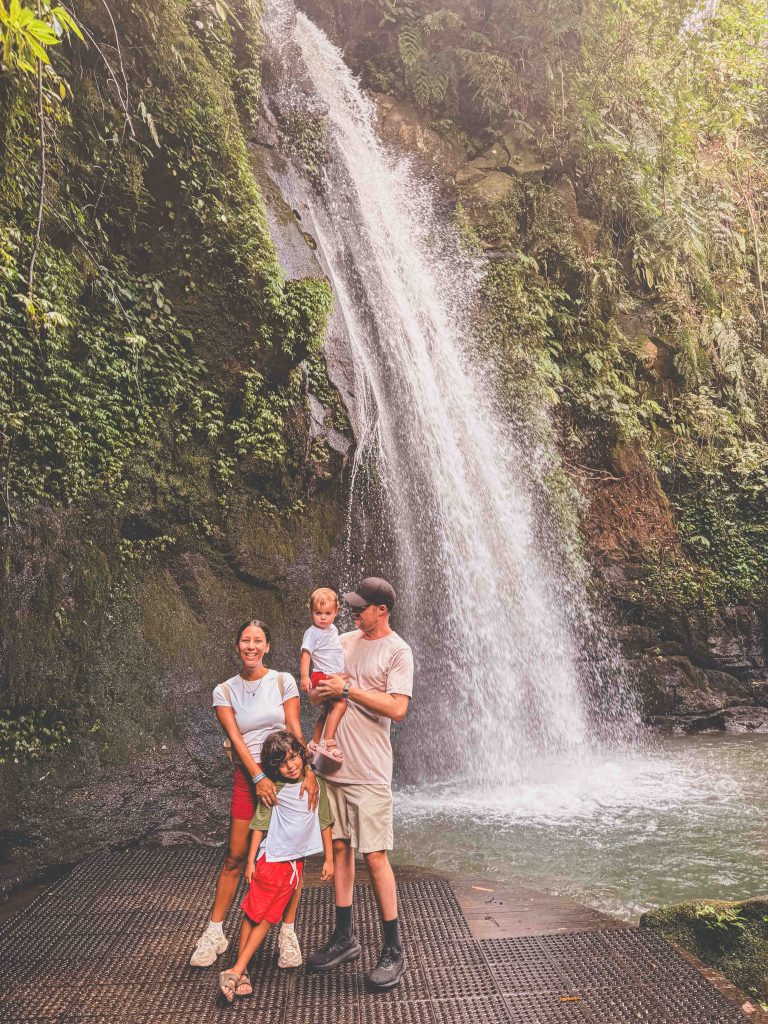
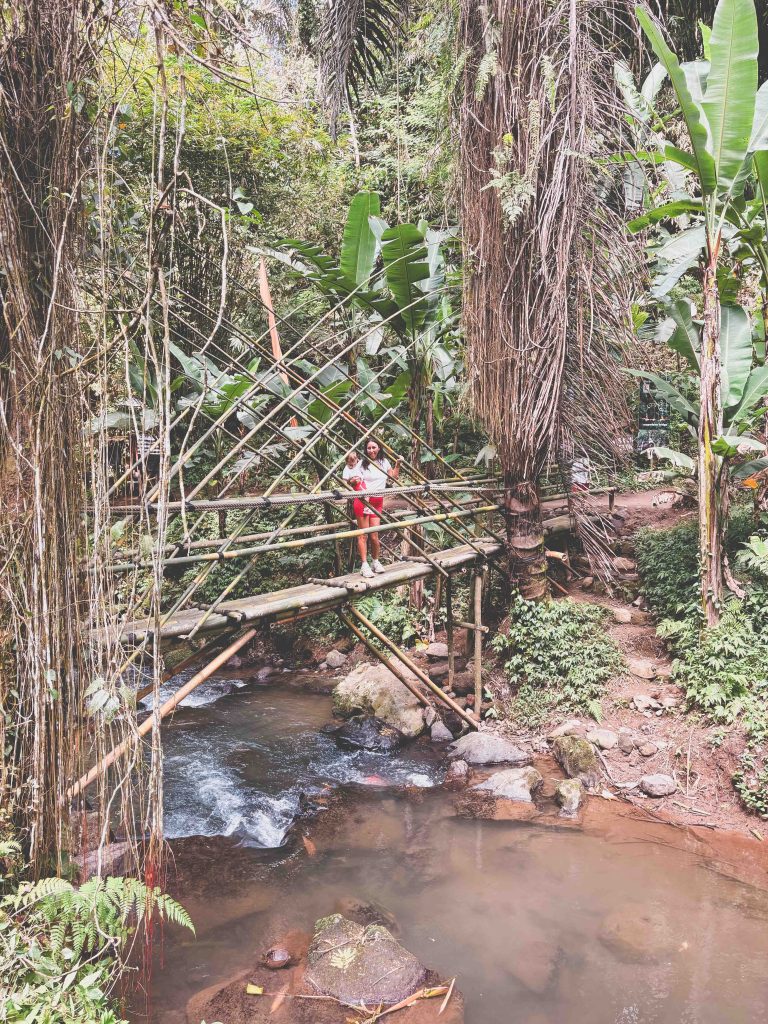
Our local driver Wayan suggested Ulu Petanu specifically because it works better for families with young children than most Ubud waterfalls — and he was right. Around 90 concrete steps down to the base, which makes it steep but structured. On the walk down you pass koi fish ponds and ducks and ducklings — both kids were absorbed before we’d even reached the water.
The waterfall itself is beautiful and well-proportioned — not enormous, but clear and lovely with a rock pool at the base. There’s a cave beyond (IDR 10,000 extra per adult) and a second waterfall on the other side. We went through — slightly smoky, properly dark, Kylo thought it was the best part of the whole trip.
Entry: IDR 75,000 adults / children free
Best time: Morning before the heat builds
💡 Tip: Wear closed-toe shoes — the steps and paths can be slippery
👨👩👧 Family note: One of the most family-friendly waterfall experiences in Ubud
EXPERIENCES & CLASSES
7. Balinese Cooking Class at Wapa di Ume ⭐ Personal Favourite
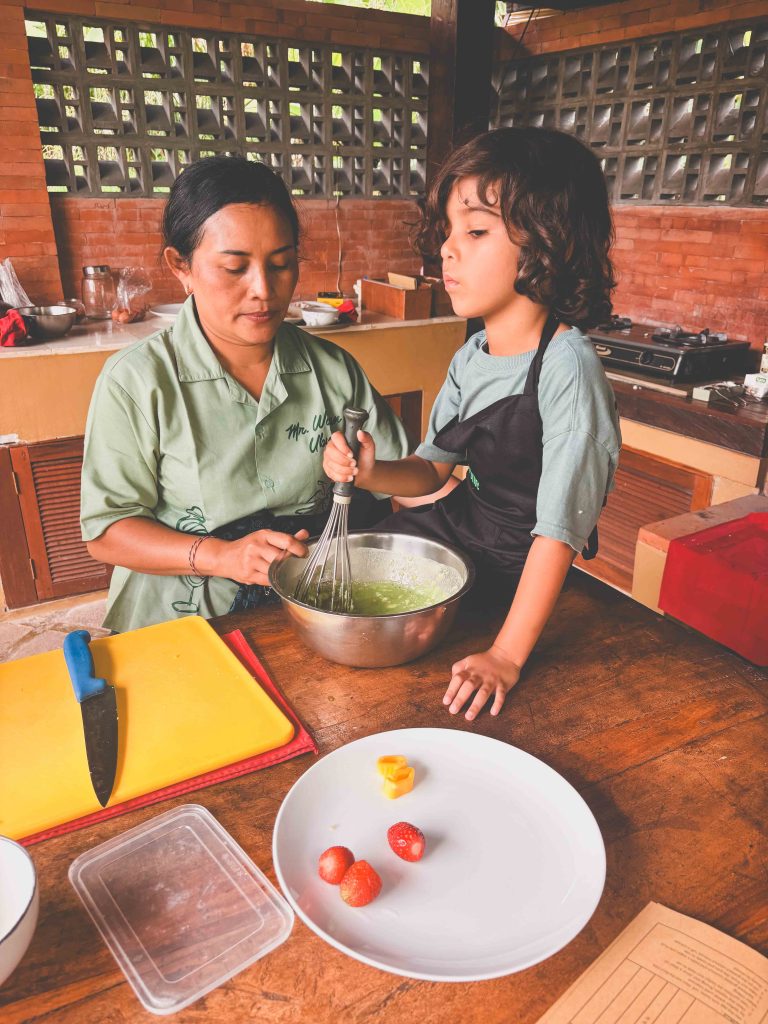
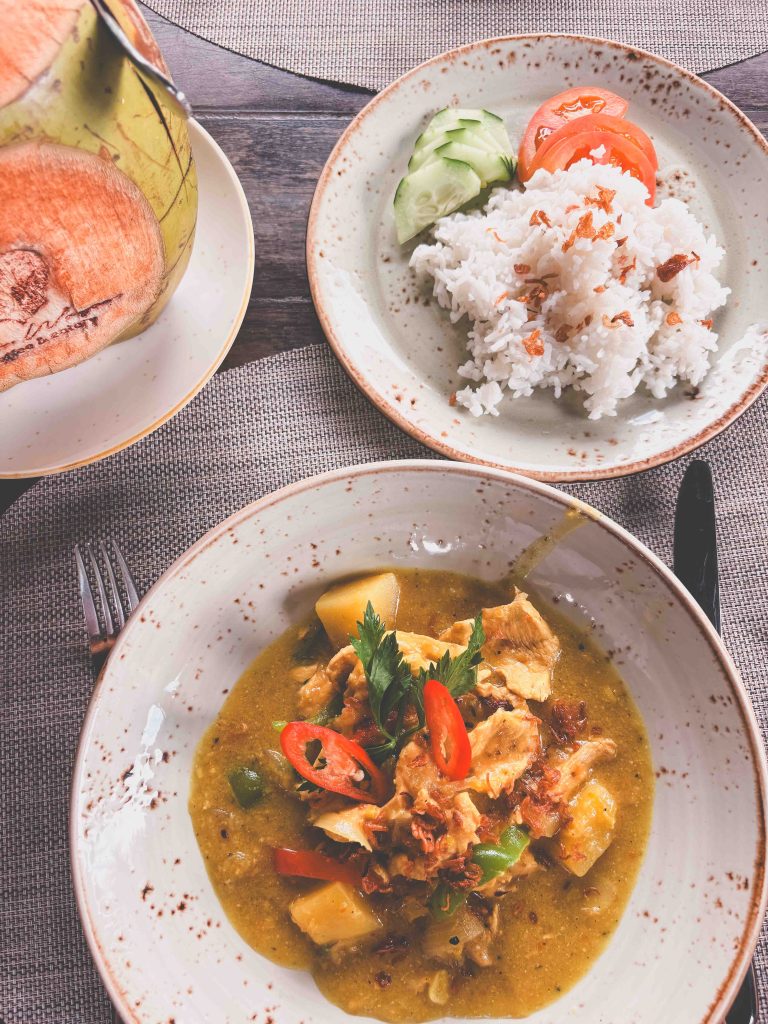
A Balinese cooking class is one of those things that sounds like a tourist activity and turns out to be genuinely one of the most memorable experiences of the trip. We did ours at Wapa di Ume in Ubud with Chef Ayu and Lasmini — a private class where we chose our menu (seafood soup, chicken curry, and pandan pancakes with coconut and palm sugar) and then actually made everything from scratch.
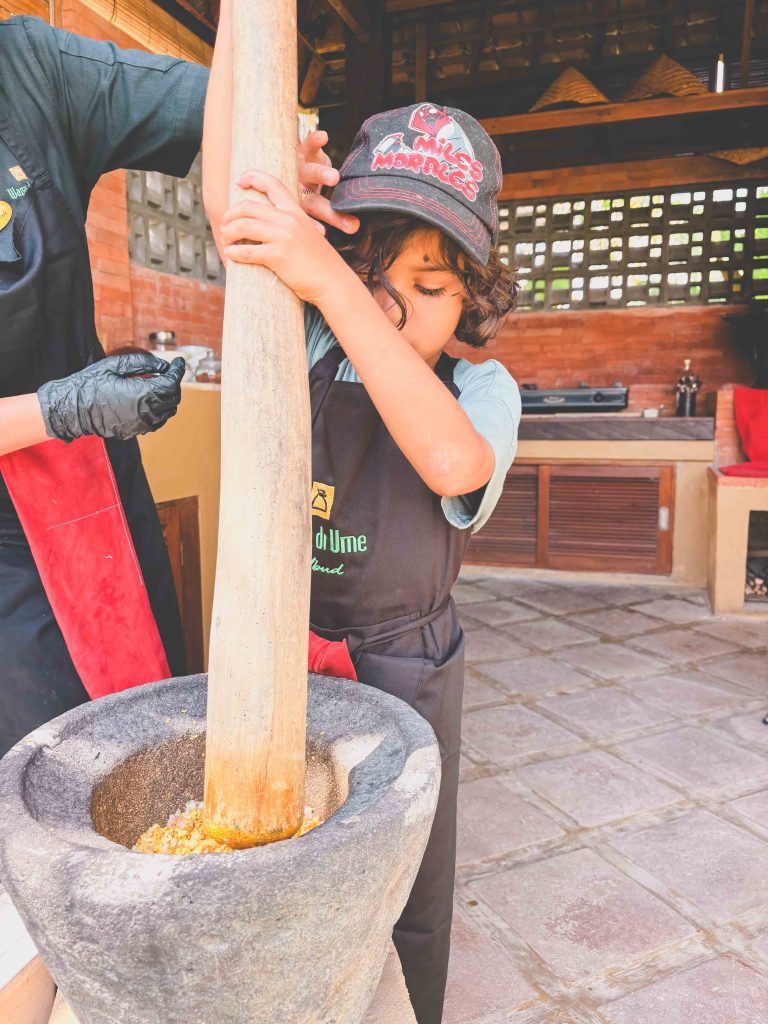
Kylo ground spices in the mortar and pestle, chopped shallots with very close supervision, and whisked the pancake batter like his life depended on it. Lasmini had worked out that he loved strawberries and secretly prepared some for his pancakes. He ate every single one.
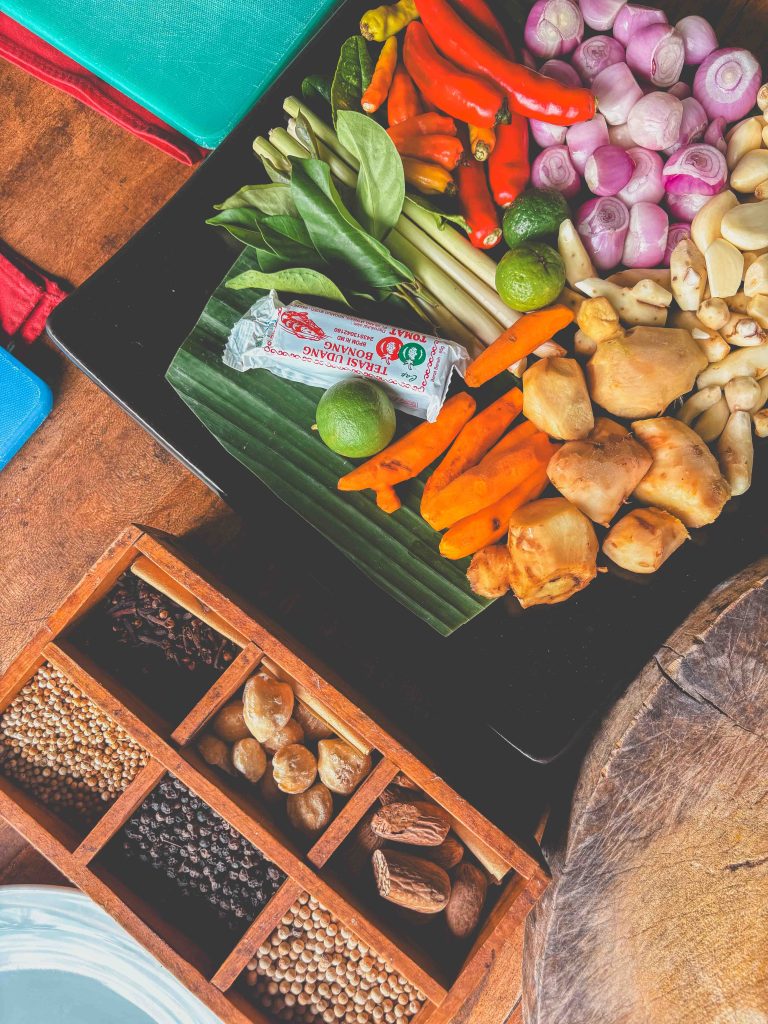
The whole spices laid out in their raw form — nutmeg, cardamom, star anise, cloves, still whole and fragrant — changes the way you cook when you get home. Book a private class if you can and give yourself the full morning.
Price: IDR 350,000–800,000 per person depending on class
Duration: 3–4 hours including eating what you made
➡️ Want to do a Cooking Class? – Check price and availability here
8. Ock Pop Tok Textile Weaving
Ock Pop Tok’s Living Crafts Centre in Ubud is one of the most genuinely rewarding cultural experiences in the region — a working silk and textile studio where you can watch master weavers at their floor looms, join a hands-on weaving or natural dyeing class, and buy directly from the artisans who made what you’re purchasing. The restaurant has Ayung River views and excellent food.
Entry: Free (classes from approximately $36 USD)
Location: Living Crafts Centre, Jl. Sriwedari 1A, Ubud
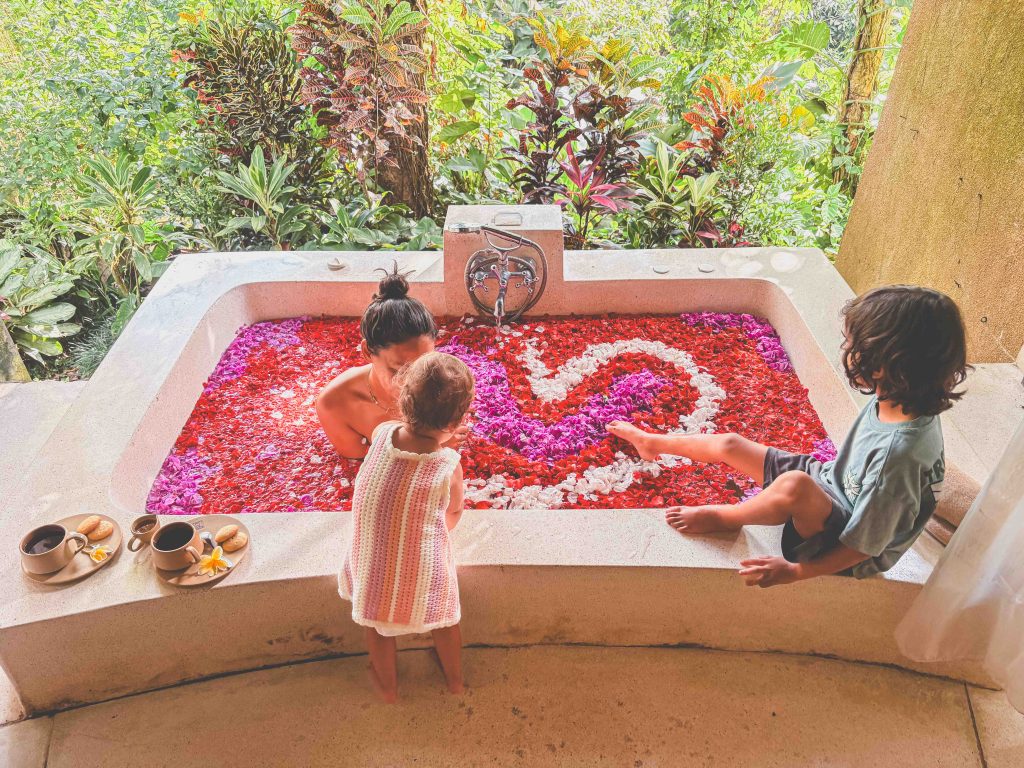
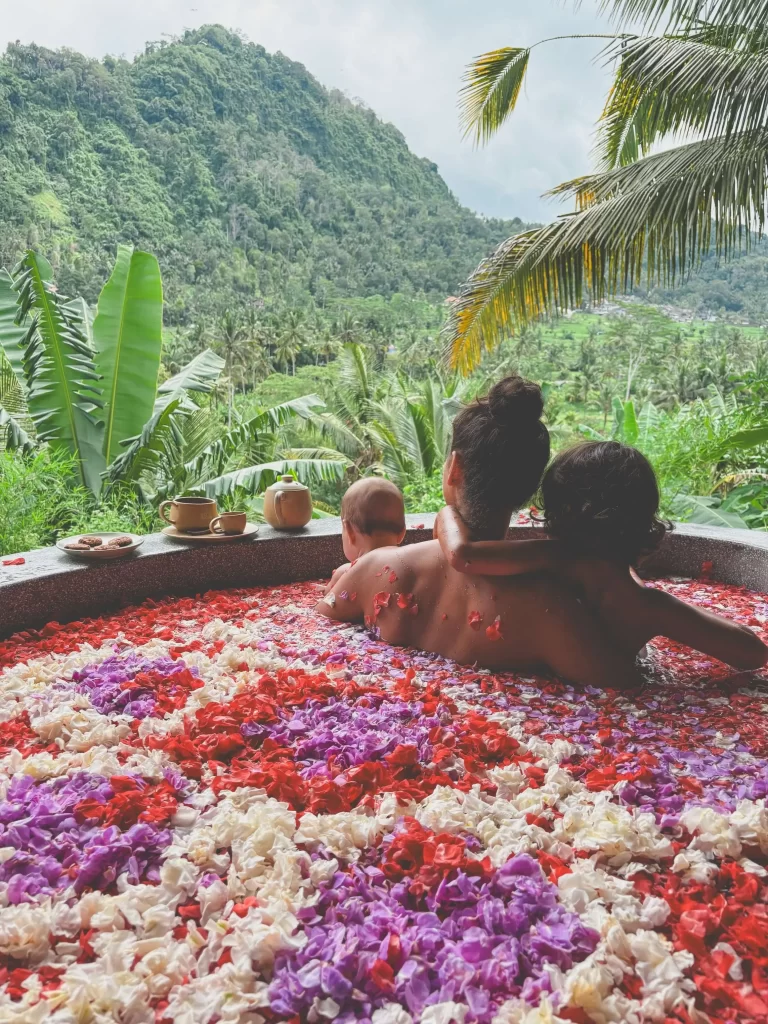
9. Flower Bath
The Balinese flower bath has become one of Ubud’s most photographed experiences — a deep tub filled with tropical flowers, petals floating on warm water, surrounded by tropical garden. It sounds indulgent and it is, and that’s completely fine. After a few days of walking, temples and waterfalls, two hours at a good spa with a flower bath is exactly the right kind of stop.
Most Ubud spas offer flower bath packages combined with a massage — Karsa Spa above the Ayung River is one of the most beautiful settings, and many of the better resorts (including Wapa di Ume) offer flower bath experiences to non-guests. Book in advance during peak season.
💡 Tip: Combine with a massage for a proper half-day spa experience
10. Floating Breakfast
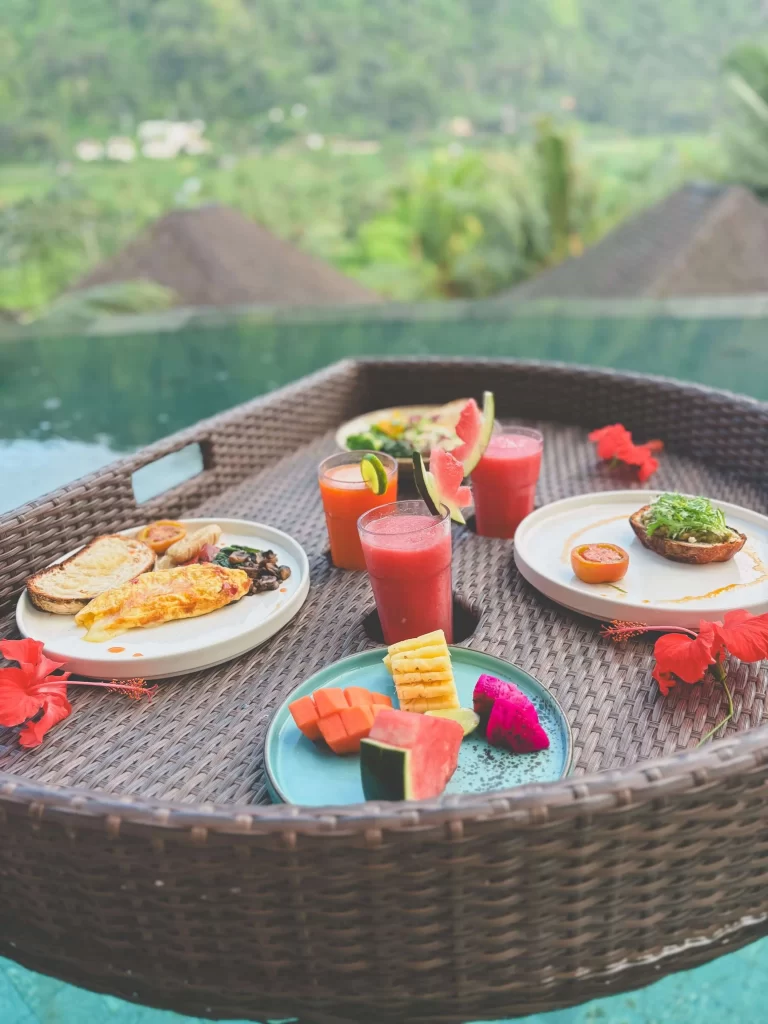
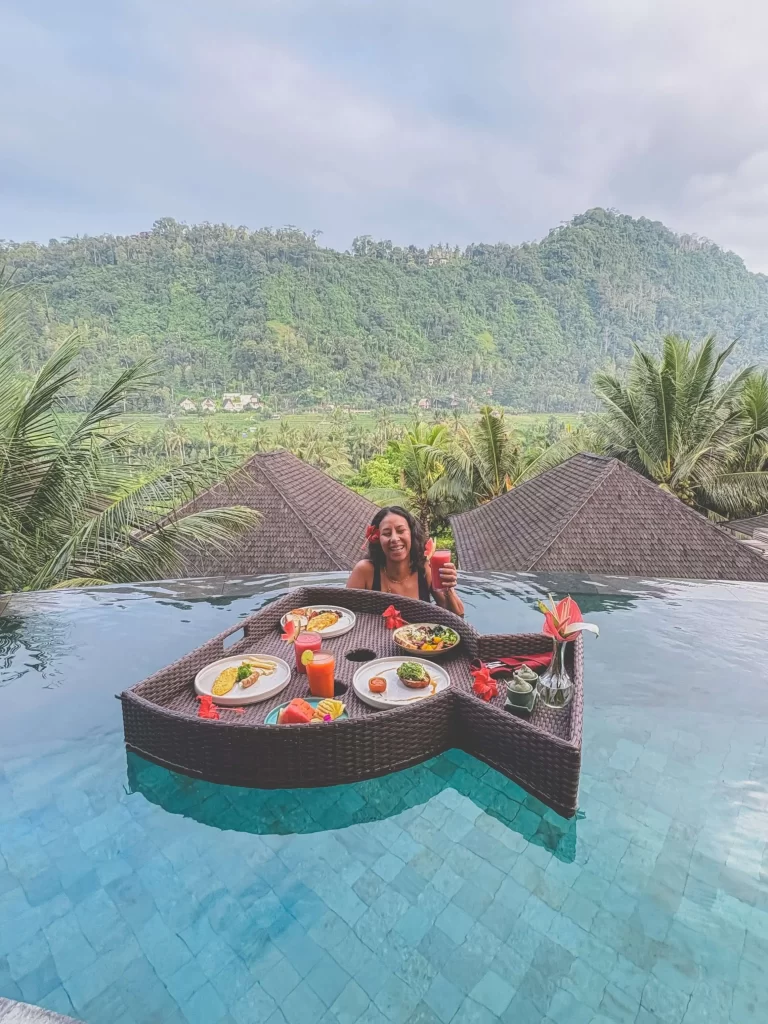
The floating breakfast has become one of Ubud’s most photographed experiences — a tray of tropical fruit, pastries, and juice floating in a flower-filled pool while you wade in beside it. It sounds indulgent, it is indulgent, and it photographs extraordinarily well — which is why it’s become a staple of Ubud villa mornings and one of the most searched Bali experiences on Instagram.
Beyond the aesthetics, it’s genuinely a lovely way to start a morning. The combination of a private pool, fresh tropical fruit, good coffee, and no particular agenda is exactly the right pace for an Ubud day before heading out to waterfalls or temples.
Most private pool villas in Ubud offer floating breakfast as an add-on or will arrange it on request — prices typically run IDR 150,000–400,000 depending on the property and how elaborate the spread is.
If your villa doesn’t offer it, several Ubud resorts and jungle retreats have made it a signature experience: Komaneka at Bisma, Alaya Resort, and The Kayon Jungle Resort are consistently recommended for the setting and presentation. Book the night before so the kitchen has time to prepare properly.
Price: IDR 150,000–400,000 per person depending on property
Tip: Book the evening before rather than on the morning — gives the kitchen time to prepare the flower arrangement and fresh fruit selection properly
Photography tip: The best light for floating breakfast photos is early morning before 8am when the sun is soft — later in the day the direct light flattens the colours
Family friendly: Yes — kids love it, though supervise closely with young children in the pool
11. Learn to Make Canang Sari — Balinese Offering Class
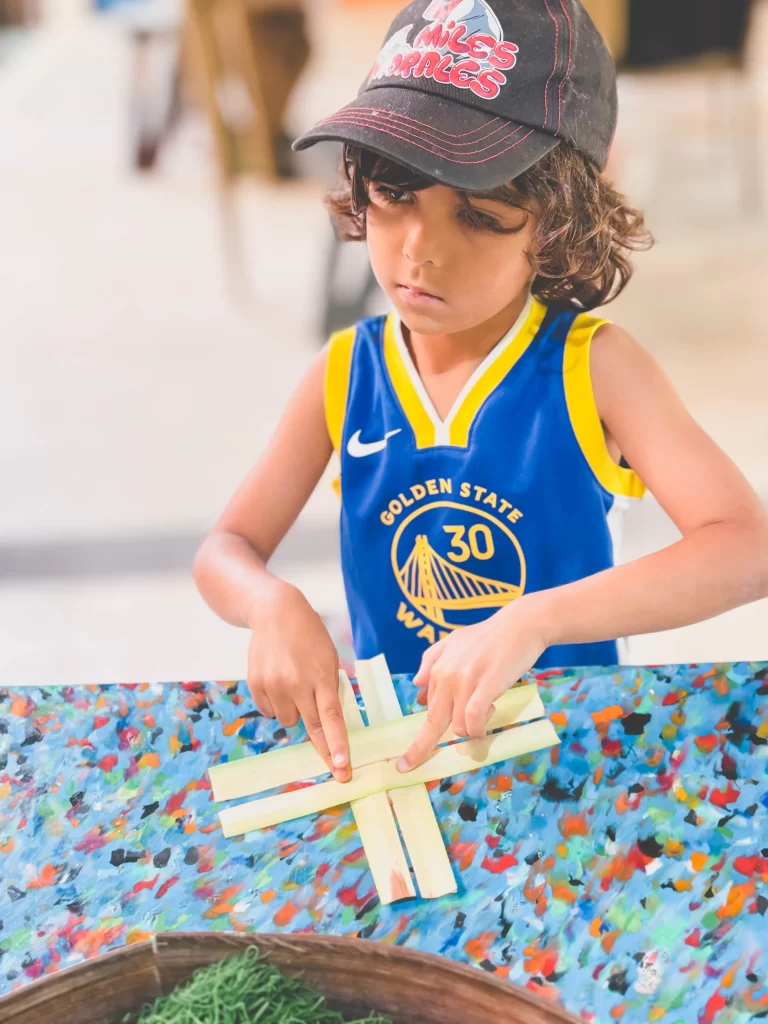
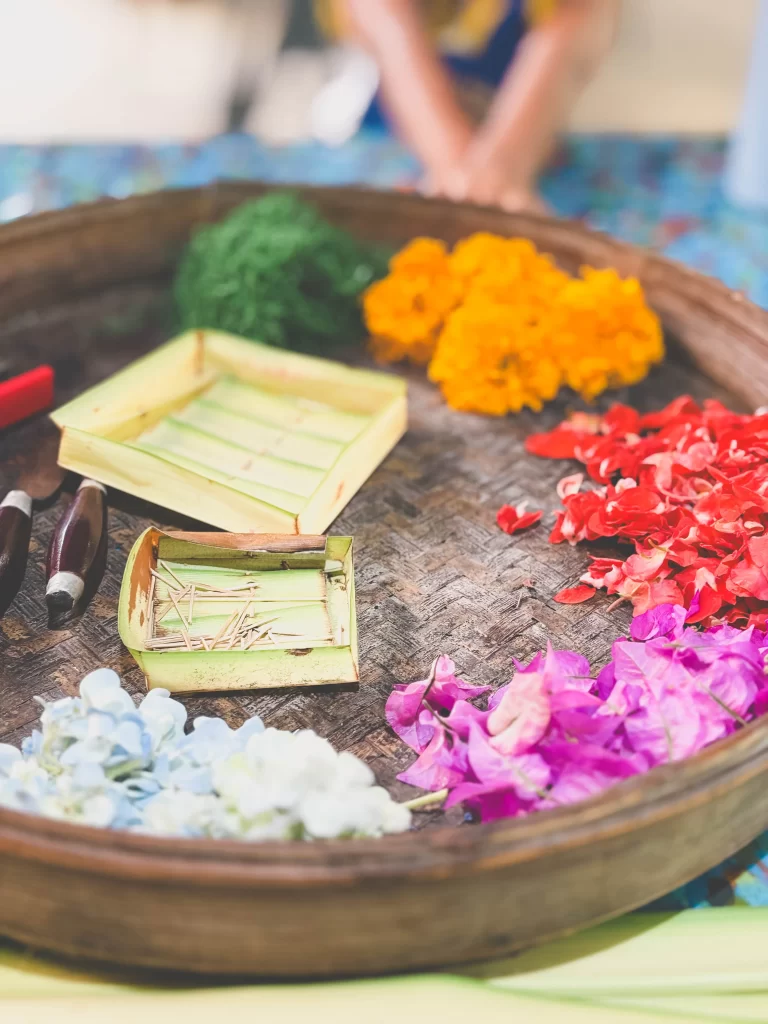
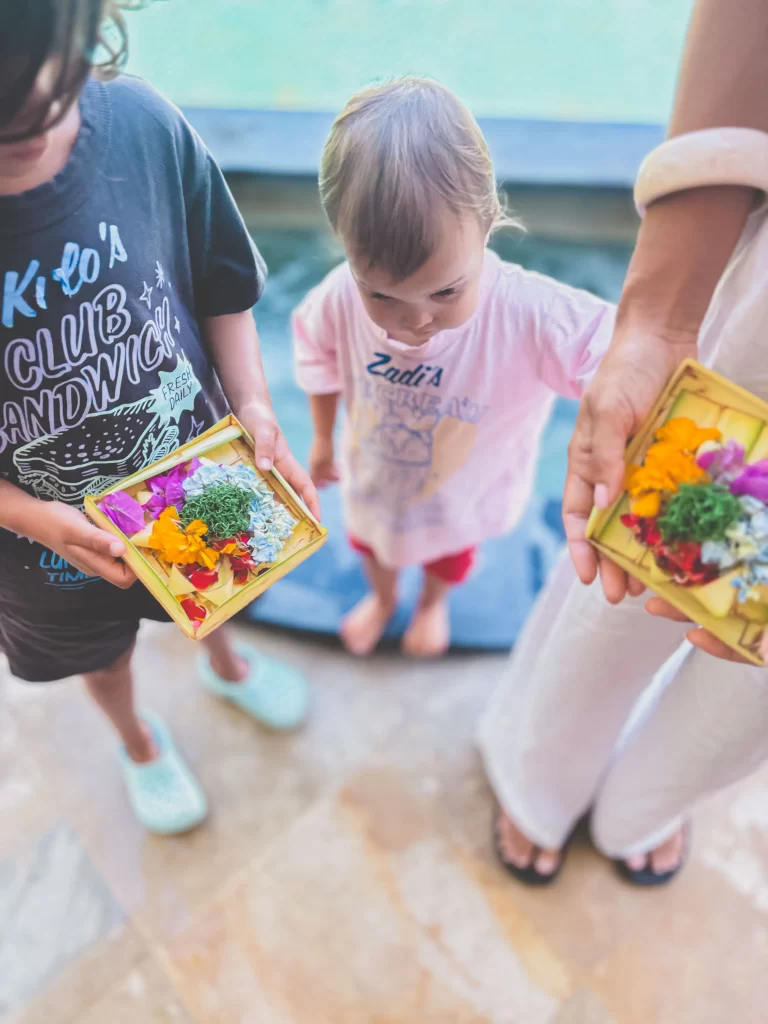
Canang sari are the small palm-leaf offerings you see everywhere in Bali — on doorsteps, temple walls, motorbike handlebars, shop counters, rice paddy borders. Every morning Balinese Hindu women make them by hand and place them as an expression of gratitude to the gods. They’re one of the most visible and beautiful parts of daily life in Bali, and most visitors walk past hundreds of them without really understanding what they are.
A canang sari workshop in Ubud changes that completely. You sit with a local woman — usually a temple member or a family who has been making offerings for generations — and learn to fold and weave the palm leaf base, then fill it with flowers in the specific colours and directions that carry symbolic meaning: white flowers facing east for Iswara, red facing south for Brahma, yellow facing west for Mahadewa, blue or green facing north for Vishnu. The process is meditative, precise, and genuinely moving once you understand what each element represents.
Most classes run 1–2 hours and end with placing your completed offering at a local shrine with a small ceremony. It’s one of the most culturally respectful and genuinely connected experiences you can have in Ubud — and one that makes every subsequent canang sari you walk past feel completely different.
Duration: 1–2 hours
Price: Approximately IDR 150,000–250,000 per person
Location: Various offerings workshops in central Ubud and surrounding villages — book through your villa or hotel, or via GetYourGuide
Family friendly: Yes — children love the hands-on flower arranging element
WILDLIFE
12. Sacred Monkey Forest Sanctuary
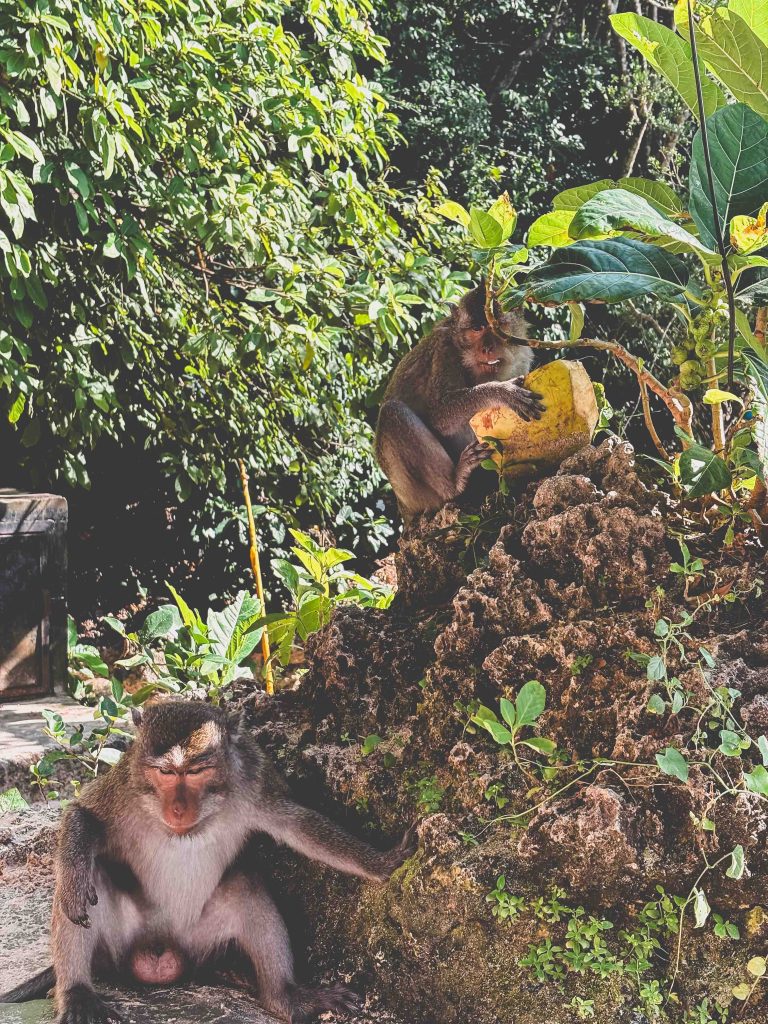
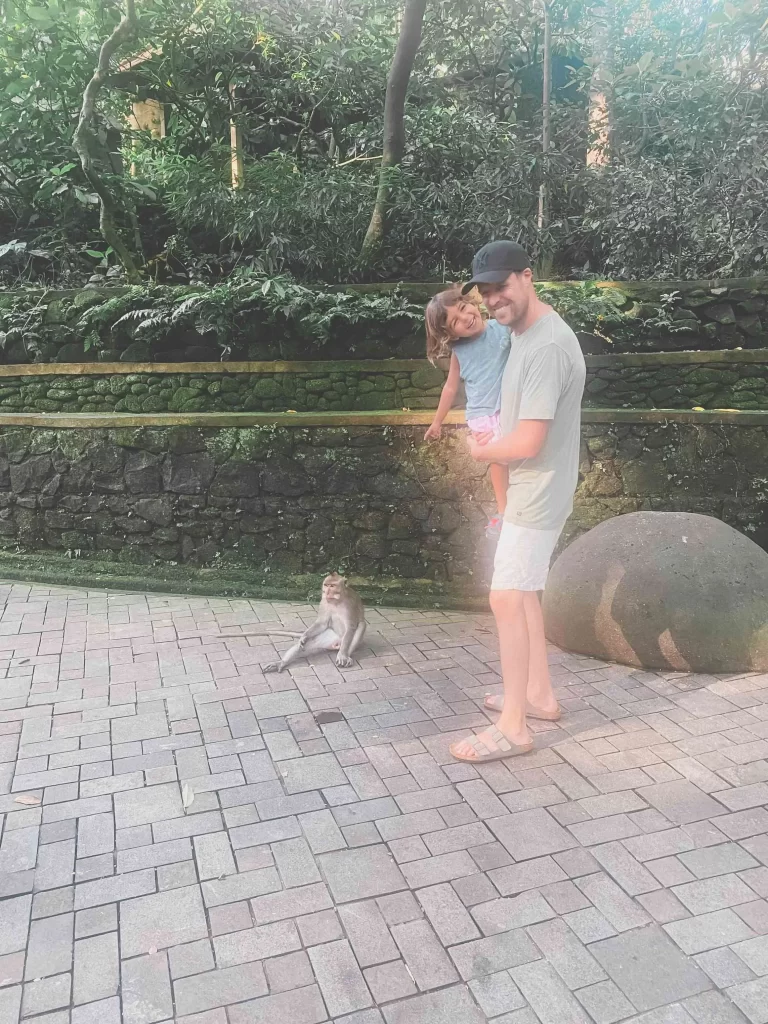
The Sacred Monkey Forest is exactly what it says — a lush jungle sanctuary in the middle of Ubud where over 1,200 Balinese long-tailed macaques live completely freely through ancient temple ruins draped in moss and banyan roots. The monkeys are everywhere, completely habituated to humans, and they will take anything unsecured with absolutely no warning.
It’s simultaneously very touristy and genuinely remarkable. The temple complex within the forest is beautiful and still used for active ceremony. The scale of the banyan trees is extraordinary. And the monkeys — chaotic, confident, occasionally terrifying — make for the kind of active, unpredictable experience that kids tend to remember for years.
Entry: IDR 100,000 adults / IDR 80,000 children
Hours: Daily 9am–5pm
Location: Jl. Monkey Forest, central Ubud
Don’t bring: Food, bags with easy access, sunglasses on your head, hats you care about
👨👩👧 Family note: Good for children who aren’t easily frightened by animals — the monkeys are very confident
13. Bali Zoo — Breakfast with the Orangutans
Bali Zoo, just outside Ubud in Singapadu, is one of the more memorable wildlife experiences in the area — best known for its breakfast buffet set right among free-roaming orangutans. Kids can also feed friendly deer, catch the daily bird show, and get up close with giraffes. It’s a genuinely engaging morning that pairs well with an easy, relaxed pace — less walking than the Monkey Forest, more structured animal interaction.
Entry: Approximately AUD $30-40 adult, $20-25 child (breakfast packages higher)
Location: Singapadu, Gianyar — about 20 minutes from central Ubud
Hours: Daily 9am-5pm
👨👩👧 Family note: Great for younger kids — more structured and predictable than the Monkey Forest, with less unpredictable animal behaviour.
WELLNESS
14. Yoga at The Yoga Barn
The Yoga Barn is Ubud’s most established yoga centre — a multi-level open-air studio complex with classes running from 6am across yoga styles, meditation, breathwork, and ecstatic dance. Drop-in classes are available at most sessions.
Even if yoga isn’t usually your thing, an early morning class here — with the jungle canopy above the open-sided studio and the sound of birds and temple bells — is a different experience to anything you’ll do at home.
Hours: Daily from 6am — check schedule at theyogabarn.com
Drop-in class: Approximately IDR 150,000 per session
Location: Jl. Hanoman, Ubud
ADVENTURE
15. White Water Rafting on the Ayung River
The Ayung River runs through the valley below central Ubud — the same river you can see from most of the better jungle-view restaurants and villas in the area. Rafting it takes you through 10km of rapids, jungle corridor, and past carved rock faces, all from the bottom of the valley looking up. It’s one of the best ways to see Ubud from a completely different angle.
Suitable for beginners — the rapids are classified as Grade 2–3. Most tours include transfers, equipment, and a meal at the end.
Price: Approximately IDR 350,000–500,000 per person
Duration: 2–3 hours on the water
16. Alas Harum Swing
The Bali swing experience — perched above the jungle canopy, views across the rice terraces below — is one of Ubud’s most photographed activities. Alas Harum is one of the best-known locations and also combines coffee and spice plantation tours with the swing experience. The swing itself is genuinely exhilarating rather than a simple photo opportunity.
Price: From IDR 350,000 per person
Location: Jl. Raya Tegalalang, north of Ubud
DAY TRIPS FROM UBUD
17. Kintamani Volcano Viewpoint
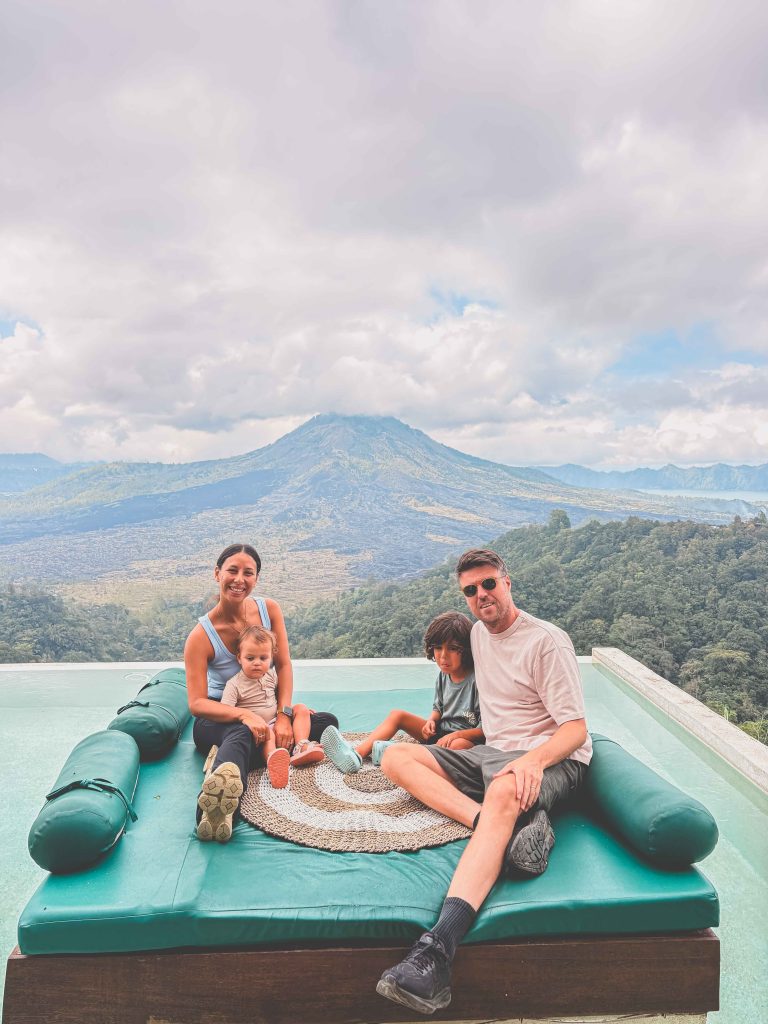
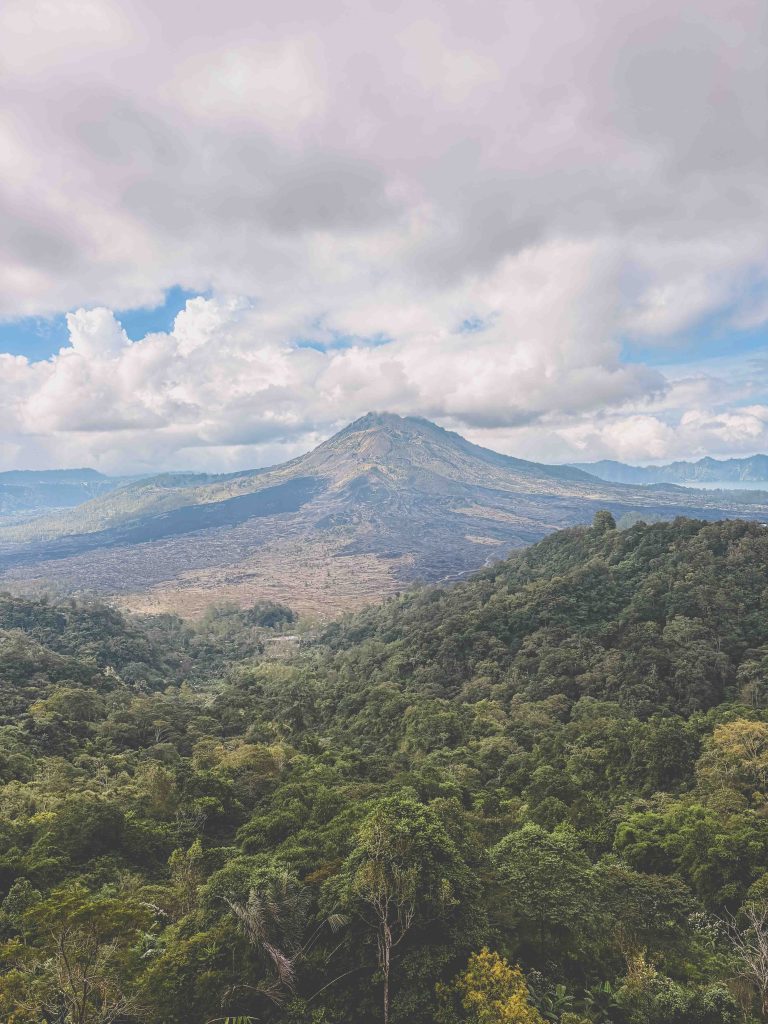
The drive from Ubud north to Kintamani takes about 45 minutes and climbs steadily into the highlands — by the time you arrive, the air is noticeably cooler and the view that opens up is genuinely one of the most dramatic things you can see in Bali. Mount Batur and the caldera lake below it emerge from the valley in a scale that’s hard to prepare for.
We stopped at Paper Hills ID which perches directly above the caldera — arrived through cloud and rain, genuinely worried the views would be hidden, and then the clouds parted just enough. Even partially obscured, it was extraordinary. Have a long lunch, let the weather do what it’s going to do, and don’t rush back.
Combine with: Tirta Empul (30 minutes south of Kintamani), coffee plantation visits along the way, or an early morning hike up Mount Batur if the sunrise trek is on your list.
18. Tirta Empul — Sacred Purification Temple
One of Bali’s most sacred Hindu temples — pilgrims and visitors alike move through the series of ornate stone spring-water fountains in the purification pools, stepping under each jet as part of the melukat cleansing ritual. It’s a genuinely moving cultural experience if approached with respect.
Entry: IDR 50,000 adults / IDR 30,000 children
Location: Tampaksiring — approximately 40 minutes from Ubud
Best time: Early morning before tour groups arrive
Note: Follow Balinese custom when entering the pools — dress modestly, follow the guidance of temple priests
19. Jatiluwih Rice Terraces (UNESCO World Heritage)
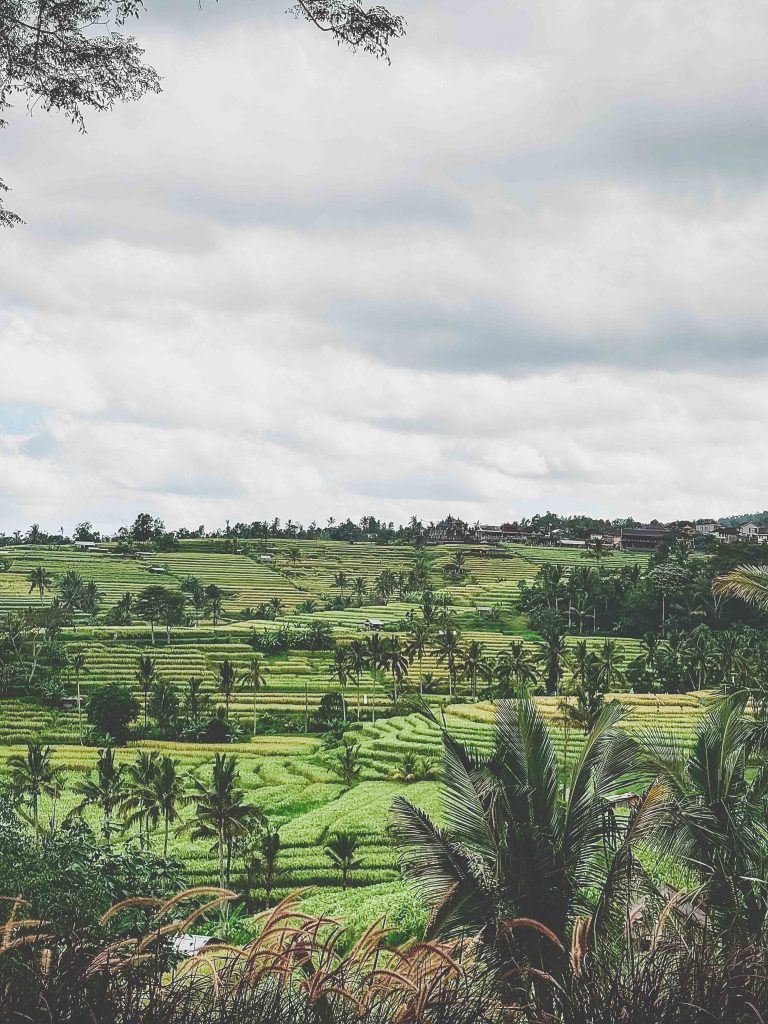
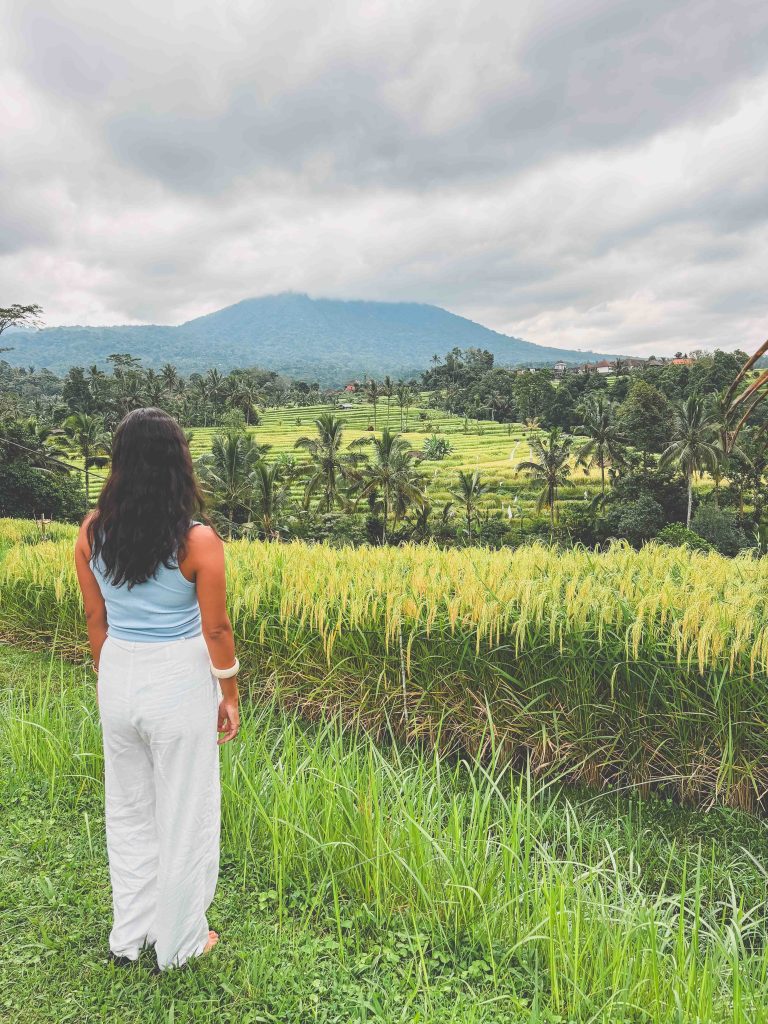
If Tegalalang is the most famous rice terrace view in Bali, Jatiluwih — a UNESCO World Heritage Site 45 minutes northwest of Ubud in the Tabanan highlands — is the most beautiful. Over 600 hectares of traditional subak irrigation system that has been maintained for nearly 1,000 years. Much less crowded than Tegalalang.
Entry: IDR 40,000 adults / IDR 30,000 children
Best time: Early morning for soft light and fewer visitors
DAY CLUBS
20. Cretya Ubud
Cretya Ubud’s three-level infinity pool sits above the jungle with rice terrace views that rival the ocean views at Bali’s most famous beach clubs — and at a fraction of the price. A VIP booth for two runs around $65 USD, significantly less than equivalent beach clubs in the south.
This is the right answer to the question “where’s the best pool day in Ubud?” — genuinely stunning setting, great food and drinks, and the jungle backdrop is something no beach club can offer.
WHERE TO EAT IN UBUD
Wapa di Ume — our personal favourite restaurant in Ubud. Plant-forward, beautifully designed, and the cooking class here is worth your whole morning. Book here
Hujon Locale — elevated Indonesian cuisine in a beautiful two-storey rice barn setting. The tasting menu is outstanding for a special dinner.
Warung Sopa — excellent local food at warung prices in a garden setting. Best for a relaxed lunch between activities.
Alchemy — Ubud’s best vegan cafe for smoothie bowls, raw desserts and plant-based meals. The jungle smoothie bowl is a non-negotiable.
Tiss Cafe — best cafe for Tegalalang rice terrace views with your morning coffee.
Humon — excellent café in a beautiful setting for a mid-morning stop after the Campuhan Ridge Walk.
WHERE TO STAY IN UBUD
Wapa di Ume Ubud — where we stay. Rice terrace views, exceptional food, the best cooking class in Ubud, and an Ayung River gorge setting that’s unlike anything else in the area.
Komaneka at Bisma — clifftop pool, extraordinary jungle views, genuinely luxurious. For a special occasion stay.
Alaya Resort Ubud — central, stylish, infinity pool, great value for the quality.
Bisma Eight — one of the most photographed infinity pools in Ubud, excellent central location.
Nefatari Exclusive Villas — private pool villas slightly outside central Ubud, very private and well-priced.
Budget note: Ubud has excellent budget guesthouses from $30–60 AUD per night — Jalan Bisma and surrounding streets have several good options within walking distance of central Ubud.
UBUD FAQ
u003Cstrongu003EHow many days do you need in Ubud?u003C/strongu003E
We recommend a minimum of 3 nights. Two nights feels rushed — you spend one whole day on logistics and transitions and only get one proper day exploring. Three nights gives you a morning walk, a day trip to Kintamani or the waterfalls, an evening Kecak performance, and a cooking class without feeling like youu0027re sprinting. Four nights is even better if Ubud is a priority.
u003Cstrongu003EIs Ubud good for families with young kids?u003C/strongu003E
Yes — better than most of Baliu0027s south for families wanting cultural activities and slower days. The cooking class, Ulu Petanu Waterfall, Campuhan Ridge Walk and the Kecak dance all work well with young children. The Monkey Forest is great for slightly older kids (5+) who arenu0027t easily startled. Ubud has less to offer very young babies in terms of pool and beach access, so combine with a resort stay in u003Ca class=u0022wpil_keyword_linku0022 href=u0022https://www.kelanabykayla.com/things-to-do-in-sanur/u0022 title=u0022Sanuru0022 data-wpil-keyword-link=u0022linkedu0022 data-wpil-replace=u0022u0022u003ESanuru003C/au003E or Uluwatu for the best balance.
u003Cstrongu003EWhat is Ubud best known for?u003C/strongu003E
Three things: its arts and crafts culture (woodcarving, painting, textile weaving — more concentrated here than anywhere else in Bali), its spiritual and ceremonial life (the most active temple circuit on the island), and its food scene (the most interesting dining in Bali outside of u003Ca class=u0022wpil_keyword_linku0022 title=u0022Seminyaku0022 data-wpil-keyword-link=u0022linkedu0022 data-wpil-monitor-id=u0022439u0022 href=u0022https://www.kelanabykayla.com/things-to-do-in-seminyak-bali/u0022u003ESeminyaku003C/au003E).
u003Cstrongu003EIs Ubud worth visiting?u003C/strongu003E
Without question — itu0027s one of the most interesting places weu0027ve spent time anywhere in Southeast Asia. Every visit we discover something new and leave feeling like we only scratched the surface. If youu0027re going to Bali for the first time and someone tells you to skip Ubud and stay in Canggu, find a different travel advisor.
u003Cstrongu003EWhat is the best time to visit Ubud?u003C/strongu003E
May–October (dry season) for the most reliable weather and the best conditions for outdoor activities. Ubud is inland so itu0027s cooler and greener than the south year-round — even in wet season the rain comes in afternoon bursts rather than all day, and the landscape is extraordinarily lush. Our personal preference is May or September — dry season without the July/August peak crowds.
PLANNING YOUR UBUD TRIP
For a complete day-by-day plan of how to structure your time in Ubud — including morning and afternoon activities, restaurant reservations, and the best order to see everything — see our dedicated 4-Day Ubud Itinerary.
For the bigger picture of how Ubud fits into a Bali trip, see our 10-Day Bali Itinerary.